
Artist Inès Longevial reinvents the Lady Dior bag
For the tenth edition of the Dior Lady Art project, the House of Dior called upon ten artists from around the world, including Inès Longevial, and gave them carte blanche to revisit its iconic bag. The French artist submitted three proposals, and her delicately beaded creations were presented in December at the Geneva boutique in her presence. Isabelle Cerboneschi
Last December, in the private salons of the Dior boutique in Geneva, a gathering of customers and friends of the House buzzed around Inès Longevial’s delicate creations. Invited to discover Dior Lady Art #10, everyone marvelled at the delicacy of the hand-embroidered details adorning the designs.
For the tenth edition of this project, which brings fashion and art together, Dior called upon ten artists from around the world – Jessica Cannon, Patrick Eugène, Eva Jospin, Ju Ting, Lakwena, Lee Ufan, Sophia Loeb, Marc Quinn, Alymamah Rashed – and Inès Longevial, who was present in the Geneva salons. This was an opportunity to discover the creative process that led her to co-create not one but three bags inspired by her works.
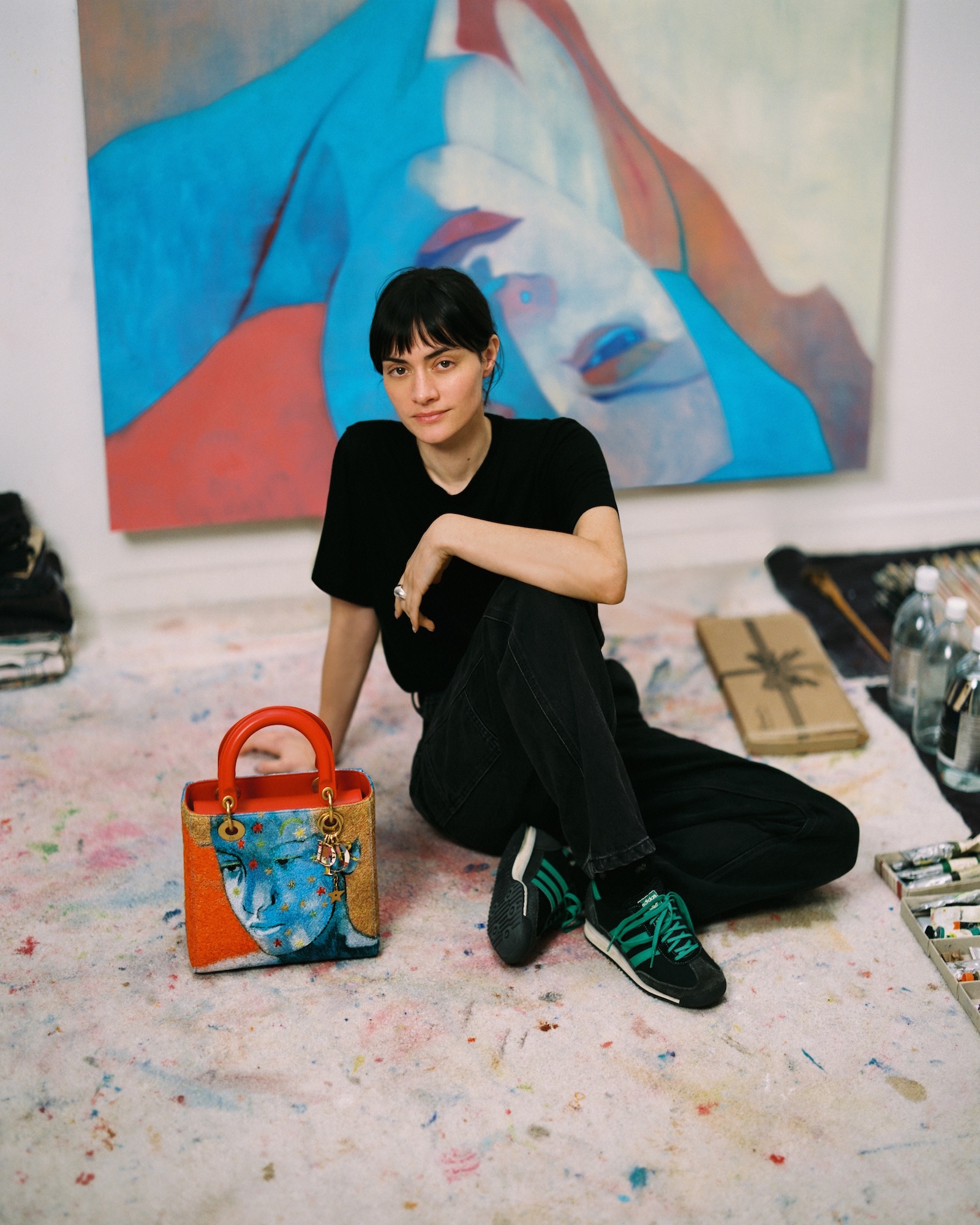
Inès Longevial in her studio ©Marion Berrin
The appeal and beauty of this collection lies in the fact that each artist is given carte blanche to make the Lady Dior – a model that has become iconic since its creation in 1994 – their own and to use it as a three-dimensional canvas on which to express their ideas. It is a refined way of opening the doors to their world. To date, 99 artists have collaborated with Dior since the inception of this project, which, year after year, generates eager anticipation among collectors.
Inès Longevial’s world is unique. Through her portraits, she attempts to make faces speak and transmit the emotions they convey through colours and shadows. For Dior, she has exceptionally created three designs, as it was impossible for her to choose just one. The first reveals a blue woman’s face created not with paint but with a unique embroidery of multidirectional threads. The second model, edged with mauve ostrich feathers, was composed as a patchwork of fabrics representing twenty of her most iconic works. The third, a mini version, is a trompe l’oeil patchwork entirely hand-embroidered with small glass beads. A true gem.
Each model is embellished with charms and Christian Dior’s lucky star, which can be found on the feet of the bags or in the lining. Those lucky enough to wear them will be able to appropriate a little of the artist’s work.
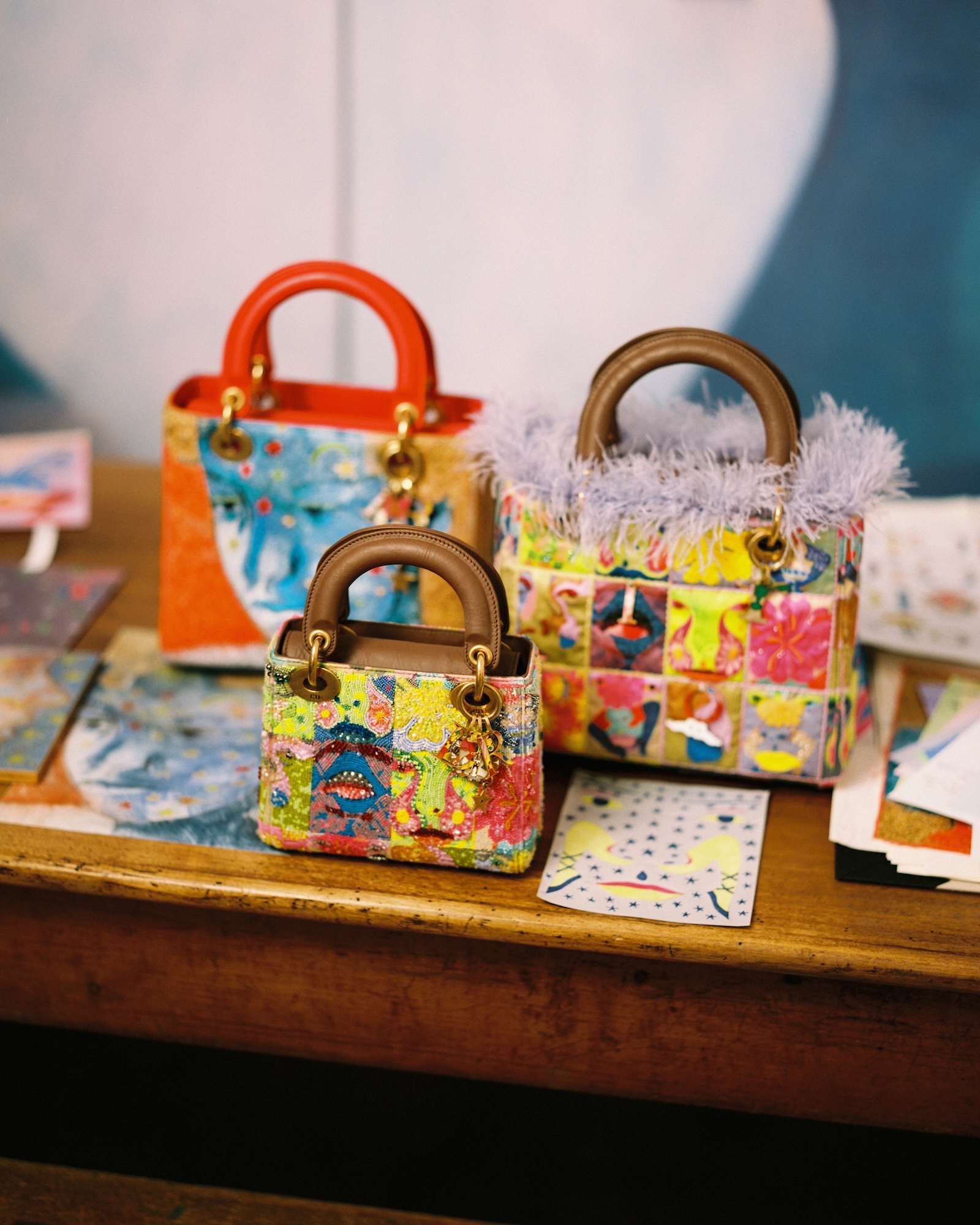
For Dior Lady Art #10, Inès Longevial designed three Lady Dior models: the first in multidirectional thread embroidery representing a starry face, the second in glass bead embroidery, and the third in patchwork edged with feathers. ©Marion Berrin
Sitting in front of the audience, Inès Longevial spoke about this adventure: ‘It’s a complicated exercise, but a fascinating one. In Paris, we saw all 100 bags together and it’s amazing how different they all are! Each one reflects the artists’ work at a given moment in time, and if I had to redo these three bags today, they wouldn’t be the same: they are a testament to my work at a particular point in time.’
One of them stands out for its uniqueness: it depicts a woman’s face painted in blue with stars. Inès Longevial’s work features many starry faces, and when the artist learned about Christian Dior’s lucky star, she saw it as a nod to her own work.
According to legend, on 18 April 1946, on his way to a meeting with textile industrialist Marcel Boussac, who had agreed to finance his couture house, Christian Dior stumbled upon a metal star that had fallen off a horse-drawn carriage. The superstitious man took it as a sign of destiny. This star, which has become one of the house’s codes, is preserved in its heritage and followed him until his last breath in 1957. ‘I didn’t know this story. I had already planned to work around the star and took the idea even further: it can be found in all three bags,’ says the artist.
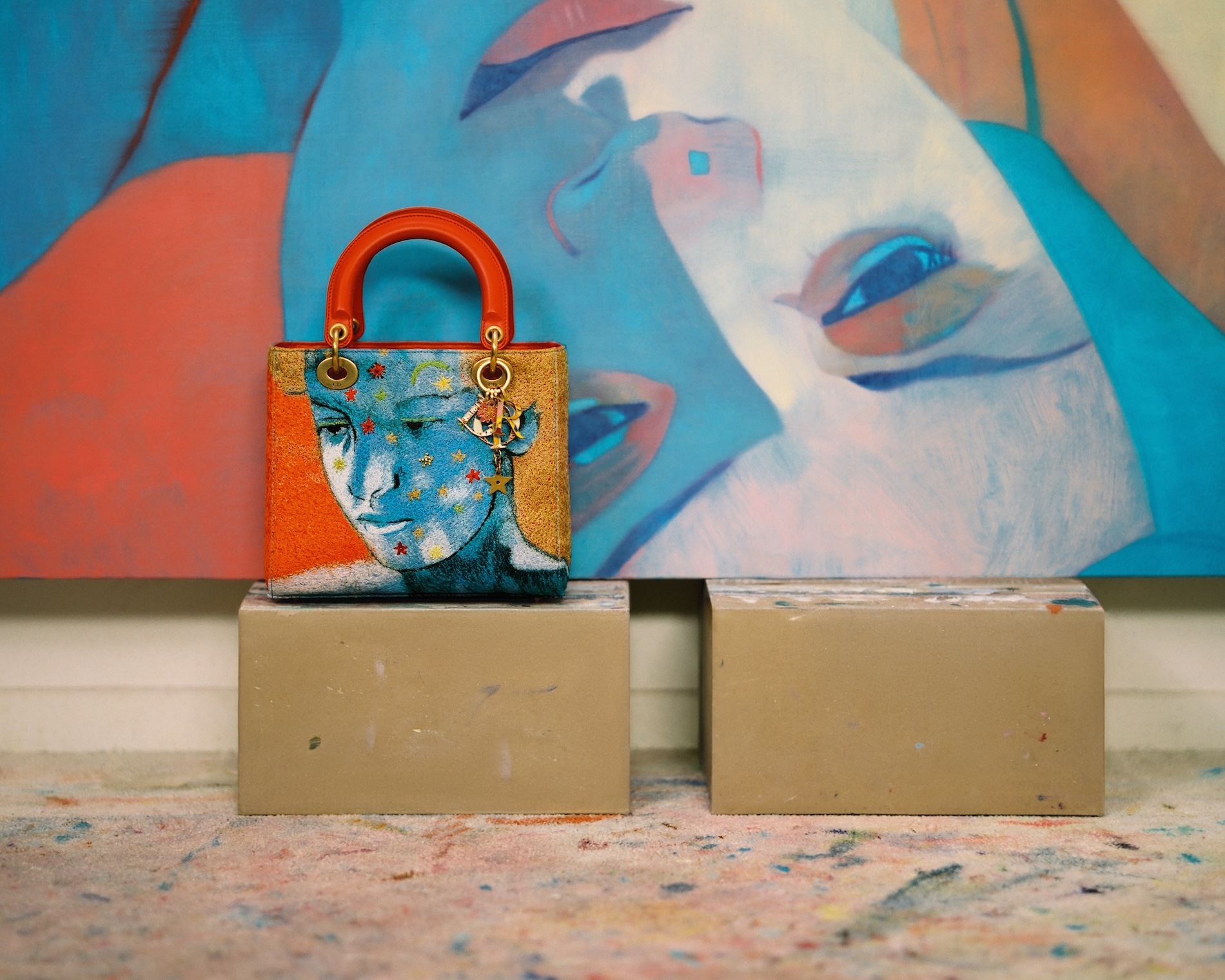
The idea behind this reinvention of the Lady Dior bag was to recreate the look and texture of the original work, which is a pastel portrait ©Marion Berrin
From a distance, it looks as if the face has been painted with broad brushstrokes, but when you get closer, you discover that it is actually embroidered with intertwining threads. ‘It’s a revolutionary technique specially developed for this bag that had never been done before,’ explains the artist. ‘The intertwining threads create new colours, a bit like in painting.’
Did she visit the workshops to see how the embroidery was done? ‘Unfortunately, I couldn’t because the workshops are in Italy,’ she replies. “The idea was to reproduce the look and texture of the original work, which is a pastel with turpentine. You can really see the brushstrokes blending from one area to another. And that’s what we tried to recreate in this embroidery. I was offered several other possibilities, which were just as incredible, and it was very difficult to choose because they were all so beautiful! In the end, I chose this technique.”
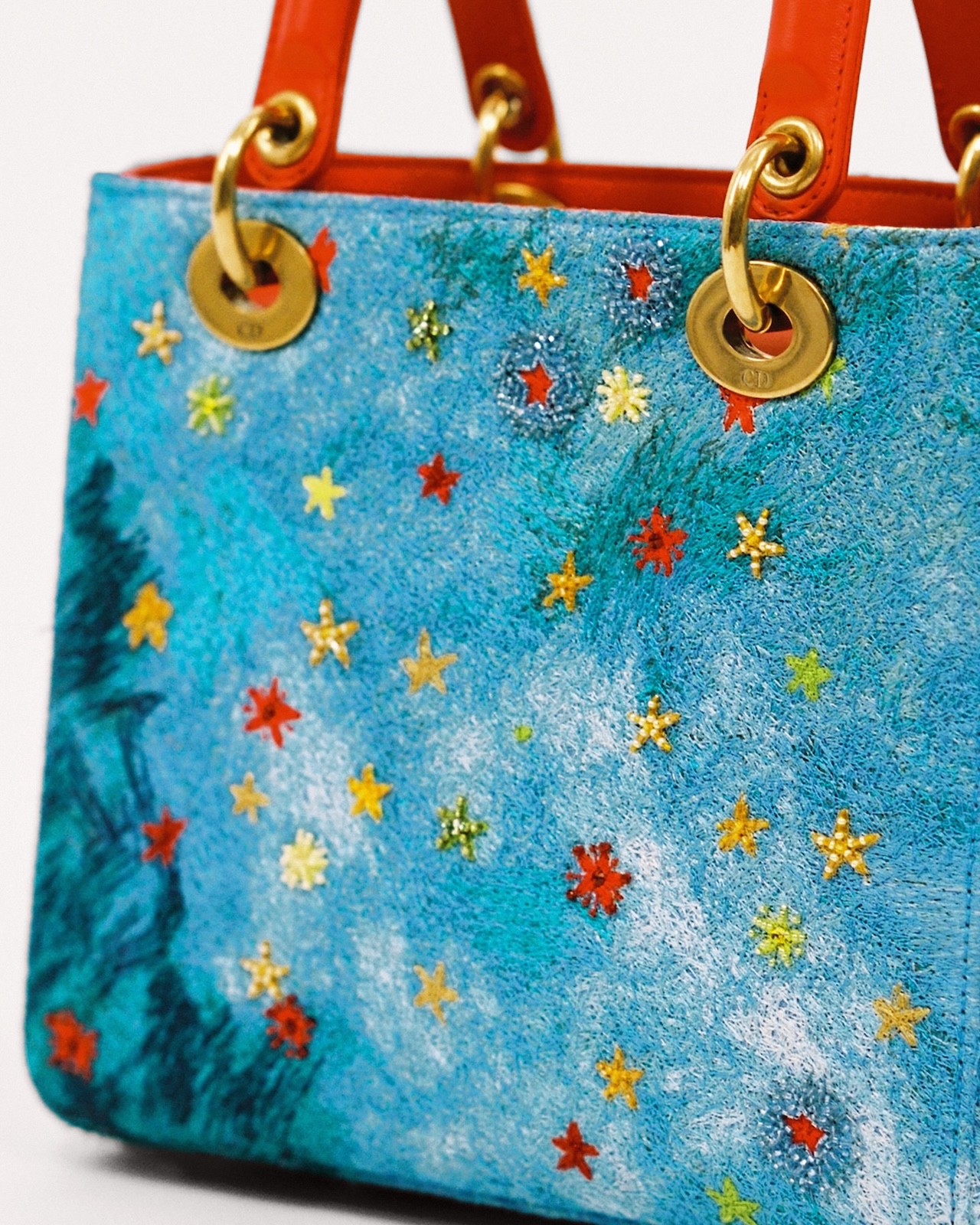
Dior Lady Art #10, by Inès Longevial, detail of the multidirectional thread embroidery that gives the effect of brushstrokes © Federica Livia
What role does the star play in her work and in these Starry Faces? “I draw and paint every day, and when there are moments that are emptier than others, I let myself be guided by an intuitive desire and end up decorating the faces. This allows me to find combinations of colours and shapes that will emerge. The starry face came to me naturally two or three years ago, and I created a whole series of them. There’s no story behind it. The star, which amazed me, allowed me to compose a face and project sensations and emotions onto it,” she explains.
The guests had the opportunity to handle each of the models and examine them from every angle. ‘Look, there are even stars inside the bag! It’s so poetic,’ marvelled one customer.
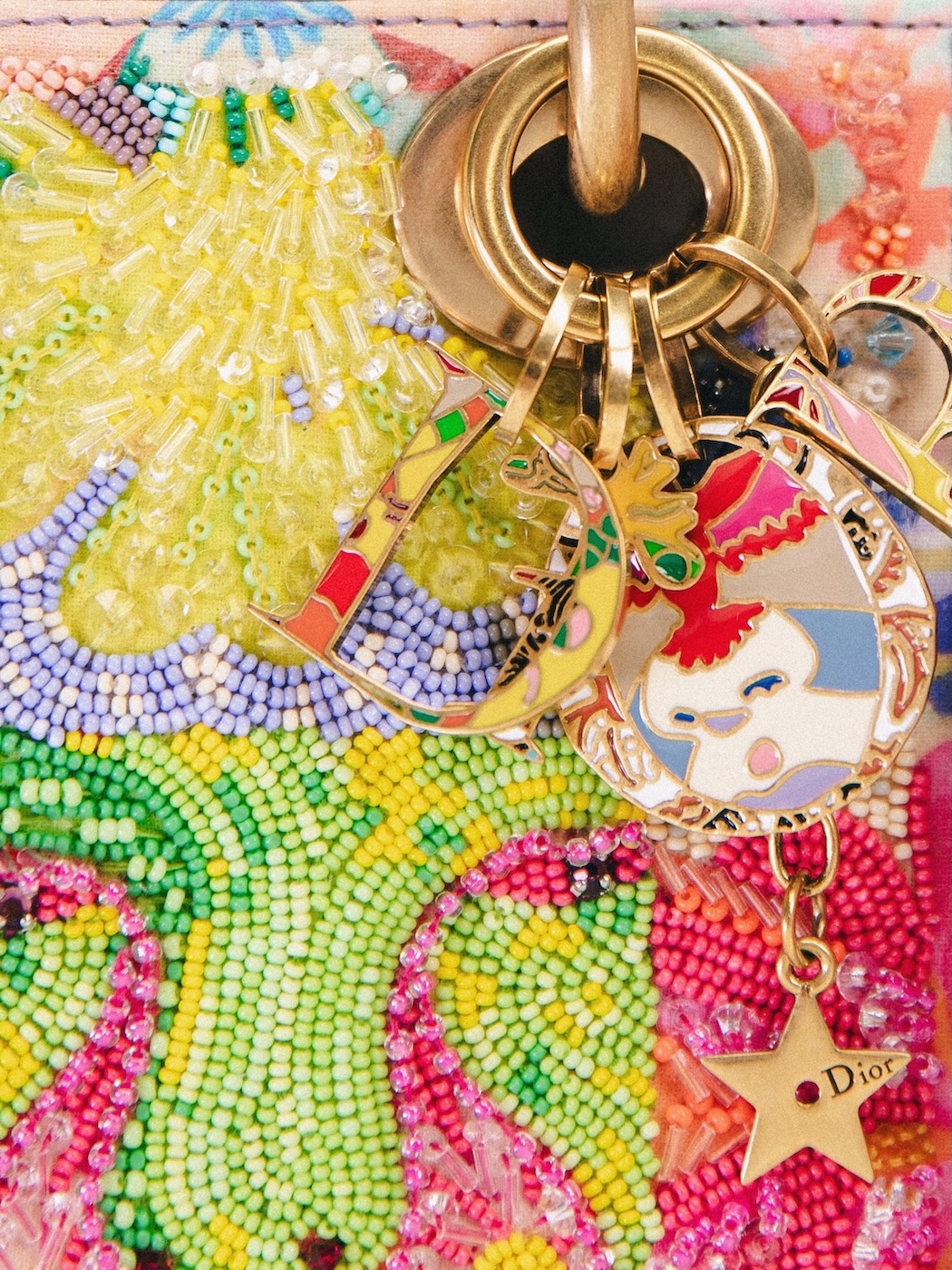
Dior Lady Art #10 by Inès Longevial, detail of the craftsmanship. © Federica Livia
The artist took the time to discuss each model. Regarding the patchwork one, she explained that she learned this technique from her grandmother. “I started working with patchwork because I needed to assemble my work and visualise it in its entirety. And when I plan to move from 2D to 3D, which was the case with these bags, I use this technique because I feel it will be able to say everything I want to say. I wanted this bag to be joyful, overflowing, and not immediately understandable. I wished for it to be like a friend, a comforting object, a presence, hence the assembly of all these charms that refer to the work of Niki de Saint Phalle. I wanted people to be surprised when they looked at it and saw these little scenes, like playing cards. Each bag is an assemblage of all my work,” she says.
A collaboration with Dior, which opens the doors of its workshops and offers endless possibilities, inevitably leaves a lasting impression on an artist and their work. ‘Since I worked on these bags, I’ve been obsessed with rhinestones and sequins,’ confides Inès Longevial, ‘and right now, I want to work on rhinestone and sequin masks.’ A new journey is about to begin…
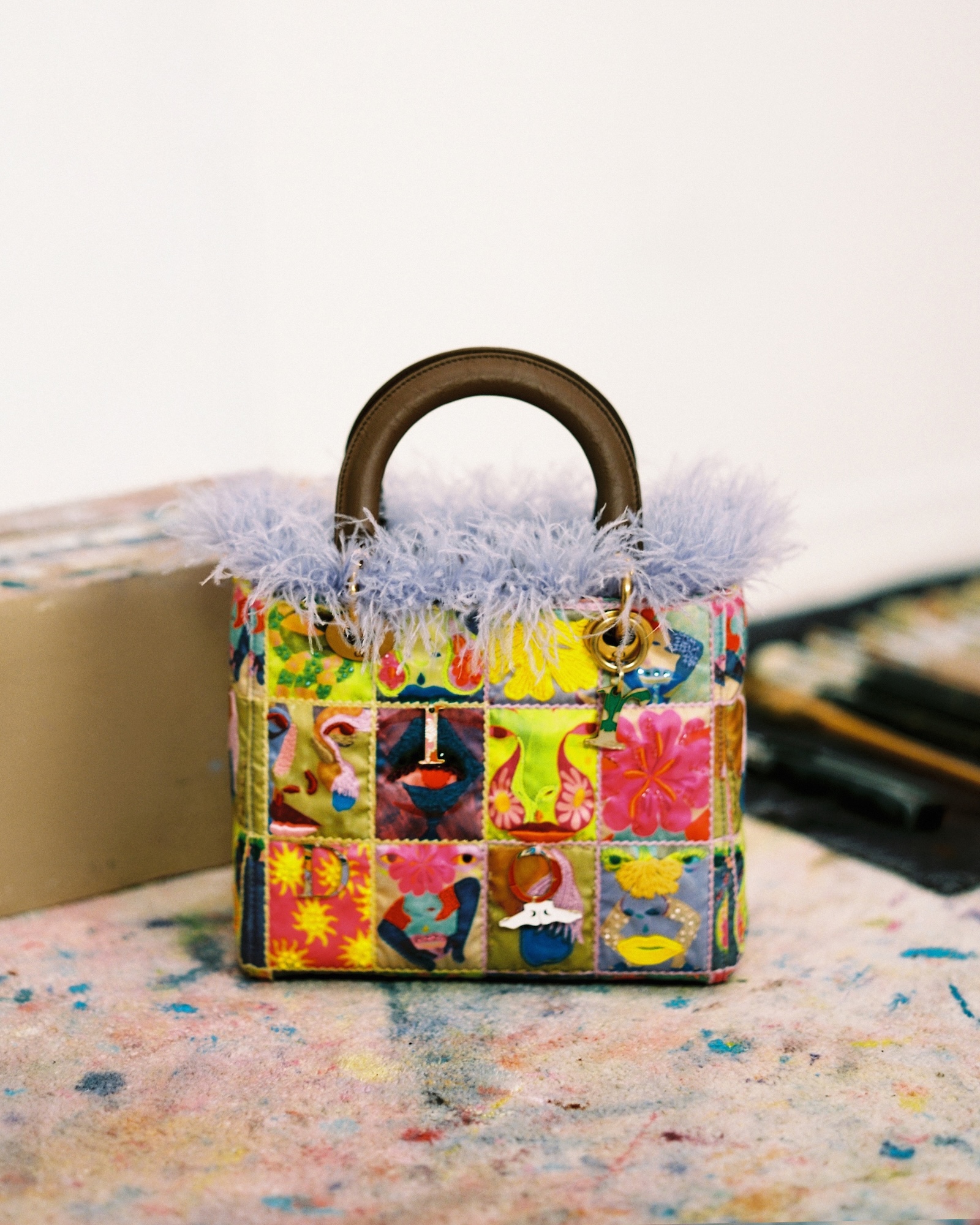
Regarding the patchwork model, Inès Longevial explained that she learned this technique from her grandmother © Marion Berrin