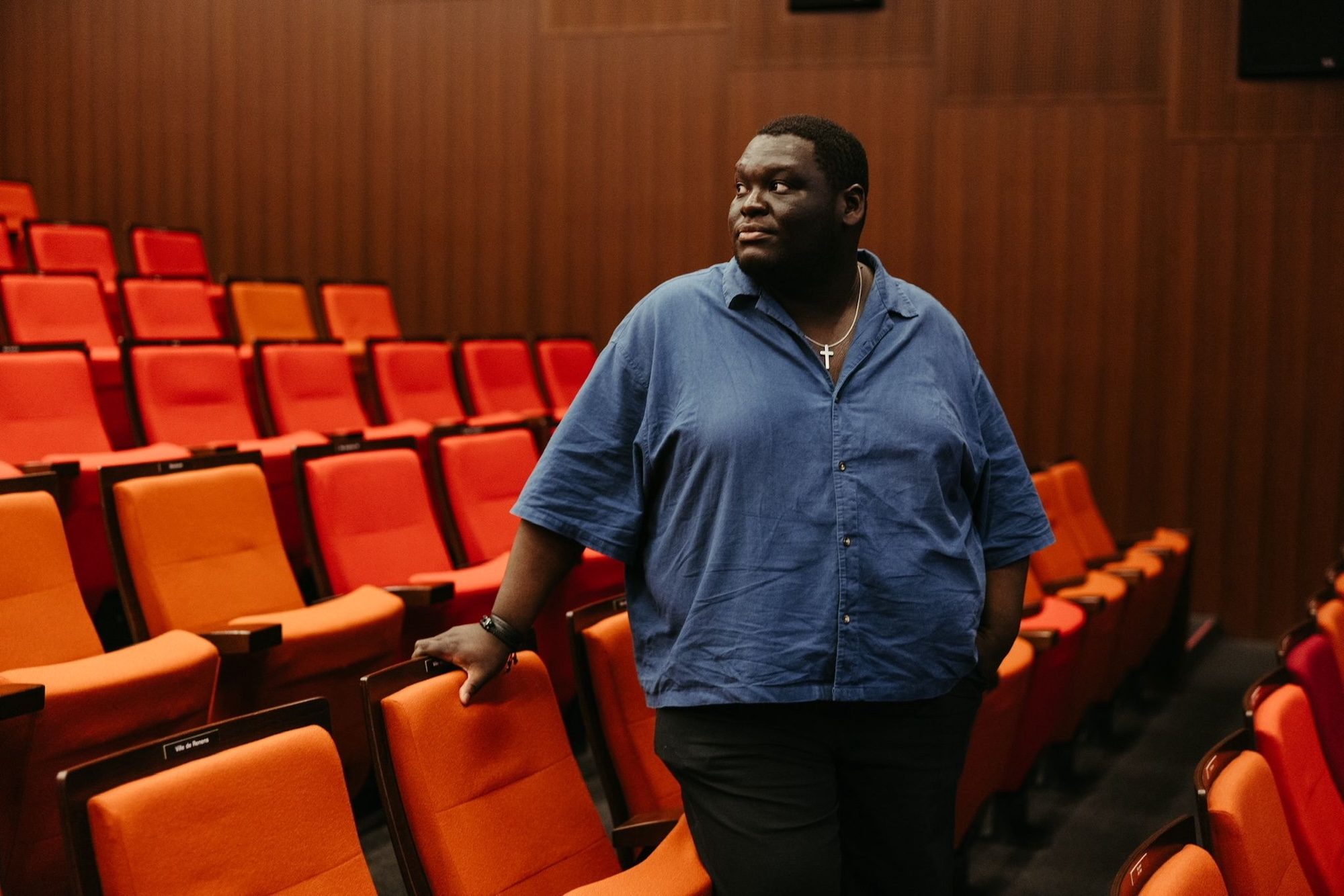

In 4 minutes and 28 seconds, photographer Joel Quayson questions his identity
Winner of the 2025 Dior Photography and Visual Arts Award for Young Talents, Joel Quayson has made a name for himself with an introspective video that explores the realms of identity. Entitled *How do you feel*, it reveals the tensions between cultural heritage, personal identity and social perception. Isabelle Cerboneschi
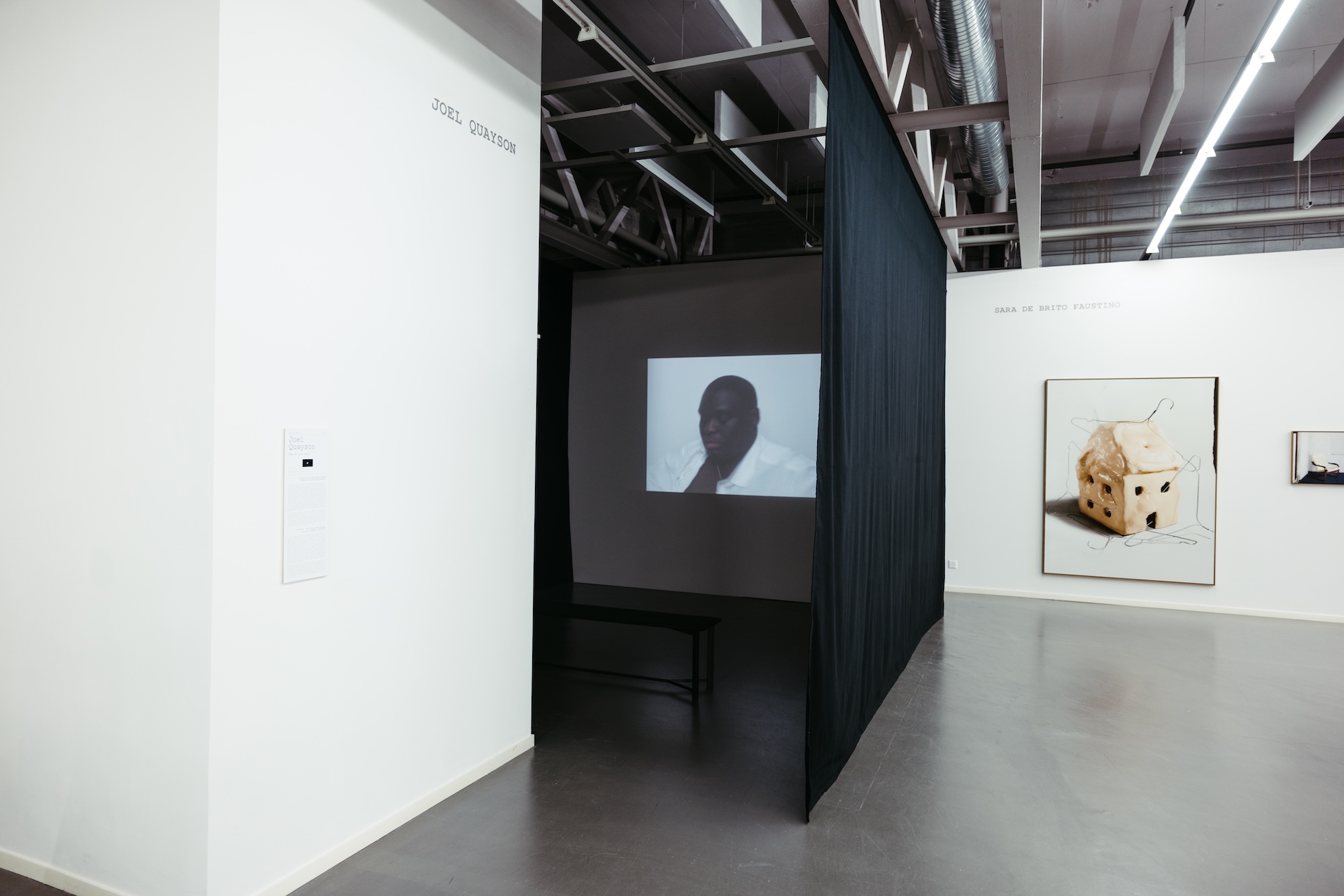
Joel Quayson’s video How do you feel explores the tensions between cultural heritage, personal identity and social perception. Photo: Nicolas Stajic for Christian Dior Parfums
On 10 July, in Arles, where every summer photography becomes a universal language, Joel Quayson’s vision stood out with rare intensity. Winner of the 8th edition of the Dior Photography and Visual Arts Award for Young Talents—a prize created in 2018 by Christian Dior Parfums, in partnership with LUMA Arles and ENSP Arles, and presented as part of the Rencontres d’Arles—this young artist, trained at the Royal Academy of Art in The Hague, was recognised for his introspective film How do you feel?
In this stripped-back work, lasting 4 minutes and 28 seconds, he explores different layers of identity—whether cultural, intimate or social—by revealing himself unfiltered before the camera. Between his silences and his transformations—with or without make-up – Joel Quayson creates a tension between the expectations inherited from his Ghanaian and Christian upbringing and the assertion of a queer identity, in an artistic gesture that is both raw and sensitive.
Unanimously selected by a jury chaired by Japanese photographer Yuriko Takagi, his work was praised for its emotional depth and its ability to resonate with a universal quest: who are we really?
Although he has only been practising for a few years, Joel Quayson is already part of a new generation of artists for whom the image is a space for inner confrontation.
His video How do you feel?, along with the works of the artists who took part in the competition, were on display at the L’Elac gallery at Ecal in Lausanne until the end of March. We met the winner.
INTERVIEW
In your video, you repeat endlessly, like a mantra: “How do you feel?”. I’ll put the question back to you: today, Joel Quayson, how do you feel?
Joel Quayson : Today, I feel good. Being here in Switzerland, doing this interview with you, seeing my work on display again – yes, I can say I feel good.
And how did you feel when you found out you’d won the Dior Prize for Photography and Visual Arts for Young Talents?
When I heard my name announced, I was very surprised because I was competing against other candidates who’d already graduated or who were far more professional. I was in my second year and I’d mainly entered to see what it was like to compete. So when I heard my name announced, I found it hard to believe, but I was very proud.
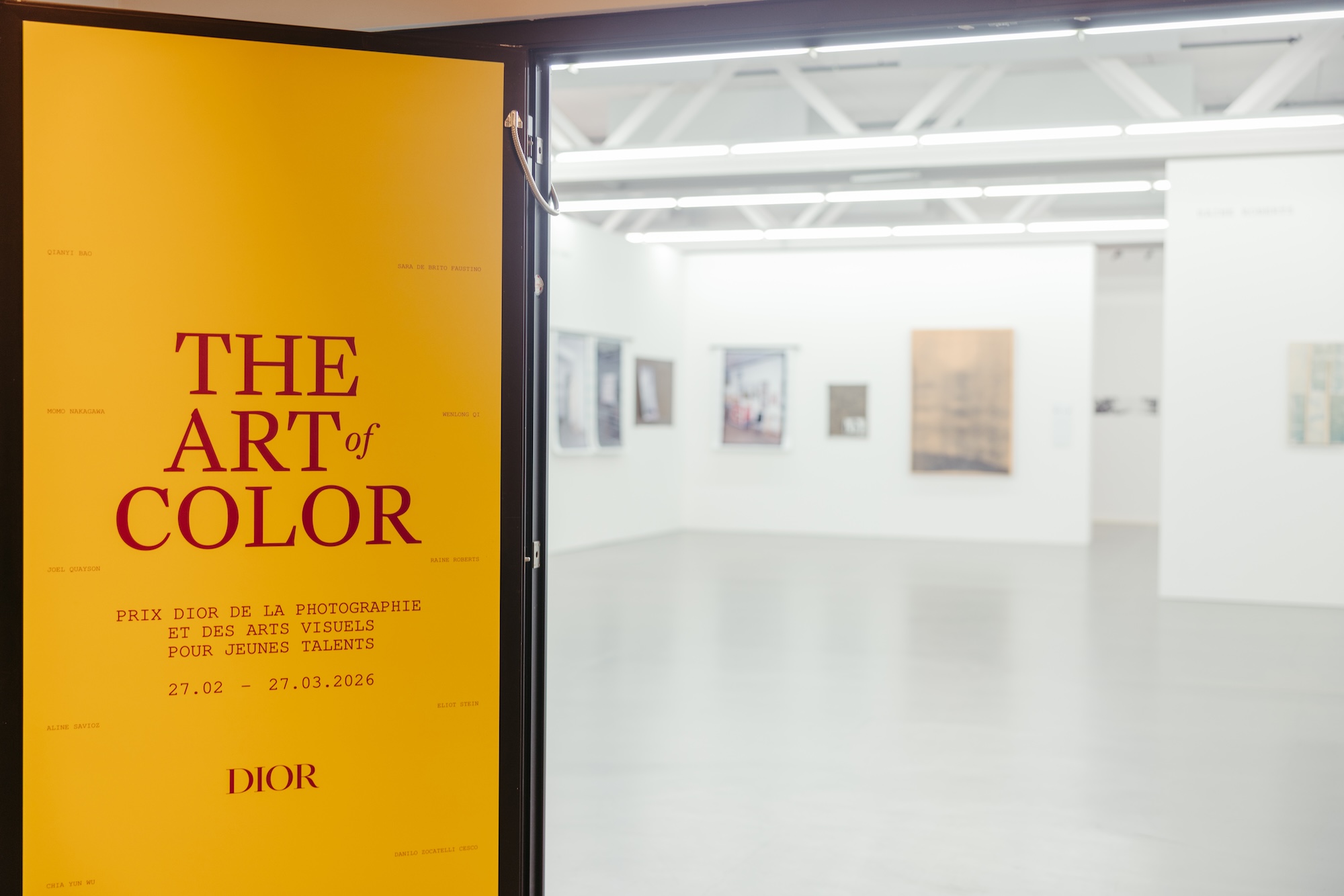
Photo: Nicolas Stajic for Christian Dior Parfums
Do you mean that you didn’t participate to win?
I just wanted to see how the competition worked. And then I discovered the other participants’ work and was really impressed. I felt that any one of them could have won instead of me. But when I heard my name, I thought to myself: ‘Well, I suppose I’ve won.’ This award also showed me that I’d come a long way since I started out. I can now consider myself an artist – a photographer, at any rate.
You were born in 1997 in the Netherlands to a family of Ghanaian origin. How does this dual cultural heritage influence your artistic vision today?
Photography has helped me understand my identity better. Because before photography, I didn’t even know who I was. I used to do various activities like football, handball and other sports, but photography has allowed me to open up more; it’s helped me feel more at ease, have easier conversations with people, and tell my story. It’s influenced my perception of who I am and of my culture.
And now, can you say: “I am”?
Not really, because whilst working on a project like this – and on others that will soon see the light of day and which I’m still working on – I feel as though I’m always searching for myself. I haven’t really found myself yet.
Could one consider you to be your own work of art?
I’m very moved by what you’re saying, but I’m a work in progress. I think that in five or ten years’ time, perhaps, I might be able to call myself a work of art, but for now I’m still developing and I think I’ll probably stay that way for decades. (Laughs)
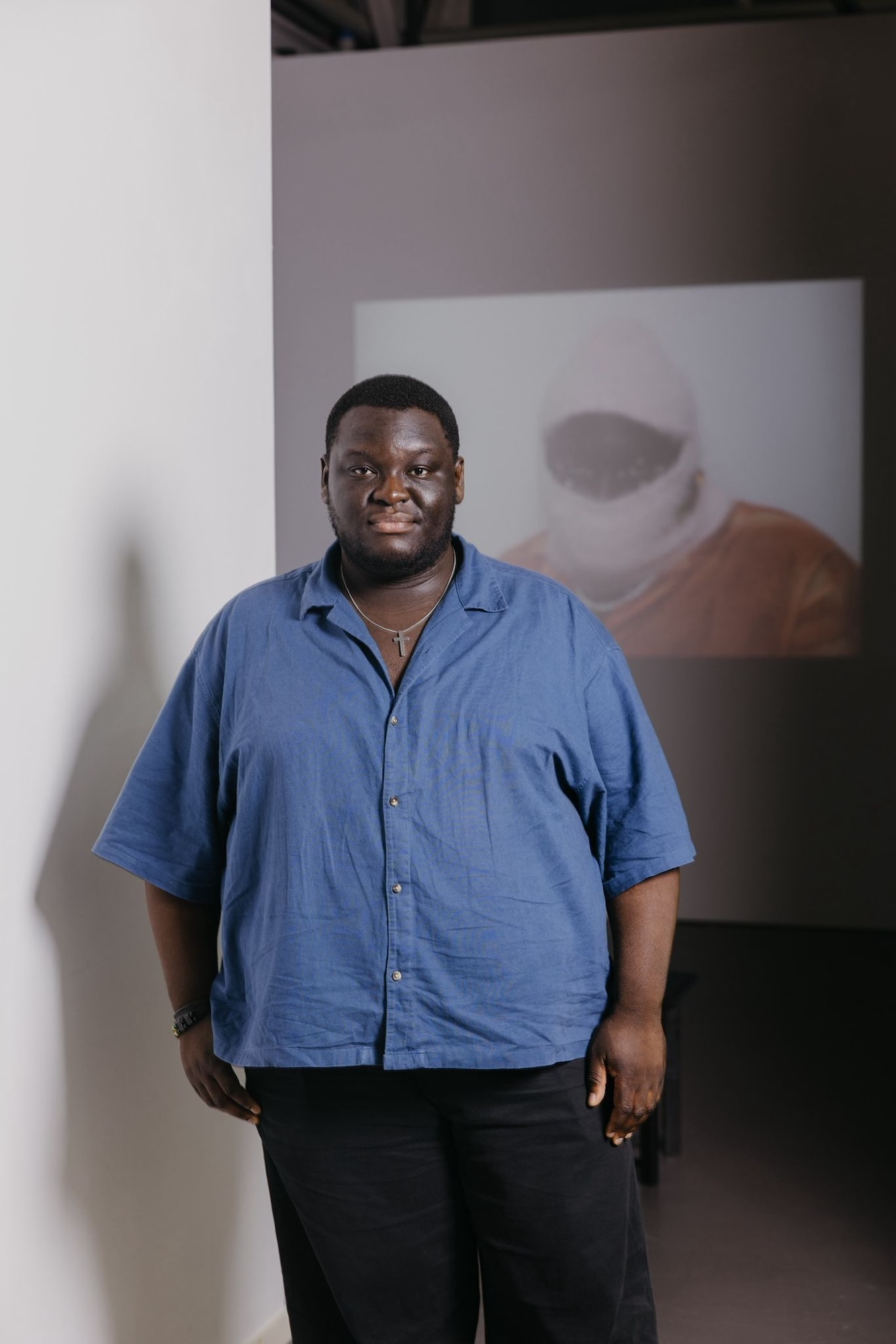
Joel Quayson by Nicolas Stajic for Christian Dior Parfums
What led you to choose video rather than another medium to explore questions of identity, whether in terms of belonging to a country, a family, a religion, or sexual identity?
Photography has allowed me to flourish more, to feel comfortable telling stories through images or videos rather than with words. In a way, it’s like a diary that I’m showing rather than writing.
Your video ‘How do you feel?’ lasts exactly 4 minutes and 28 seconds. Why this short, direct format: was it an aesthetic or emotional choice?
Both. Aesthetically, I was inspired by the way certain photographers or videographers, such as Sharna Osborne, film with a VHS camera and turn that into a still image. I think that in photography, not everything needs to be perfect. It can also be very raw, very ugly, very ‘homemade’. I wanted to do the same. The story I’m telling is my story, the one I’m struggling with and trying to share with the audience, so that they feel the same way, so that they understand how I deal with it. I decided to use video because I felt it would explain how I feel better than still images. I don’t even know how I would have presented it in photos, actually.
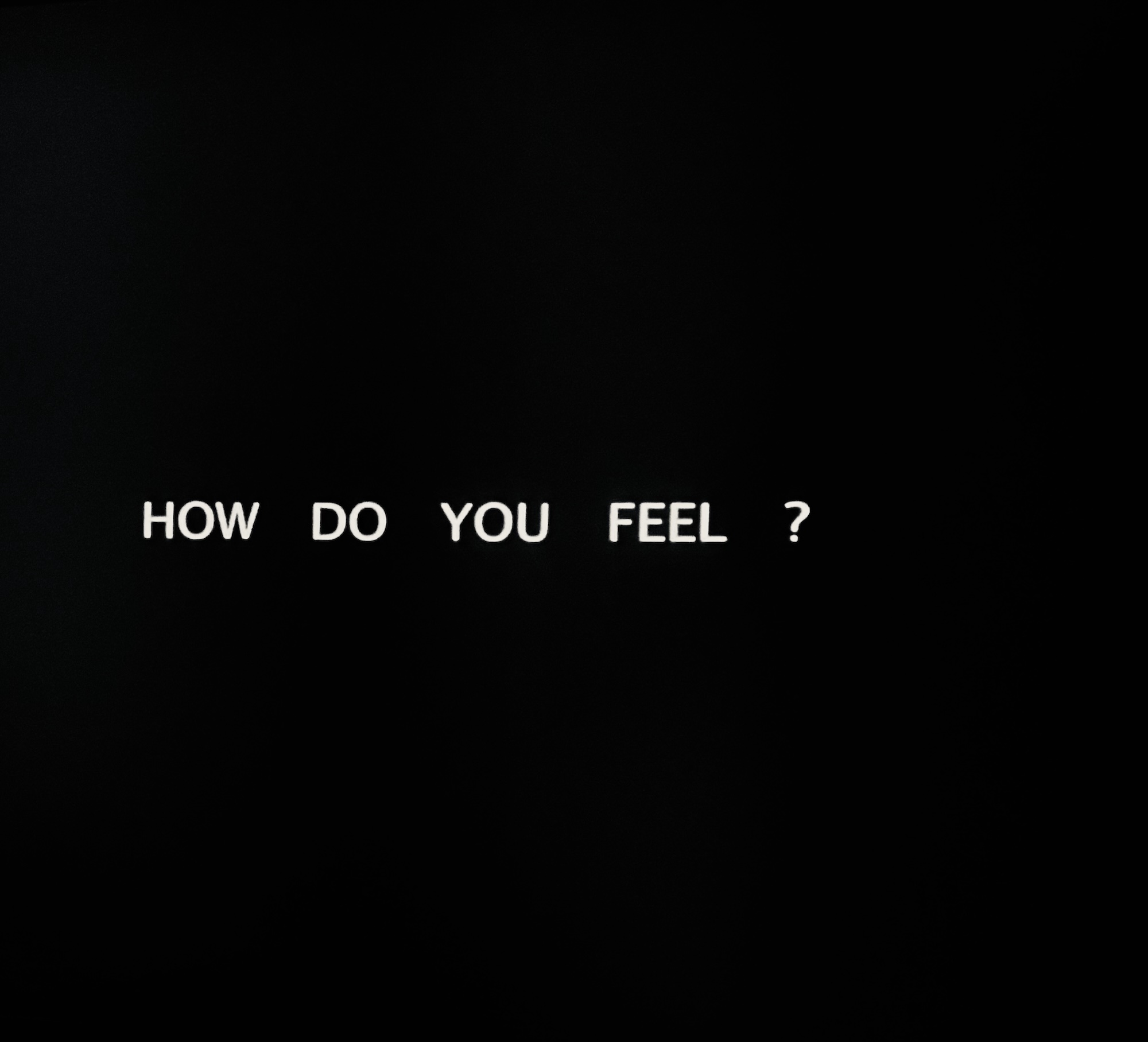
How do you feel?
In this work, you oscillate between two versions of yourself: the exemplary son who grew up in a strict Christian family, and the more fluid being who expresses their freedom through make-up, in particular. Has this work helped you resolve the conflict between, to put it simply, Christianity and queerness?
It depends on me, too. I could show this video to my parents and explain the situation to them, but because of the taboo that exists in our country regarding self-expression or how one wishes to identify, it’s still difficult for me. That’s why I wanted to take this risk, simply to tell my story, in the hope that someone else in Ghana, Europe or elsewhere, who might be facing the same duality as me, might, I hope, find it easier to talk to their parents or to themselves.
You wear a Christian cross: what does it mean to you? Is it an important symbol that says a lot about you, or is it linked to your family?
It’s funny because originally, it was a cross with a pearl attached, symbolising my two sides. It was part of a Halloween costume where I dressed up as an angel. But I still consider myself a Christian; it’s the religion I was brought up in. This cross is aesthetic, but I also see it as a symbol: I sleep with it, I wear it every day, and I pray too, even if it’s not in the same way as my family. I’m following my own path, which is more open and different.
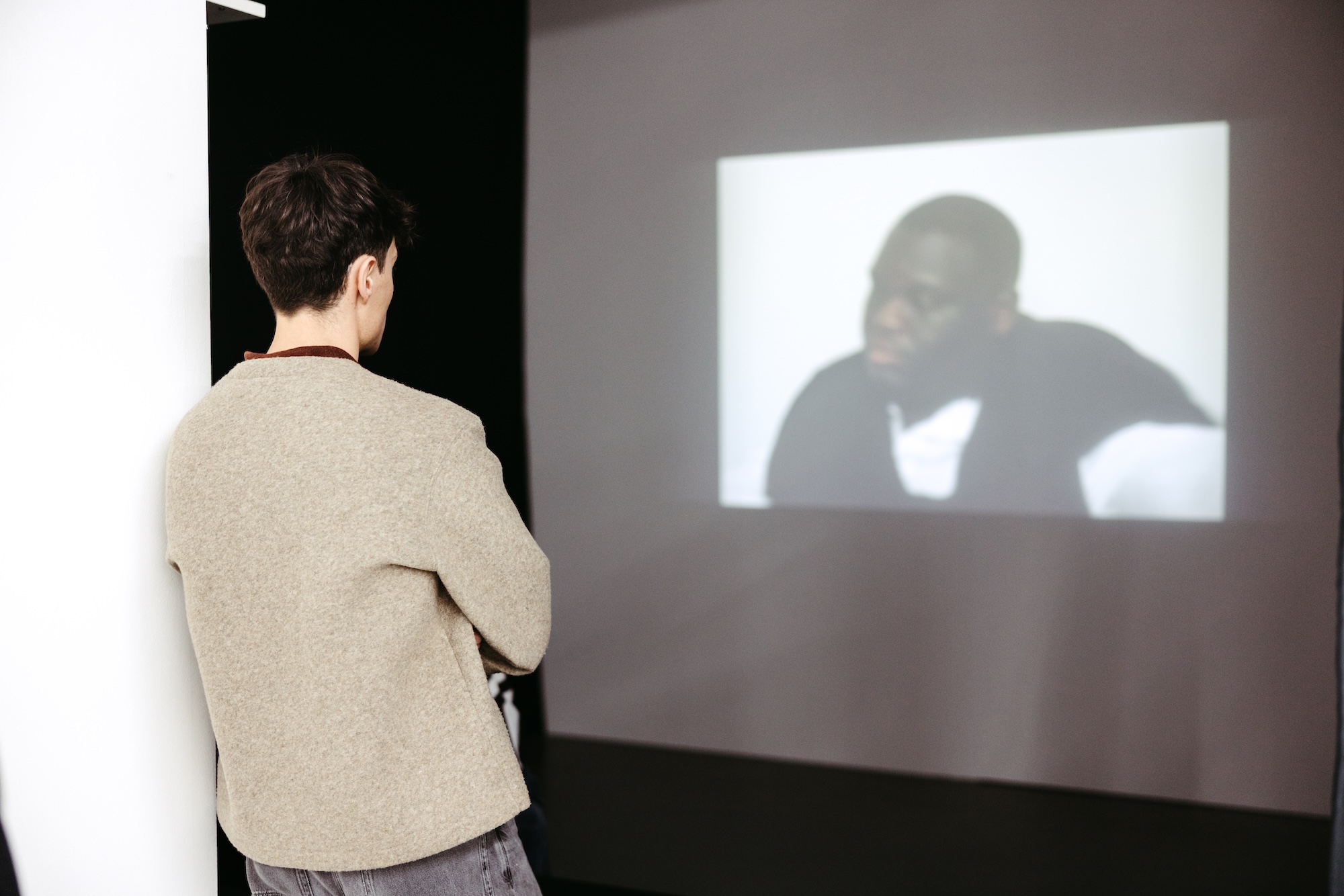
‘When I received a whole host of comments from people telling me, for example, that they’d been moved to tears, I felt that my work had struck a chord with people.’ Photo: Nicolas Stajic for Christian Dior Parfums
Have you been asked to choose between these different facets of your personality, or is this pressure you put on yourself?
It’s clearly personal pressure, because I’m torn between these two identities. How can I present myself as a single person? When I go to school, when I’m with my friends, when I go out or to a club, I feel comfortable expressing myself, even though I no longer wear make-up or rhinestones. I just dress as I do today and I always feel at one with who I am inside. But when I’m with my family, I can’t really tell them much, nor talk about my interests, nor share my feelings or my love life as I do with my friends, because it’s very far removed from who they are and I don’t know how to talk to them about it.
You mention your family. Have they seen your video?
No. My family knows I won the competition and that my work was exhibited at MAP’s Off Screen. I told them everything, and yet I still have this anxiety about showing them my work and having to answer all those questions like: ‘Why did you put that make-up on yourself? What does it mean?’ It would be very easy to just show them, but no.
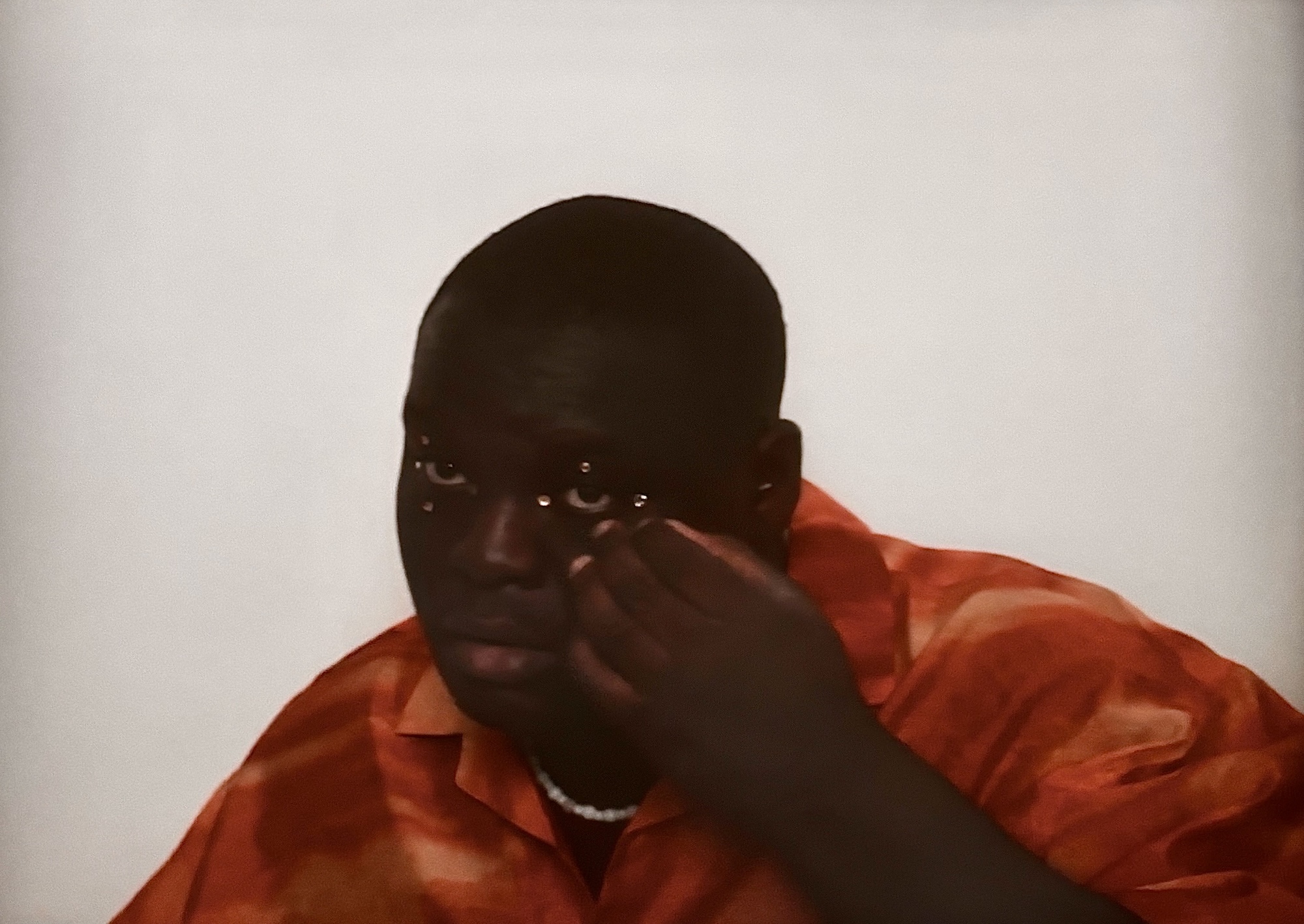
In this video, Joel Quayson shifts between two versions of himself: the exemplary son who grew up in a strict Christian family, and the more fluid individual who expresses his freedom through make-up, among other things.
But in any case, they must have been proud.
Yes, they were very proud, because once again, I come from a culture where photography isn’t taken seriously. In my country, in my family, a ‘real’ job is an office job—a lawyer, for example, or one of those prestigious professions—but I can’t see myself going down that path. I see myself primarily in the arts because I love expressing my emotions through what I do.
By filming yourself looking the audience straight in the eye, what did you want to provoke in them: empathy, unease, an inner dialogue, a mirror effect, a reflection of their own duality?
Well, to be honest, when I made this video, I didn’t have any of that in mind. The idea was simply to look at a camera, film myself and see what happened. Later, when I showed it at school, people were very moved by it, which I didn’t understand at first. But then, when it was selected for the Dior competition and shown in Paris, and I received loads of comments from people telling me, for example, that it had brought tears to their eyes, I felt that my work had struck a chord with people. I never would have thought my video would make people cry, especially men, but I can see now that it acts as a mirror. And when I receive these comments on social media or in person, I don’t know how to respond, but it warms my heart. I’m very proud of it, very grateful.