
What does ‘Mazal U’Bracha’ mean?
It is a tradition unique in the world; it exists only in the diamond and gemstone industry. A handshake is as good as a signed contract. The value of one’s word has been one of the cornerstones of this highly discreet trade since the 19th century. But where does this tradition come from, one observed by all merchants and traders, regardless of their religion or nationality? Photos: © Scott McDermott. Text: Isabelle Cerboneschi
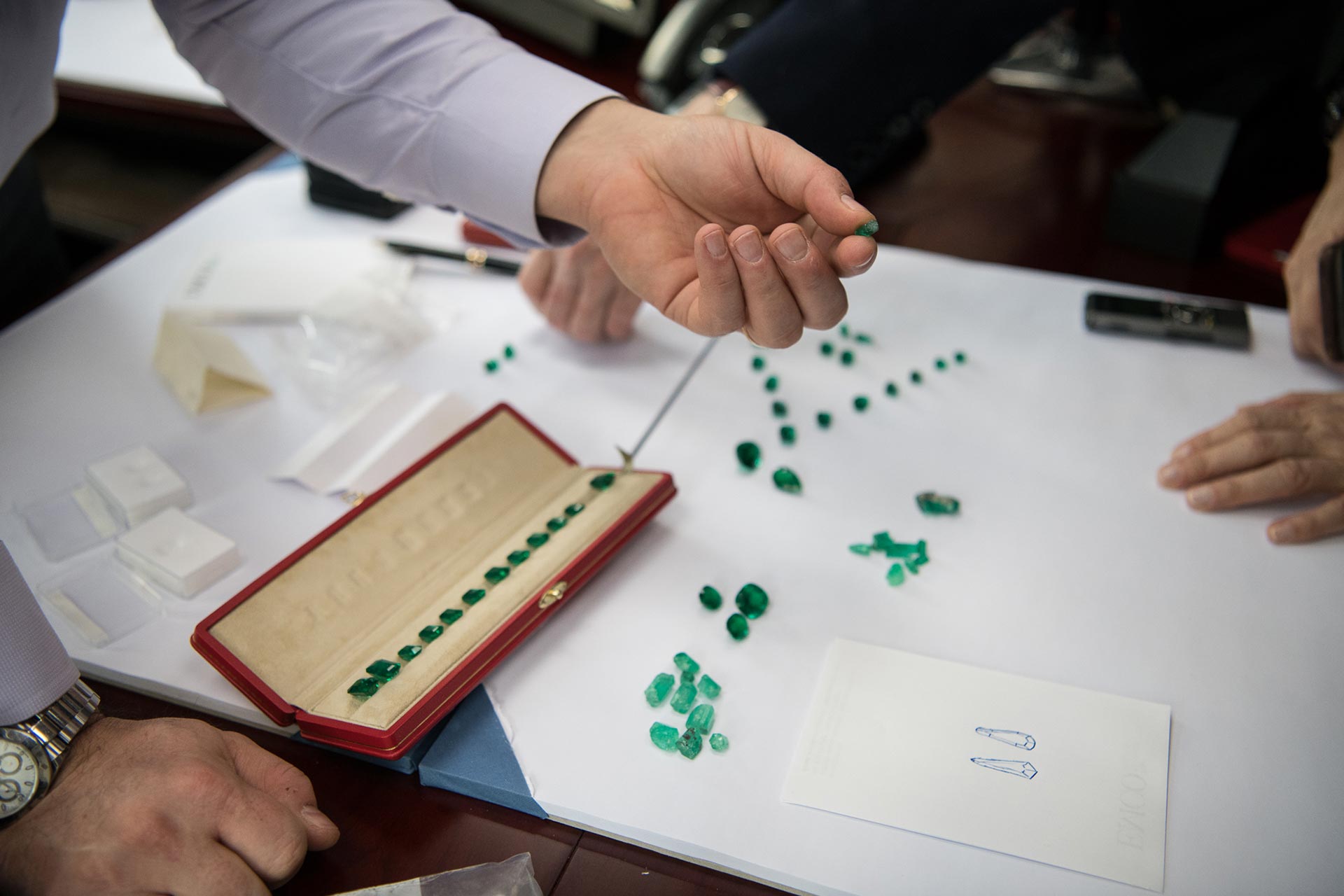
The scene took place at the offices of Emco Gem Inc in New York, a company specialising in the trade of Colombian emeralds. On the table on the left, Oren Nhaissi shows me a selection of emeralds; on the table on the right, Thomas Faerber, a dealer in precious stones and antique jewellery and co-founder of the GemGenève fair, admires a stone and talks with Yaron Nhaissi, the brother of Oren. They are speaking in hushed tones.
– Did you buy it? I ask Thomas Faerber.
– No, I didn’t say ‘Mazal’, he replies.
– Mazal?
– I didn’t say ‘Mazal U’Bracha’. Those are the words we say when we close a deal in our line of work; it’s as good as a contract,’ he continues.
Ever since that day, I have been constantly trying to understand where this tradition came from – a tradition that would seem like a utopia were it not real and rooted in custom for over a century.
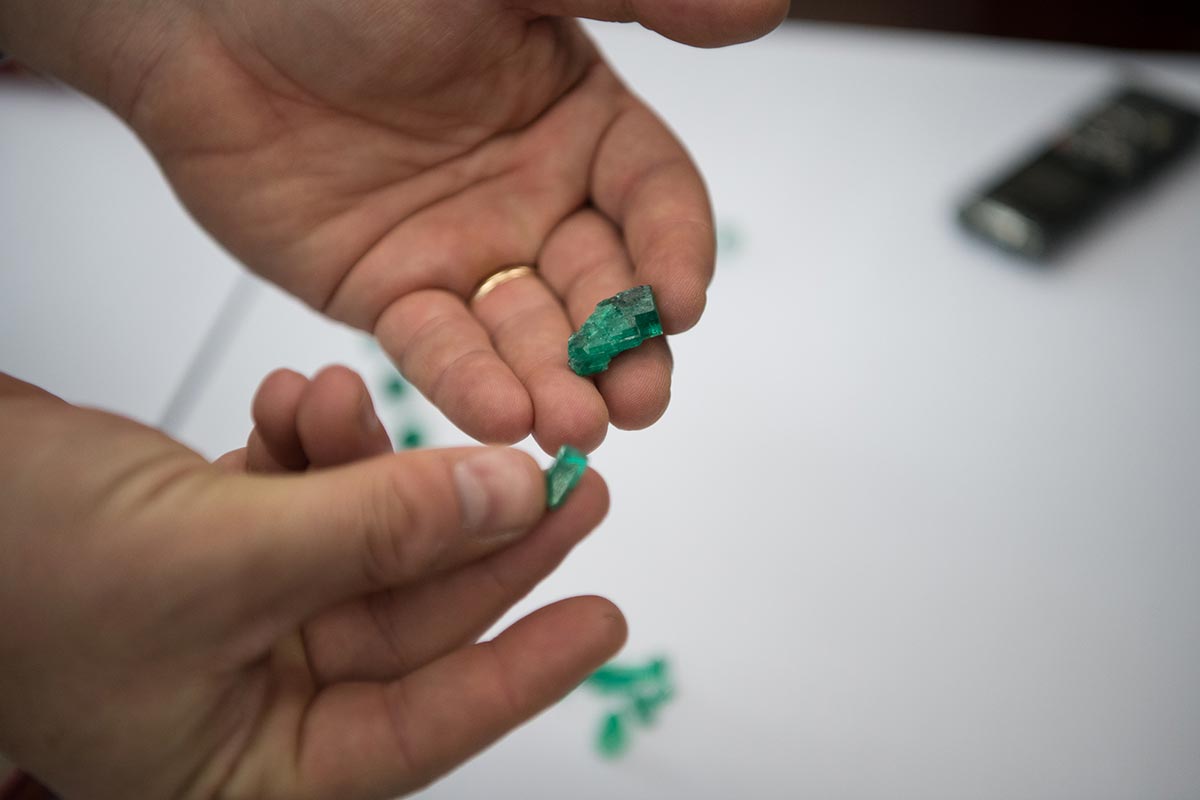
In the gemstone industry, giving one’s word with a handshake whilst saying ‘Mazal U’Bracha’ is one of those unwritten rules that govern trade. And that is enough to exchange a stone, whatever its value. ‘By saying “Mazal”, you give your word. There’s no need to sign a contract. It’s fantastic! It’s an amazing industry, based on trust,” explains Lili Goldberg, the widow of William Goldberg, who was one of the kings of New York’s Diamond District. Indeed, billions of dollars change hands every year—or rather, are transferred from one account to another—on the sole basis of a given word. “When you say Mazal U’Bracha, the sale is done,” explains Jacob Gueron of Heritage Gems, L.L.C. “You can no longer say ‘I regret it’ or go back on your word.”
It means Good luck! I give you my blessing
But what does this expression mean? “Mazal means ‘good luck’ and Bracha: ‘I give you my blessing’.” The stone has passed into your hands and with all my heart, I hope you have good luck with this stone, that you may sell it, and I bless you,” explains Rabbi David Leybel of Leybel-Elieli Diamonds Ltd.
“There is a lot of superstition in this trade,” he continues. When we say someone has ‘a bad hand’, it means that when you buy a stone from them, you don’t make a profit. When we say ‘I have a good hand with you’, it means that a rapport has developed between the buyer and the seller, and that every time one buys from the other, they make a profit. You have to give the stone with all your heart so that it can be sold, so Mazal U’Bracha is a way of saying: ‘You’ll sell your stone well because I’ve given it to you with all my heart.’

But who first uttered this phrase? Opinions differ, depending on the source. “Some claim it comes from Maimonides, but he wasn’t involved in the diamond trade,” points out Rabbi David Leybel. “It seems this saying already appeared in the 18th century, in certain contracts.”
“Jews were heavily involved in this trade, starting with the refugees who went to Holland after being expelled from Spain in 1492. Originally, the diamond exchange was based in Holland. The Jewish community in Amsterdam was very open-minded; it was made up of Jews who had come from Italy, Spain and Portugal, such as Spinoza’s family, who had fled the Inquisition. There was a great spirit of openness there. Later, the exchange moved to Antwerp. As it was run by Jews, this phrase became part of the tradition. It’s a way of saying: ‘deal done’. And if the person who said ‘Mazal’ reconsiders, they can be sued because it’s as if they’d signed a contract. When I started in this trade, we’d say ‘Mazal’, tear off a small piece of paper, write the number of carats and the price on it, and sign it. A promise was as good as a contract.”, explains Rabbi David Leybel.
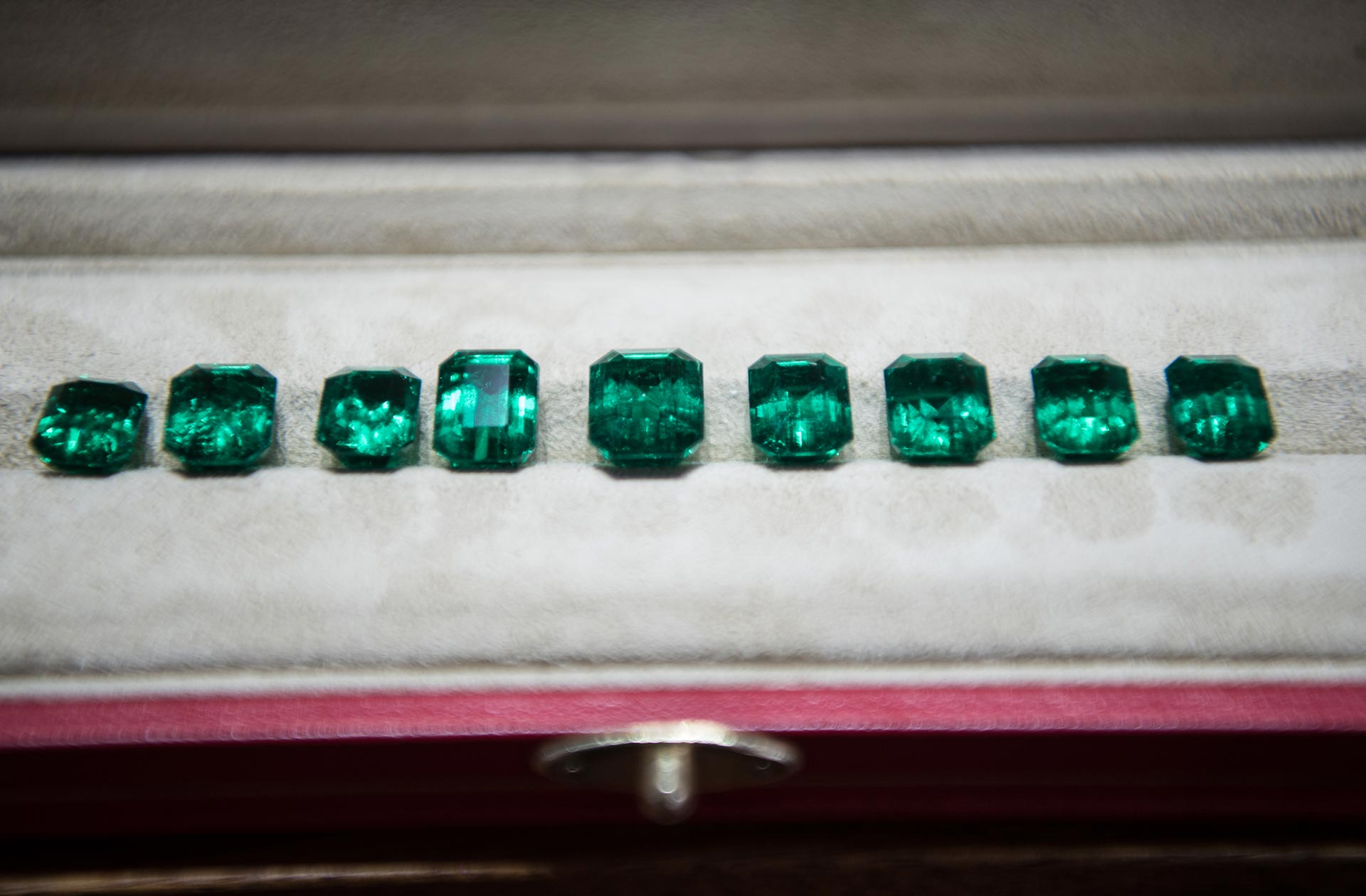
“This phrase has been in use since the 19th century, and it originated at the diamond exchange in Amsterdam, where diamonds were cut,” explains Eli Nhaissi of DDI Diamond Distributors, Inc, in New York. “At the time, the Gemmological Institute of America (GIA) didn’t exist yet, nor did the Rapaport Diamond Report (used as a basis for setting the price of cut white diamonds, ed.). There was a great deal of uncertainty surrounding rough diamonds. It was a highly speculative trade. You could make huge profits or suffer heavy losses with a rough diamond. So traders began using the word ‘Mazal’, to avoid losing money. Then came ‘Bracha’, which was a blessing. “When a diamond was sold to you, the first thing people wished was for you to have good luck, not to lose money, and then to know how to use that money in good health, with joy and generosity, to spend it doing good around you, to give to charity, to your family, to your friends… That is why these two words were used together.”
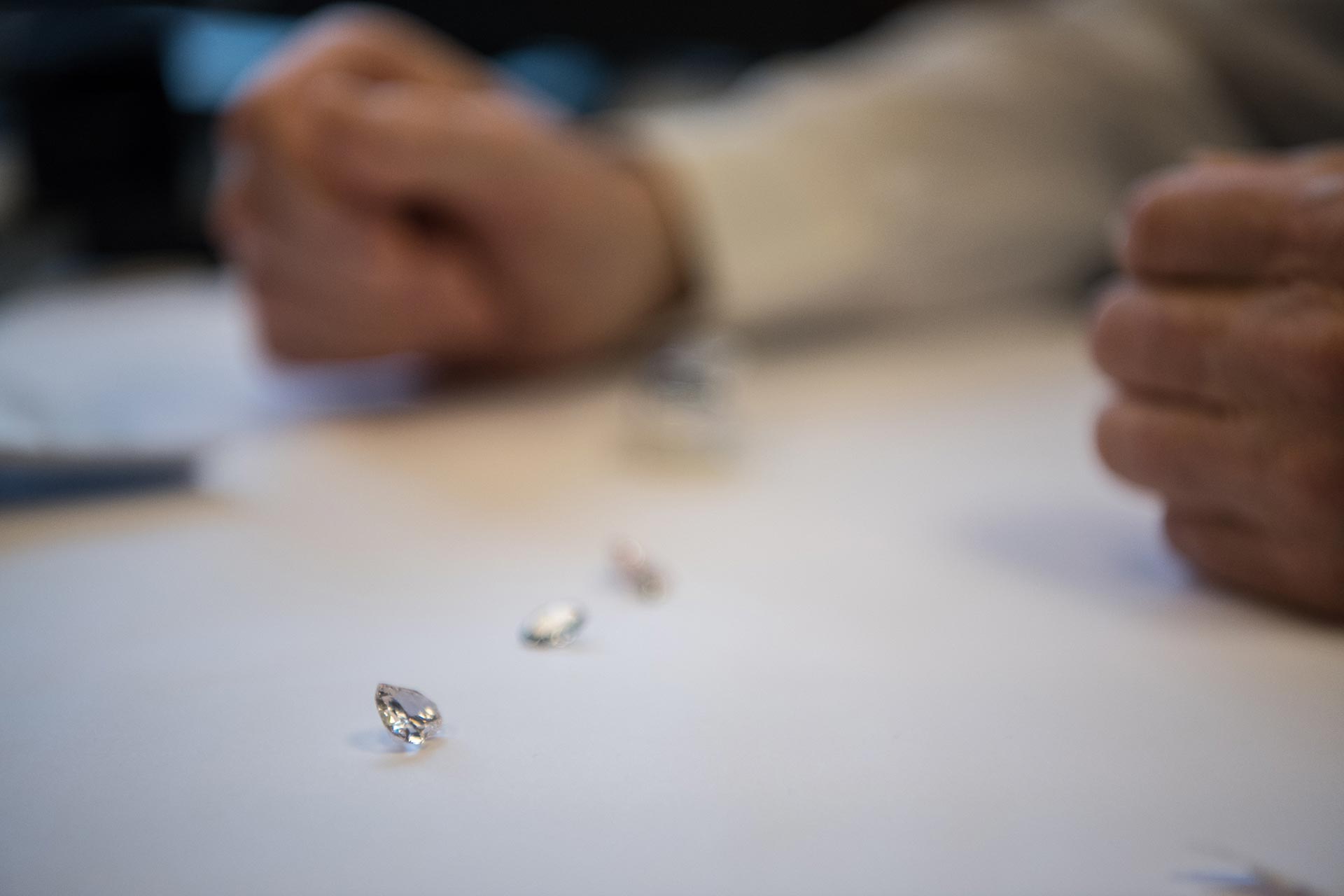
“Not long ago, and for the first time, we had to engage a law firm to protect our licence for the Ashoka diamond cut and our brand,” explains Saul Goldberg, president of William Goldberg. “But I’ve worked in this industry all my life; every transaction has always been sealed with a handshake, and until now I’d never had to deal with lawyers. This phrase, Mazal U’Bracha, says it all!”
I ask him how such a thing is possible in an age when contracts easily run to a hundred pages? “I don’t know,” he replies. “We’ve done I don’t know how many Basel fairs; we spent hours at our booth with clients from Saudi Arabia, Kuwait, Lebanon, Syria, Abu Dhabi and Japan, and at the end of the deal, we’d hug each other, say ‘Mazal U’Bracha’ and we all kept our word. There was no animosity between us, no political discussions. When I think about that, about all those interactions in our industry, I tell myself that the world should be at peace! That phrase transcends the world’s problems.”
But those two words are not without consequence. Failing to keep one’s word risks ending up in court, not to mention the fact that one loses one’s reputation, which is the lifeblood of this profession. Trust and reputation are not like a diamond; they cannot be bought. They are earned over the course of a professional life, and once lost, they will not return.