
A historic tourbillon for 1,800,000 swiss francs
On 9 November 2025, François-Paul Journe acquired a historic Abraham-Louis Breguet pocket watch for his private collection, “ F.P.Journe Le Patrimoine” : the No. 1890. In conversation, François-Paul Journe explains why he was determined to purchase this piece at any price and what he owes to the master watchmaker, whilst also lifting the veil on his future museum. Without Breguet, he might not be the artist he became… Isabelle Cerboneschi
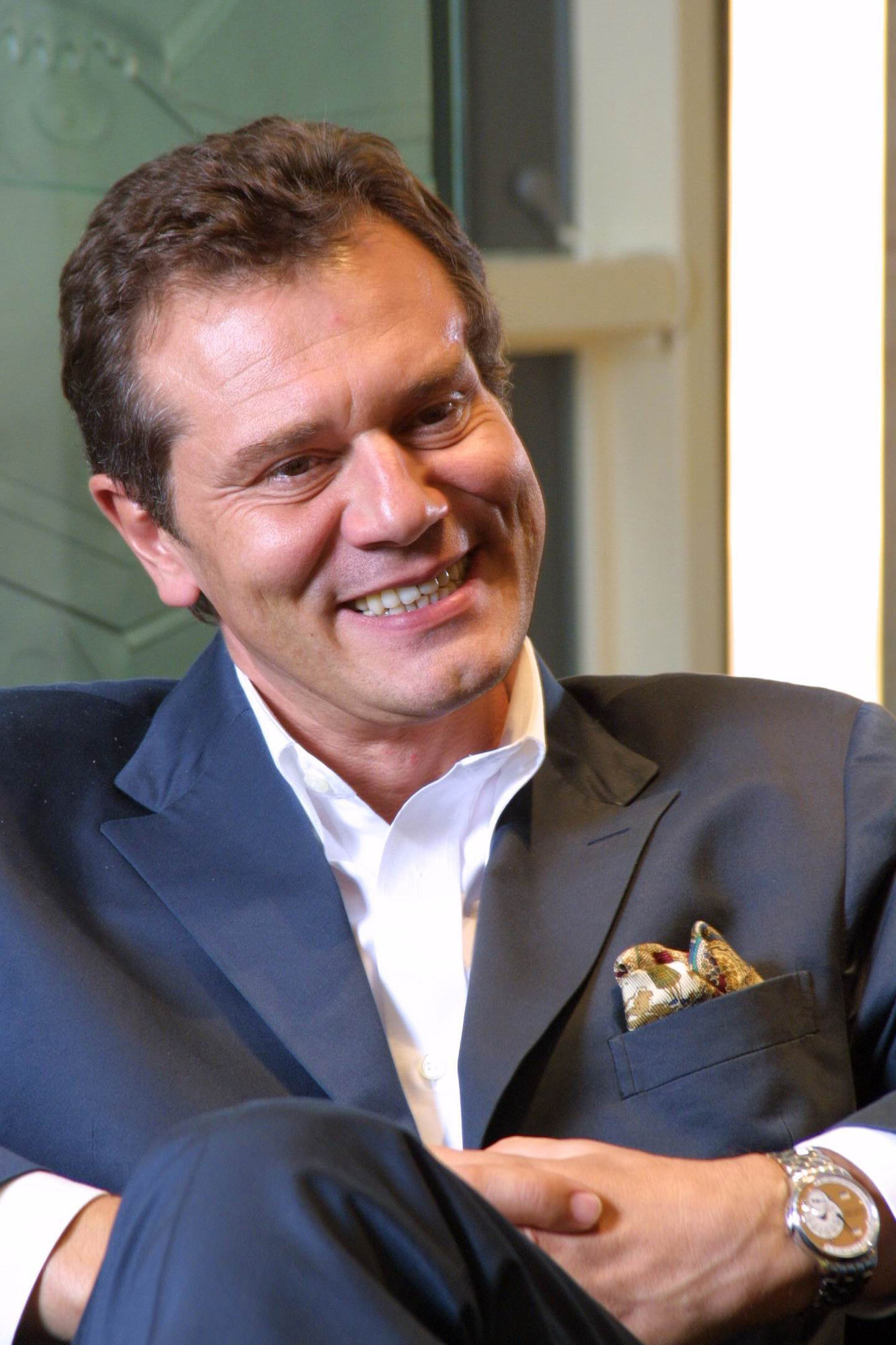
Master watchmaker François-Paul Journe ©F.P.Journe
On 9 November 2025, François-Paul Journe bacquired at auction the Abraham-Louis Breguet pocket watch No. 1890, a four-minute tourbillon regulator with a natural escapement, dated 1890, for the sum of CHF 1,880,000. This acquisition took place during the A Celebration of Breguet’s 250th Anniversary sale, held by Sotheby’s in Geneva.
In the eyes of François-Paul Journe, who was in the room and bid until he won the lot, this model represents “ the most beautiful Breguet tourbillon”. The No. 1890 features two major innovations: the natural escapement and the tourbillon regulator. By combining the advantages of the natural escapement, designed to transmit the force of the barrel with minimal friction, and the tourbillon’s ability to compensate for timing errors due to positioning, Breguet created a watch of unparalleled precision for its time.
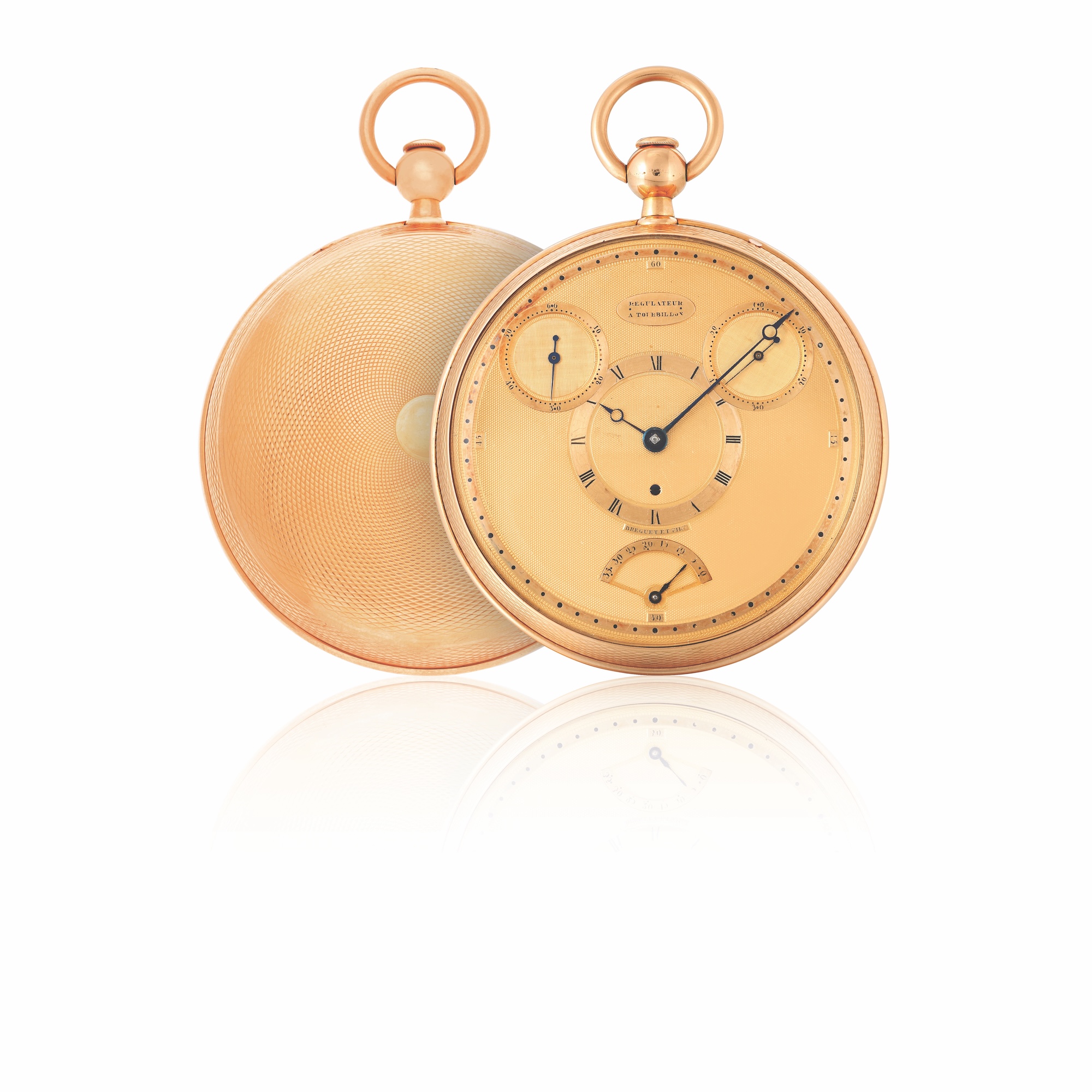
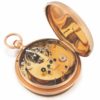
Breguet No. 1890 Pocket watch with a four-minute tourbillon and natural escapement, completed in 1809 by Breguet during the lifetime of Abraham-Louis Breguet © Sotheby’s.
Delivered to Frédéric Frackmann in 1809, Breguet’s agent for Russia, the watch was sold to Count Alexei Razumovsky, a member of the Imperial Court and Minister of Public Instruction under Tsar Alexander I. In 1954, it was acquired by Sir Cecil Clutton, the British historian and watch collector who participated in the 20th century watchmaking revival.
The No. 1890 now joins the F.P.Journe private collection and will be exhibited in the future “ Le Patrimoine ” gallery which will bring together all of François-Paul Journe’s creations since his very first pocket watch, as well as some historical pieces that have contributed to the writing of his history.
INTERVIEW
After acquiring Abraham-Louis Breguet pocket watch No. 1890 from Sotheby’s, you stated, “I am proud to have acquired the most beautiful Abraham-Louis Breguet.” What makes this the most beautiful Breguet tourbillon?
François-Paul Journe : Abraham-Louis Breguet had created a series of three gold tourbillons. One is in the Breguet museum collection, with floral engravings on the back of the case, which is not to my taste. There is the piece that was made for George IV of England and which was auctioned a few years ago, and finally, the one I acquired, which is in absolutely perfect condition. This is the most beautiful tourbillon he has ever created, except, of course, from his first tourbillon, which is in the private collection of the Sultan of Oman.
In terms of watchmaking mechanics, what does this tourbillon represent?
This calibre brings together the best that Breguet produced at that time. A 4-minute tourbillon with a natural escapement. Everything is just so balanced : the dial, the case, the movement. Everything is perfect. He made other series afterwards, but they were not the same calibre. I believe he had Jacques-Frédéric Houriet make the ébauches at the time. I wanted this tourbillon because I knew that it is not possible to acquire others like it. The dial is engraved with an invisible, secret inscription indicating the name of the client at the time.
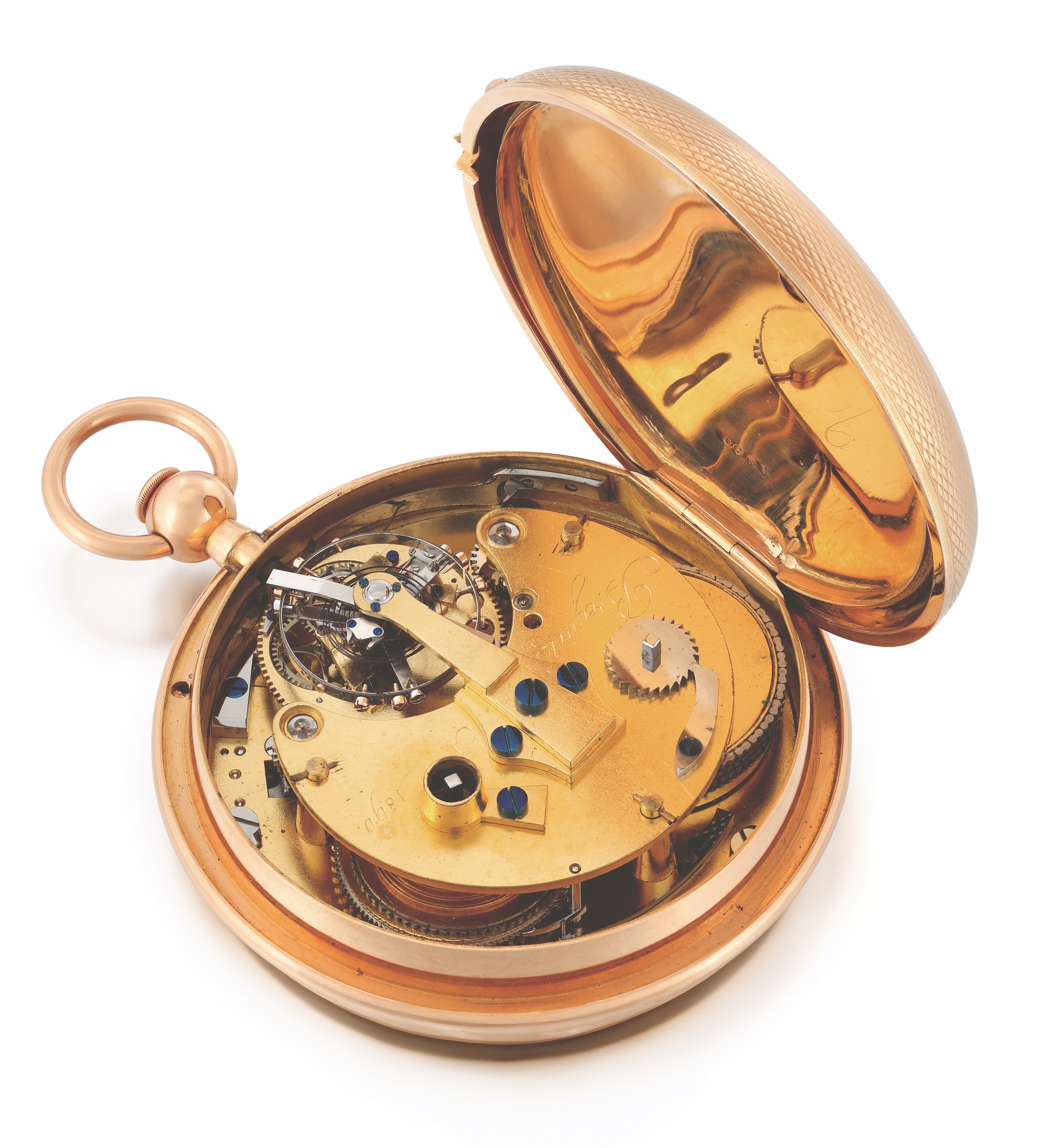
Breguet No. 1890 24-line movement with a four-minute tourbillon, natural escapement and fusée-and-chain system. © Sotheby’s
Are you referring to Alexei Razumovsky, a member of the Imperial Court of Russia under Tsar Alexander I?
Yes. And I was also contacted by his great-grandson, who told me he had in his possession letters written by his ancestor to Breguet, of which I am hoping he will provide me with photocopies.
In what condition is this watch, which is over 200 years old?
It is in extraordinary condition and has not been damaged, because old pieces have often been restored. If the dial had been retouched, the secret signature would have been erased, because it was engraved with a pantograph using a drypoint needle, and is therefore very light. It disappears with the slightest sign of wear on the dial.
This watch is also believed to have belonged to the British collector Sir Cecil Clutton. Did you know him?
Yes, I knew Cecil well. His name was Sam. He was the treasurer to the Queen of England. He owned a very fine collection of watches and cars. He participated in vintage Bugatti races and, when he visited Paris, he played the organ at Notre-Dame. He wrote a short book about his watch collection, after selling almost all of it except for around thirty of the most beautiful and innovative watches from each era. It was he who commissioned George Daniels to make his first watch. Before that, George restored timepieces, but he didn’t manufacture them.
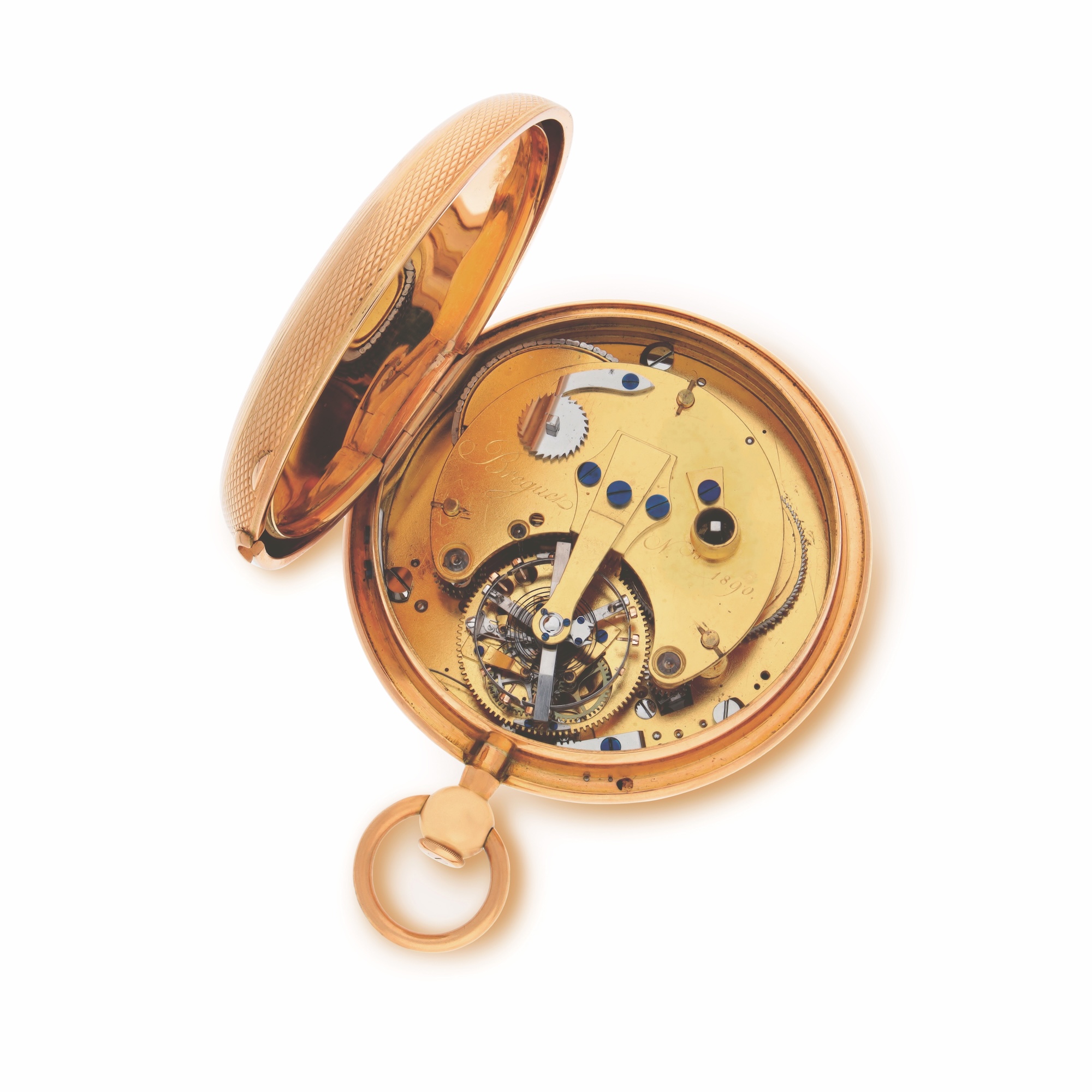
The Breguet No. 1890 pocket watch, featuring a four-minute tourbillon and a natural escapement, is in exceptional condition ©Sotheby’s
What happened to that first watch created for him by George Daniels?
After his death, it was auctioned off and acquired by David Saul Landes, a charming gentleman whom I knew well, a professor of history at Harvard and a specialist in modern European economic history. He was one of Jimmy Carter’s advisors, and wrote a book on watchmaking called “ Revolution in Time : Clocks and the Making of the Modern World ” which has just been reissued by Les Belles Lettres. And it’s funny, because in his book, he mentions the Tuesday lunches in Paris, with Jean-Claude Sabrier and his entire clique, which took place at Michel Journe’s.
How did you meet Sir Cecil Clutton?
When he came to Paris, he often visited the restoration workshop of my uncle Michel, with whom I worked. He was an elegant gentleman who passed away in the early 1980s.
Did meeting him have an impact on you?
Absolutely. A major impact. When he came, he always wore a three-piece suit with a watch in each waistcoat pocket: In one there was a Breguet, which he often changed, and in the other a George Daniels. I was 17 or 18 years old, I was still at watchmaking school and I wasn’t yet thinking about making a watch, but seeing him with his pocket watches planted the seed in my mind. Meeting him was one of the things that motivated me to start my career. In 1977, I was 20 years old and, since I thought I would never be able to afford to buy a tourbillon, I decided to create one for myself.
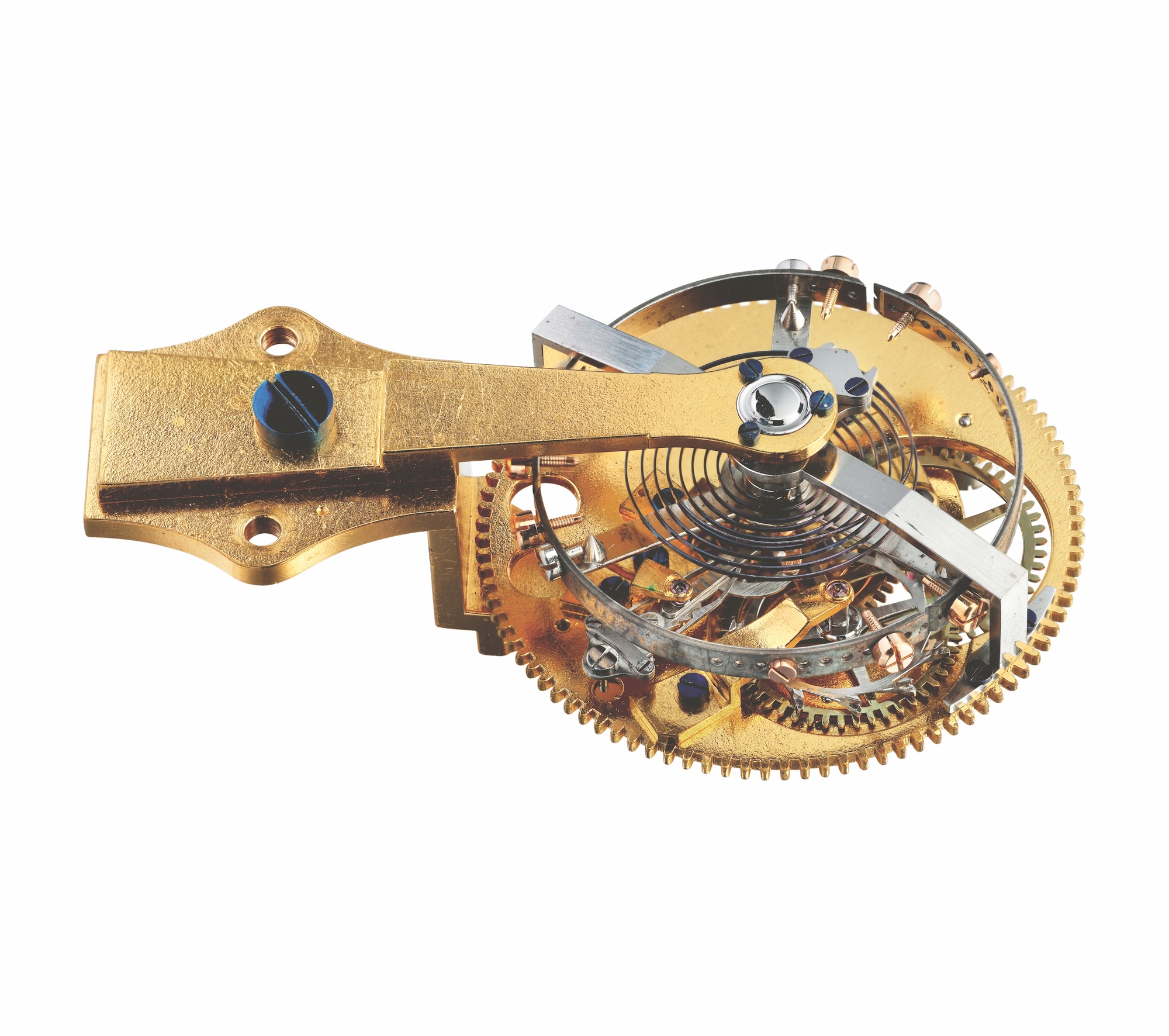
Tourbillon carriage with the balance, hairspring and natural escapement © Sotheby’s
How did you create your first tourbillon?
I had never seen one, apart from Sam’s, and I had no idea how it worked. I learned how it worked through David Penney’s drawings in The Art of Breguet. His sketches are very informative. In the 1970s, tourbillons were like the story of the man who saw the bear: the watch sellers had never actually held one in their hands.
Were tourbillons really that rare at the time?
They were extremely rare ! And subsequently, apart from George Daniels and myself, nobody made tourbillons. Collectors at the time were interested in antique clocks, not modern pieces. They were buying pieces from the 16th, 17th, 18th century, sometimes pieces from the early 19th century relating to chronometry. That was the history that interested them.
It’s extraordinary to have been able to recreate a tourbillon based on drawings!
This is the first Breguet tourbillon, and the first in the world, which is in the collection of the Sultan of Oman. It’s a tourbillon with a double barrel, which inspired George Daniels in his early days, as well as myself. It’s a source of inspiration for many watchmakers. We’ve all dreamt about this watch. It has defined more than 200 years of watchmaking. Breguet was a visionary.
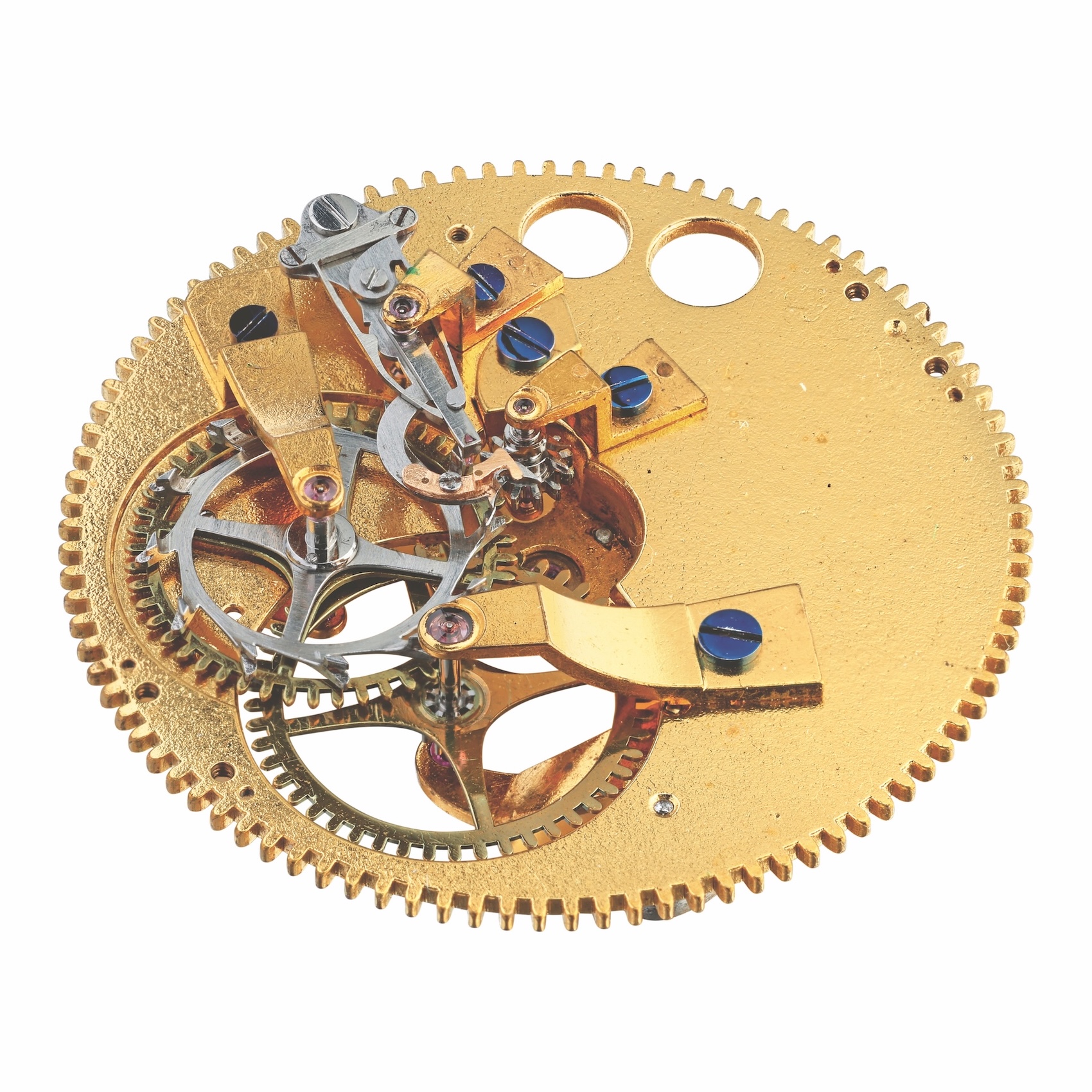
Detail of Breguet’s natural escapement © Sotheby’s
Have you had a chance to see this watch?
Yes. I’ve actually held it. I was one of ten guests invited by the sultan to visit his private museum. I was there with John Asprey and Sebastian Whitestone who established this museum. You knew the plans for this tourbillon by heart.
You knew the plans for this tourbillon by heart. Were you surprised when you saw it?
No. It’s magnificent. To set up the museum, John had purchased multiple splendid pieces: Napoleon’s perpetual watch signed by Breguet, a Breguet watch that belonged to the Duke of Wellington, Prince Anatole Demidov’s Breguet Pendule Sympathique – pieces with important provenances. And the only wristwatches on dis- play in this museum are my own : including a Sonnerie Souveraine and also the Pendule Sympathique that I made in the 1980s.
Was the acquisition of the Breguet tourbillon particularly emotional for you?
Certainly. I had decided to buy it at any price.
Were you actually in the room for the auction?
Yes. There were other potential buyers offering up to a million, then we were down to just two, and finally I got it.
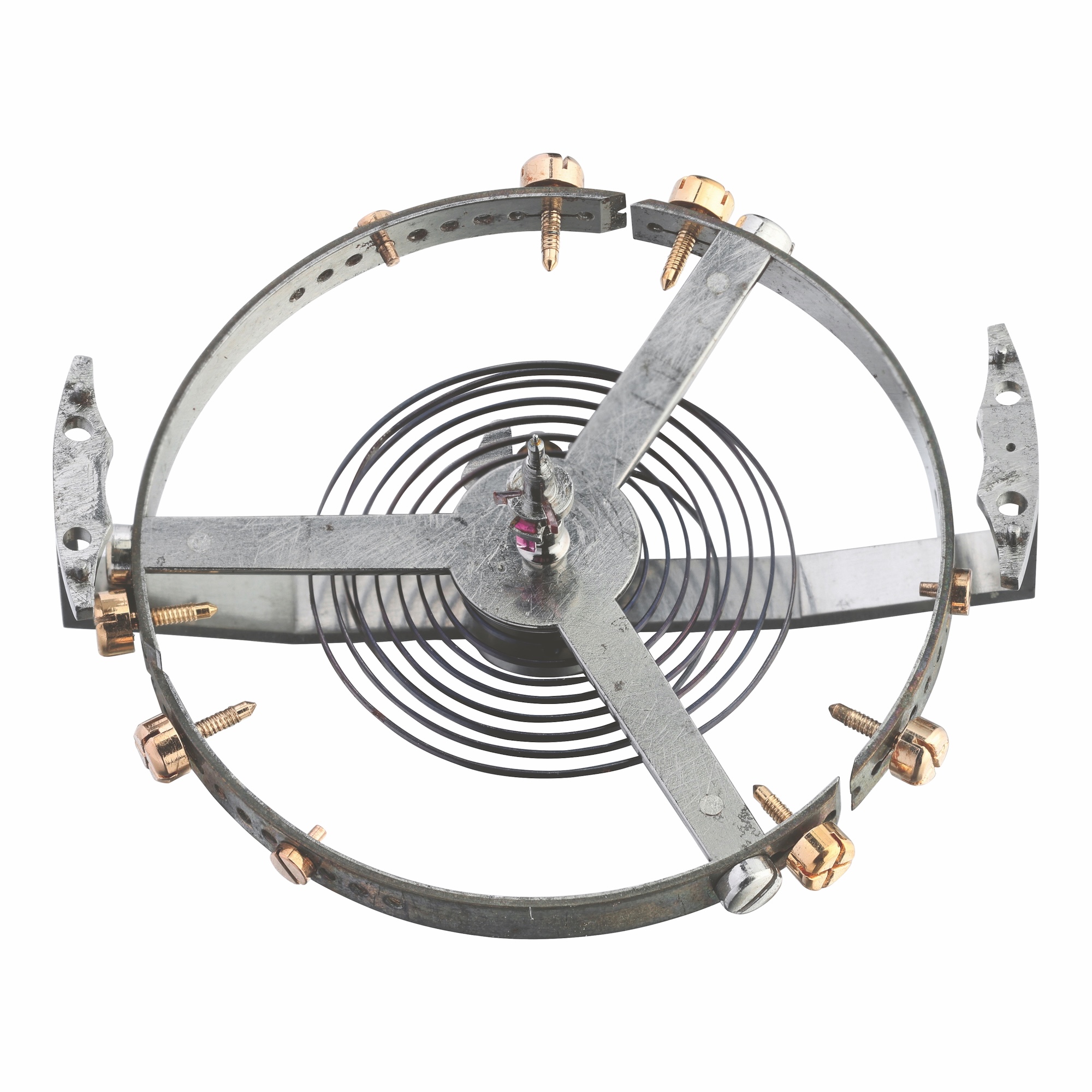
Underside of the balance and hairspring © Sotheby’s
Did you purchase Abraham-Louis Breguet’s No. 1890 pocket tourbillon to display in your future museum, which is due to open soon?
I did. It’s a tribute I’m paying to the inventor of the tourbillon. Also, it won’t be a museum in the strict sense but a private collection that won’t be open to the public. Visits will be by appointment. The building will be called “ Le Patrimoine ”. The collections will be located on the ground floor. On the first floor, there will be all the after-sales service and training. And finally, I will also be able to exhibit my “ Steel Time” collection (a collection of historical steel pocket watches dating from 1850-1910, editor’s note). I have 220 of them, and the last time they were exhibited was at the Forbes Gallery in New York in 2012.
Will there be a space dedicated to Breguet?
I plan to present four Breguet watches, including the one I have just acquired. There will also be the Pendule Sympathique No. 1 from 1991. I was glad I purchased it because I think it is the most beautiful creation that was made after Breguet’s death. Nothing better was ever done. There will also be a small Breguet portable clock that I acquired from Antiquorum, as well as a subscription.
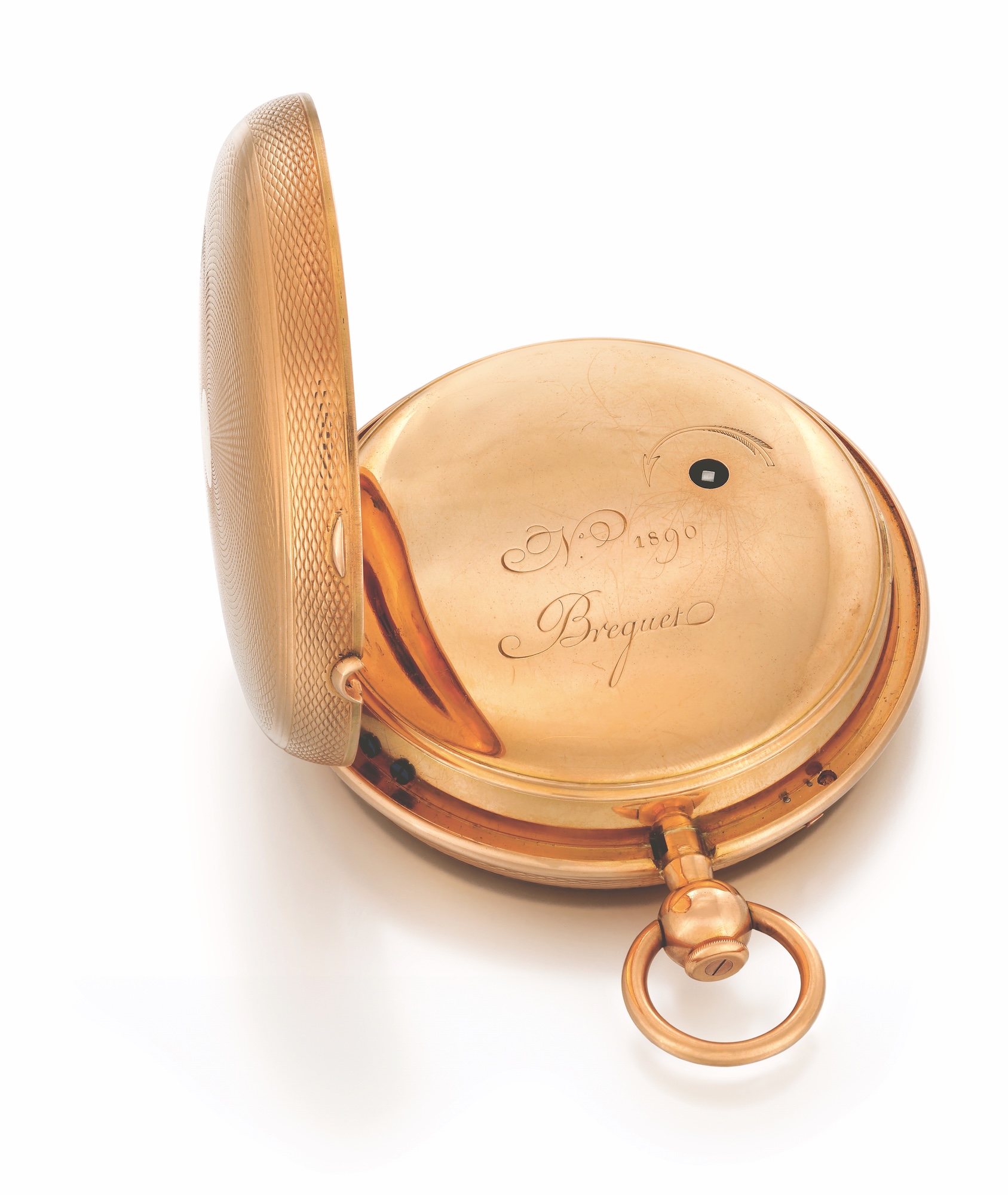
Engraved 18K gold cuvette Breguet No. 1890 ©Sotheby’s
The subscription is directly linked to your story : that’s how you sold your first models, by subscription?
Breguet had the idea of the subscription after the Revolution, because he had lost money. He created this model which is “ one of the first watch designs ” as Jean-Claude Sabrier said. Before Breguet, a watch consisted of two main plates with pillars that enclosed the gear train, with the balance wheel on top. Later, Jean-Antoine Lépine invented bridges, which made it possible to dismantle the movement piece by piece, but he never designed his movements like Breguet designed the subscription. The idea of launching a small subscription of 20 pieces in 1999 came to me from Breguet, and you had also written an article on the subject.
What is the concept behind this future exhibition space?
We will primarily exhibit our heritage, i.e. all the zero numbers, the prototypes of our models since the creation of the “ready-to-wear” watches (the models which were not entirely handmade by François-Paul Journe from 1999 onwards, editor’s note). As well as some old pieces that I was able to recover and that I had entirely made in the 1980s, including my first watch. And around that, contemporary art and pieces that have advanced the history of watchmaking, for example a clock by Jost Bürgi – the inventor of the “ remontoir d’égalité ” – which is currently being restored and which dates from late 16th century. I also bought some table clocks from the late 16th – early 17th centuries. At that time, the watch did not yet exist. It arrived just after that. I’m missing a watch from that very early period to make the link between watchmaking before watches, and us. The watchmaking industry is a great wall that has existed for 600 years, and on which I have placed two stones.
Where does the Breguet tourbillon fit into it?
It will certainly be displayed with the other Breguet pieces that I have purchased. We will be exhibiting antique timepieces that have a connection to my work. I made my first tourbillon between 1977 and 1982 and, if Breguet had not existed, I might never have made one at all. We must pay tribute to the reason for the existence of F.P.Journe.