
Unis Vers, when photography combines the good and the beautiful
Photographer Michèle Bloch-Stuckens is exhibiting portraits of artists who agreed to reveal themselves, their sensibilities, and their passions at the EspaceDiorama in Geneva. A book accompanies the Unis Vers exhibition, with all proceeds going to Secours Populaire. This magnificent and generous project took five years to come to life. Isabelle Cerboneschi
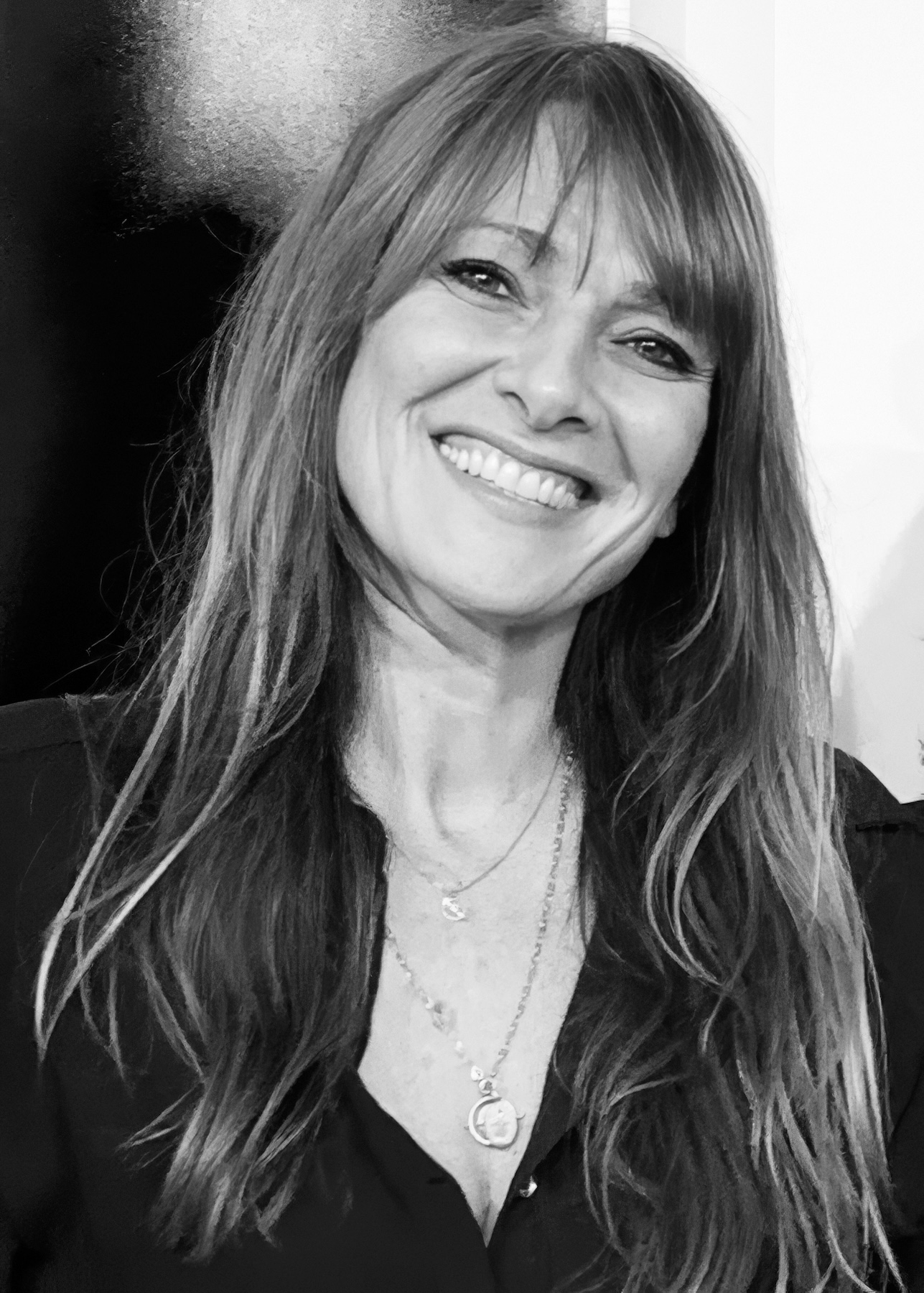
Photographer Michèle Bloch-Stuckens has succeeded in bringing together some forty artists around her solidarity project Unis Vers
Don’t miss the Unis Vers exhibition, which runs until December 31 at the EspaceDiorama in Geneva.
Firstly, because the images by photographer Michèle Bloch-Stuckens, which reveal artists, singers, actors, dancers, and musicians at their most intimate, are absolutely magnificent. But also because all proceeds from sales of the book accompanying the exhibition will be donated to Secours Populaire, an association born out of the Resistance, which works daily to create a more compassionate world.
The project should have been completed in a year, but it took the Belgian photographer, who is based between Paris and Geneva, five years to complete the Unis Vers adventure. Michèle Bloch-Stuckens has succeeded in bringing together around forty artists for this tender, funny, and kind-hearted human project.
The exhibition opening, which brought together 200 people, took place in Paris on December 2. A second exhibition is being held until December 31 in Geneva at the EspaceDiorama.
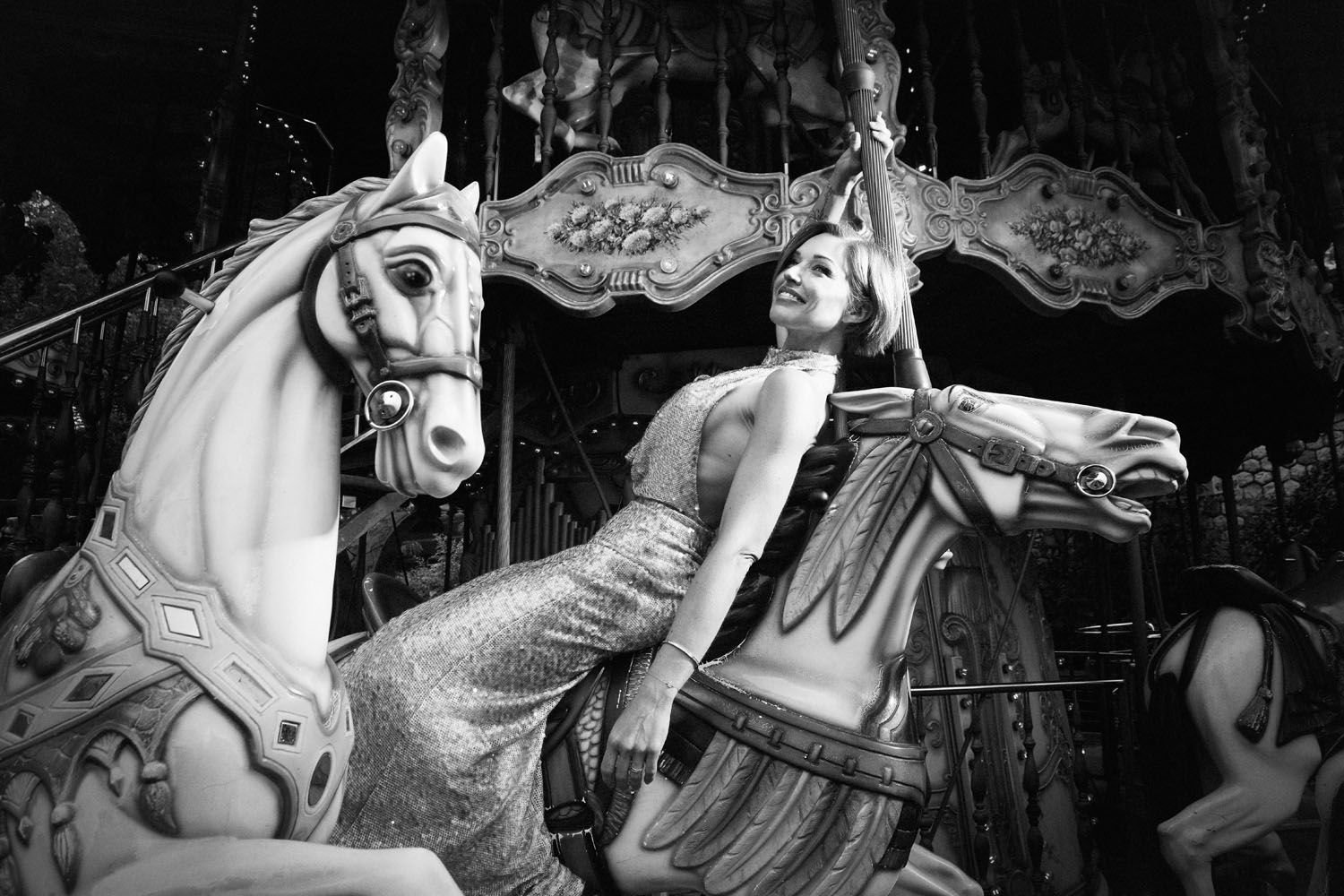
Natasha St-Pier ©Michèle Bloch-Stuckens
INTERVIEW
How did this project come about?
Michèle Bloch-Stuckens: It came about during the first lockdown, during the Covid crisis. Various charities were saying that they were no longer receiving the subsidies they were usually entitled to, which meant that a lot of people were being left without help. At the same time, on social media, I saw all the artists at home, unable to perform because the theaters were closed. I thought to myself that there must be a way to use the light of some to help the most disadvantaged.
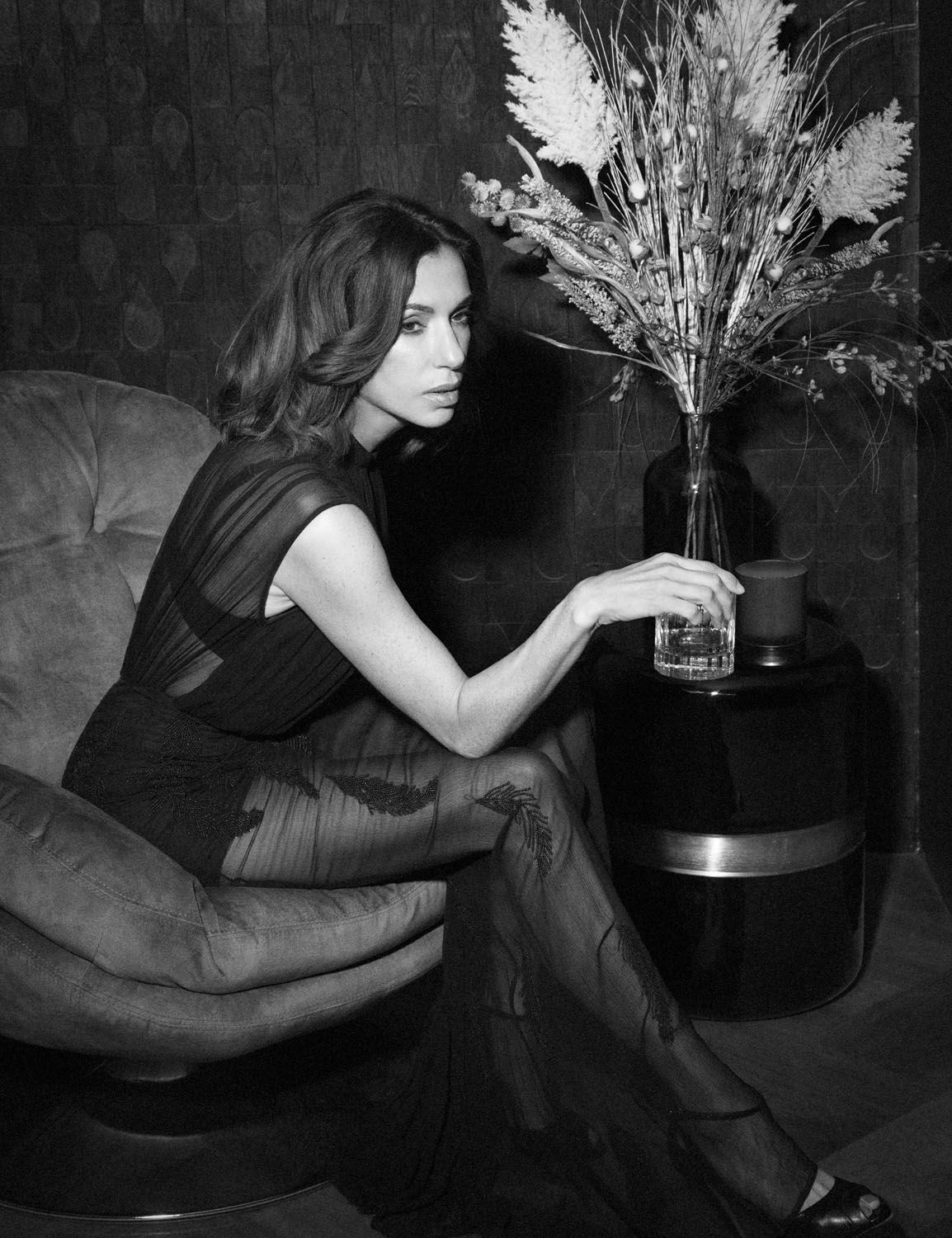
Aure Atika ©Michèle Bloch-Stuckens
Why did it take you five years to complete this adventure?
At first, I thought it would be something that could be set up fairly quickly and that celebrities would be delighted to get involved. Except that there was a first deconfinement and nothing went as planned. I was a fashion photographer that celebrities didn’t know, I had nothing to show them, yet I had to get them interested without being able to contact them other than through their agents, social media, or a few friends. One of them put me in touch with Yann Arthus-Bertrand, you put me in touch with Matthieu Chedid and Aure Atika, and that got me started.
Were you surprised by the reaction of these celebrities?
Yes. For example, Sophie Marceau said yes right away, but I had to wait until she finished filming her movie with François Ozon to get the picture.
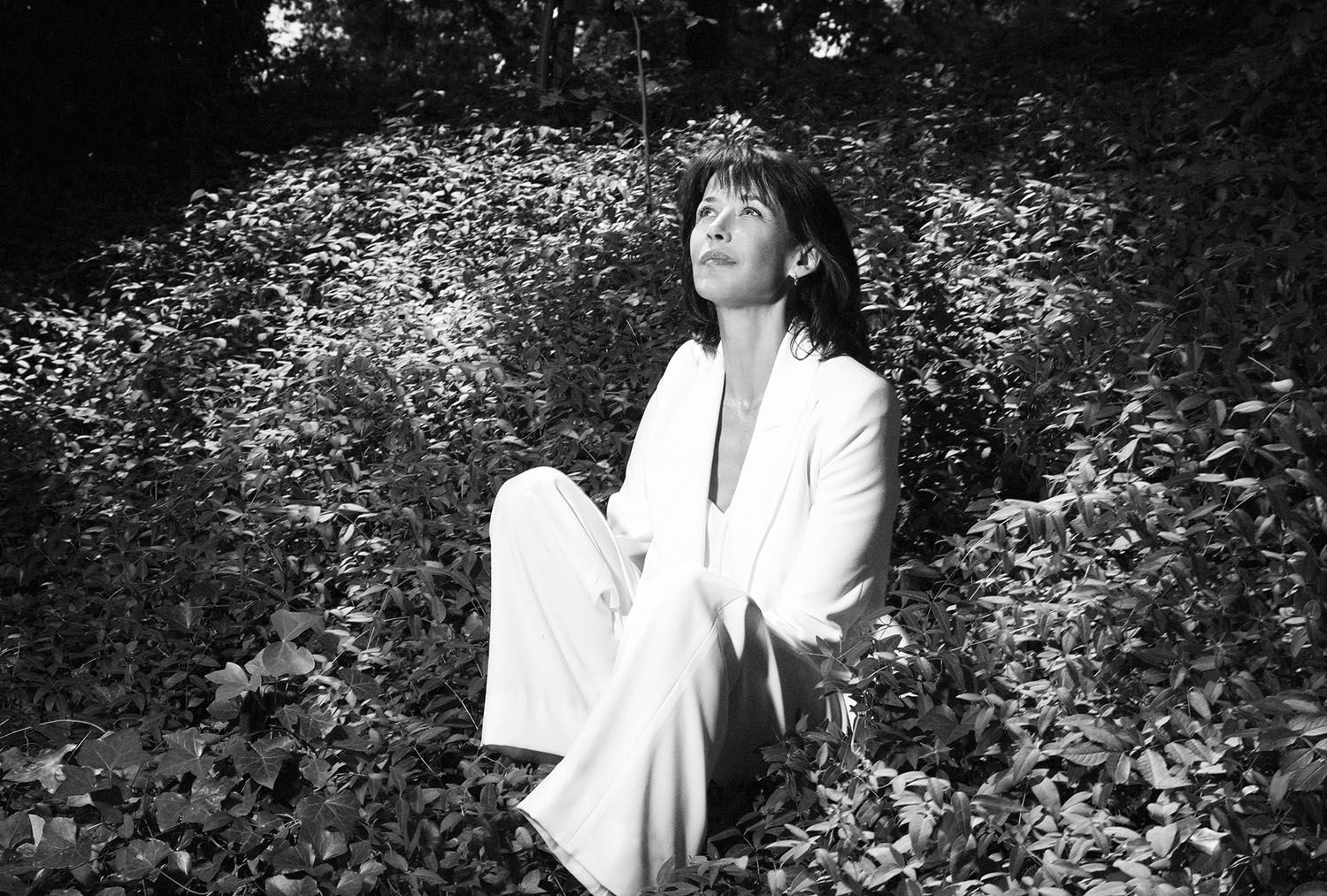
Sophie Marceau ©Michèle Bloch-Stuckens
Why did you choose to donate the proceeds from your book to Secours Populaire?
In addition to the obvious and long-standing ties that this association has with artists who have always been very supportive, it is a very honest organization, unlike others. Its basic premise is to help the disadvantaged, whether young or old. It helps them with housing and food, it is active on all fronts, and I felt that its mission statement matched my original cause. In order to take concrete action, I decided to self-publish. This allows me to donate a significant amount to the association: the profit it receives represents about one-third of the purchase price, or almost 20 euros per book sold at 59 euros.
How did the photo shoots go?
Each time was quite a special moment because the artists arrived with their public persona. I then asked them to tell me about what brought them joy, what made them happy, and we moved into a whole other, more intimate dimension. For example, José Garcia told me he was passionate about aviation. That gave me a starting point to think about and suggest a location, in this case the Astonfly airfield.
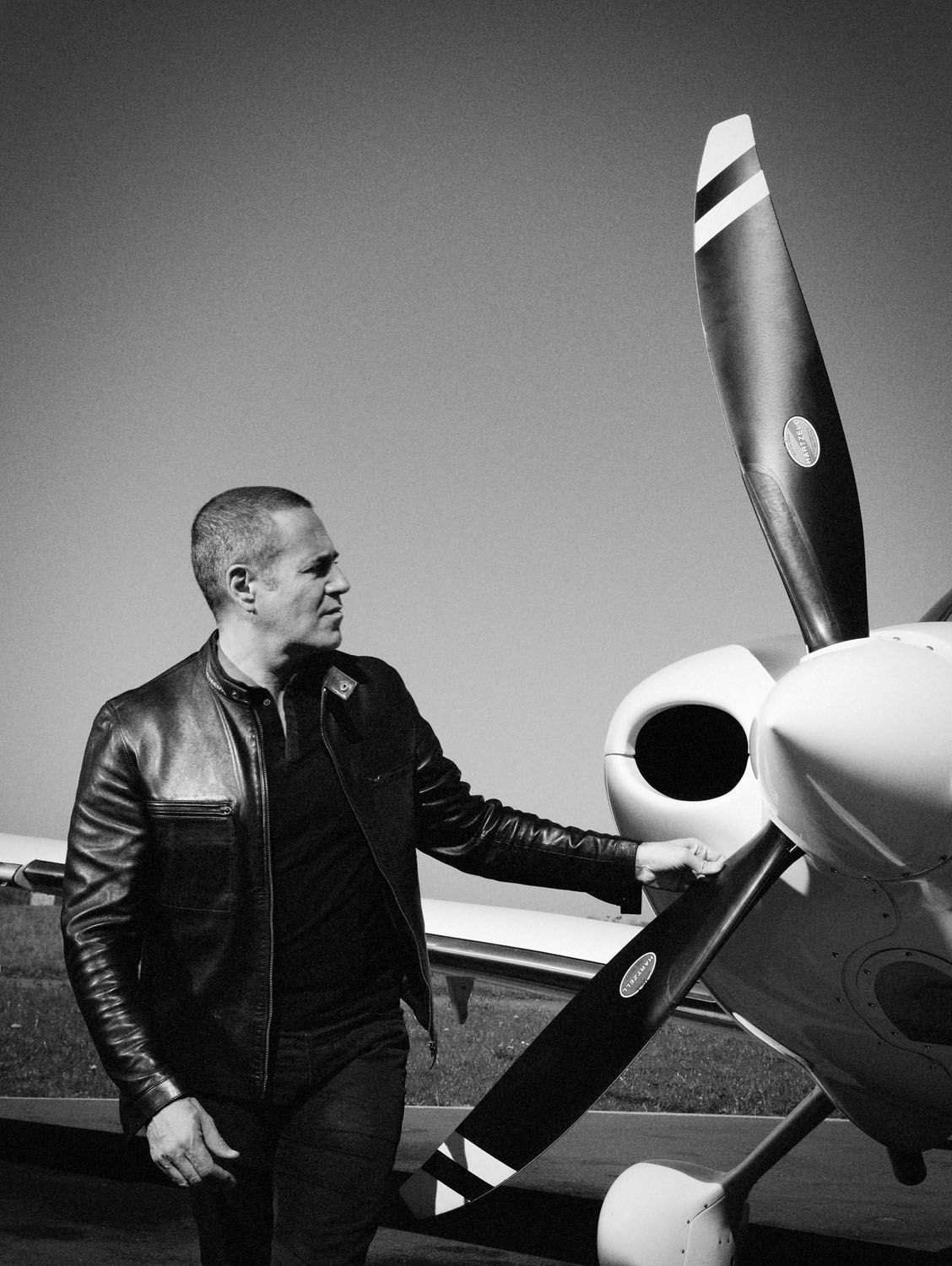
José Garcia ©Michèle Bloch-Stuckens
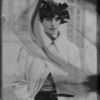
The image of violinist Camille Thomas is surreal. Where did you photograph her?
I was extremely lucky because she had organized concerts in venues that were no longer in use during Covid, such as museums or, in the case of the photo, the Sainte-Chapelle. I found myself in this extraordinary place that was completely empty. There were four of us inside. I chose to photograph her with a huge veil flying around her so that she would look as dazzling as Beyoncé. It was a sacred moment.
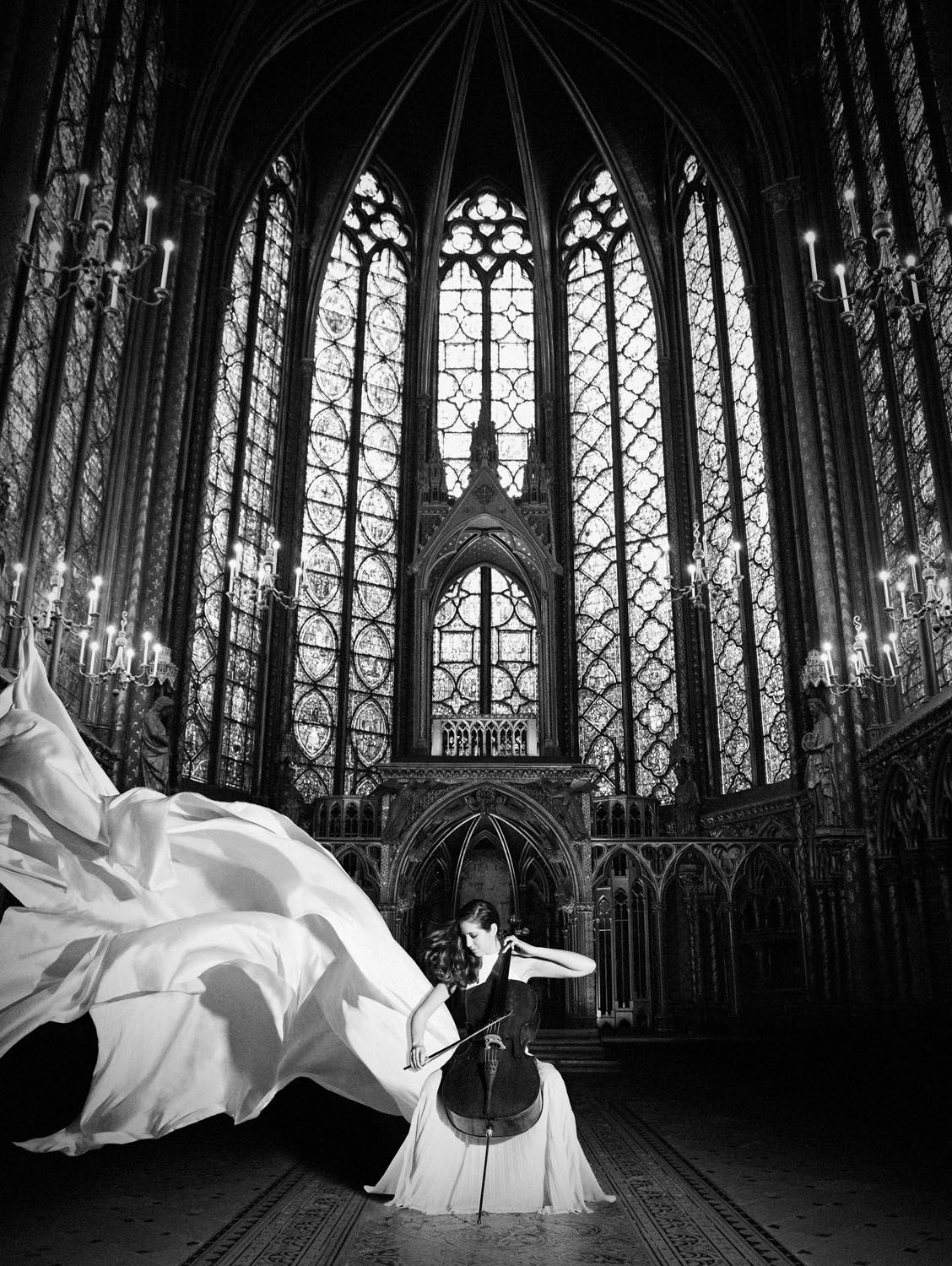
Camille Thomas ©Michèle Bloch-Stuckens
Were some images more complicated to set up than others?
Actress Philippine Leroy-Beaulieu challenged me: she told me she loved dancing in the sand to Brazilian rhythms. I had to find the closest thing to a beach in Paris. We took the photo in the forest of Fontainebleau, which has a patch of sand. We chatted for two hours on the way there and back. I set up my flash in the middle of the sand, where there were two families nearby preparing a barbecue. Philippine was wearing an extremely sexy outfit, she had brought her music and started dancing as if I wasn’t there. It was quite funny, except that she was moving all the time and her hair was in her face. I had a hard time capturing her because she was completely caught up in her dancing. It was very lively, very joyful, but not easy to do.
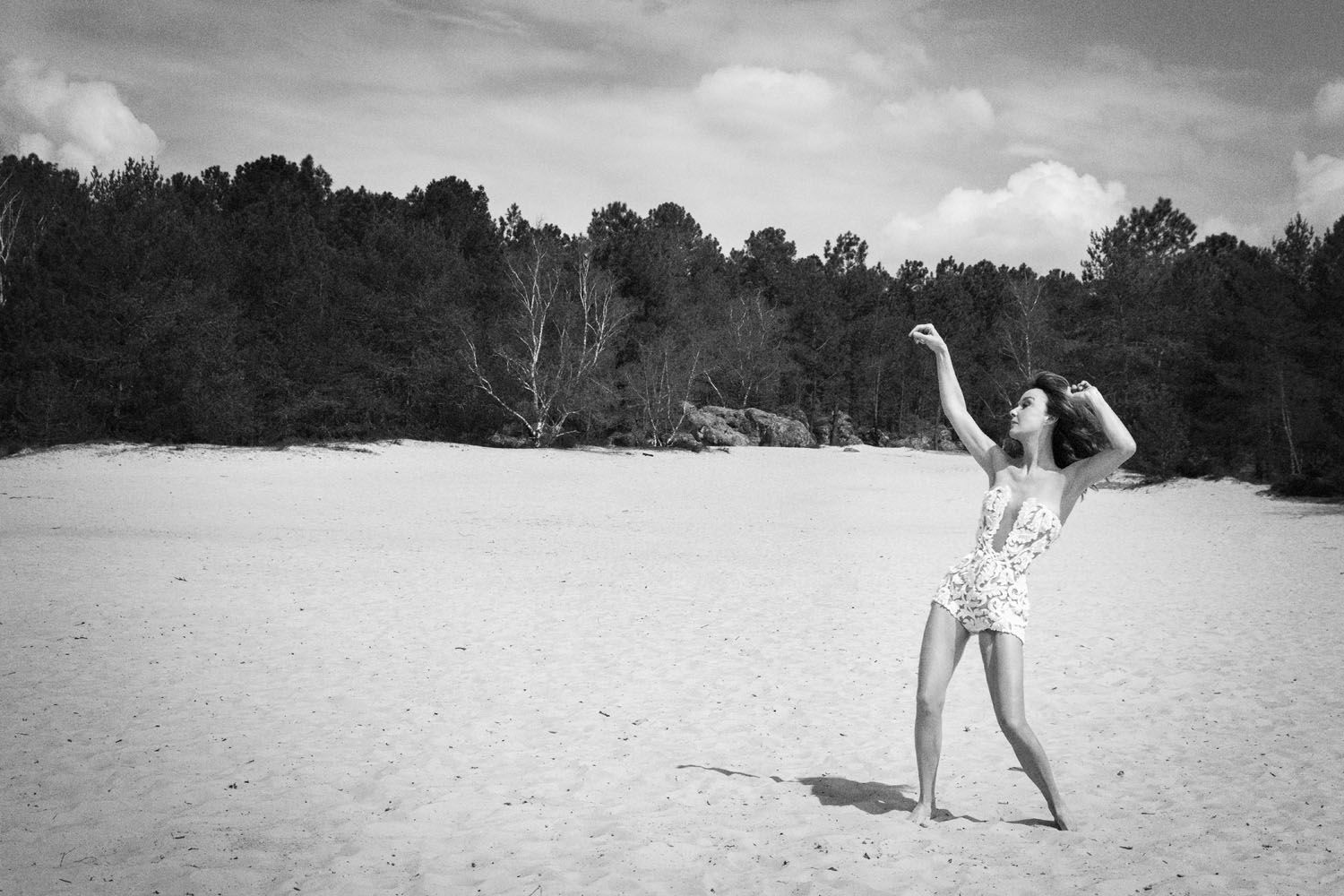
Philippine Leroy-Beaulieu ©Michèle Bloch-Stuckens
Which image amused you the most?
The one with Philippe Lacheau. He told me he loved his job and 1980s movies. I had to brainstorm to figure out what I could do that would come close to that idea.
We were in the middle of a heatwave. To make the moment more enjoyable, why not recreate the legendary scene from Pretty Woman where Julia Roberts is in a bathtub? I had access to a magnificent hotel with a beautiful bath. The actor loved the idea. Instead of a Walkman, I dug out my old iPod to give it a vintage feel.
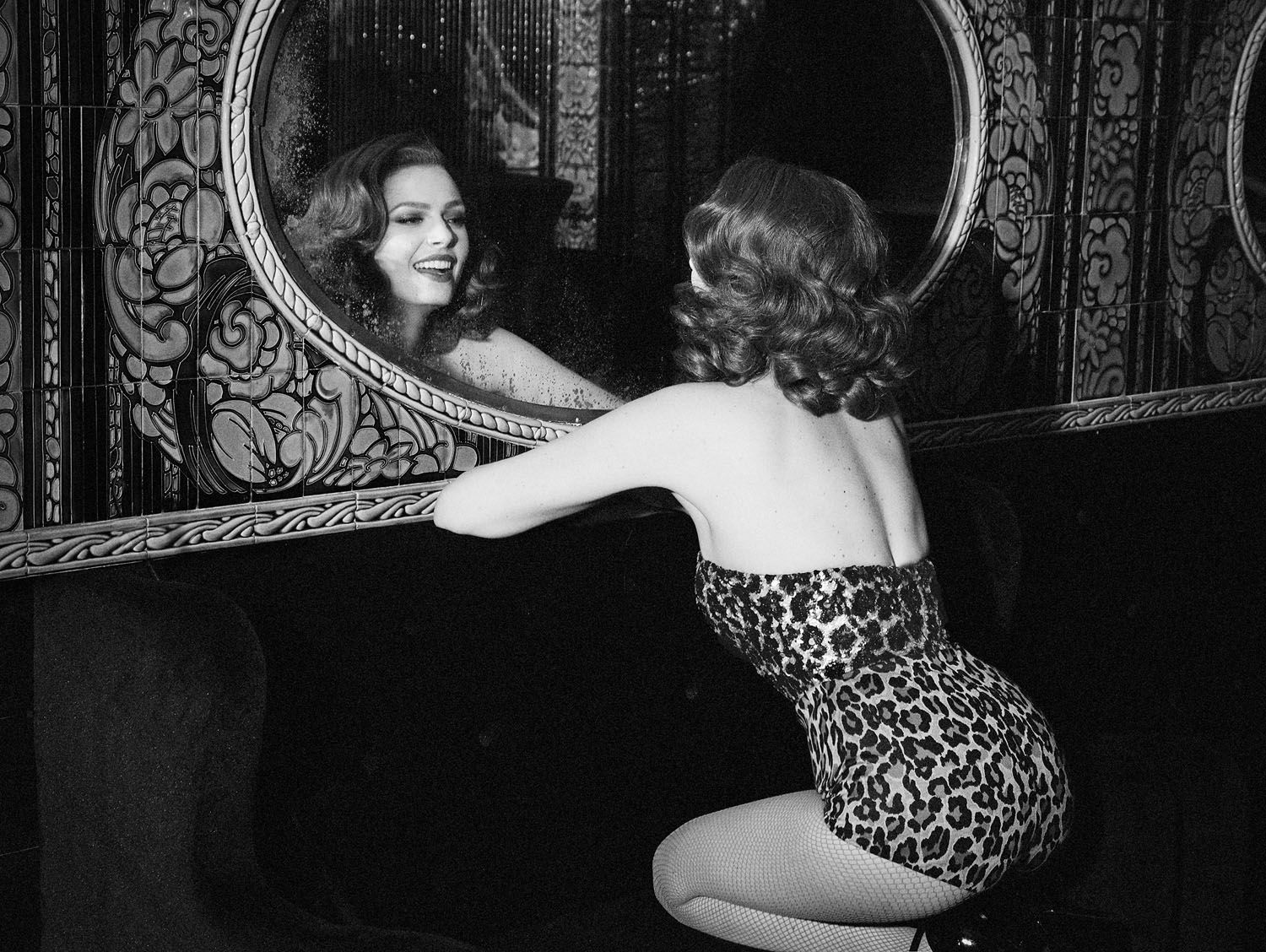
He started fooling around in the cold bath. We laughed a lot. We also took photos of Élodie Frégé: she was so funny in her exuberance and burlesque style with a riding crop. We took the photo in a former brothel from the Roaring Twenties called Aux Belles Poules.
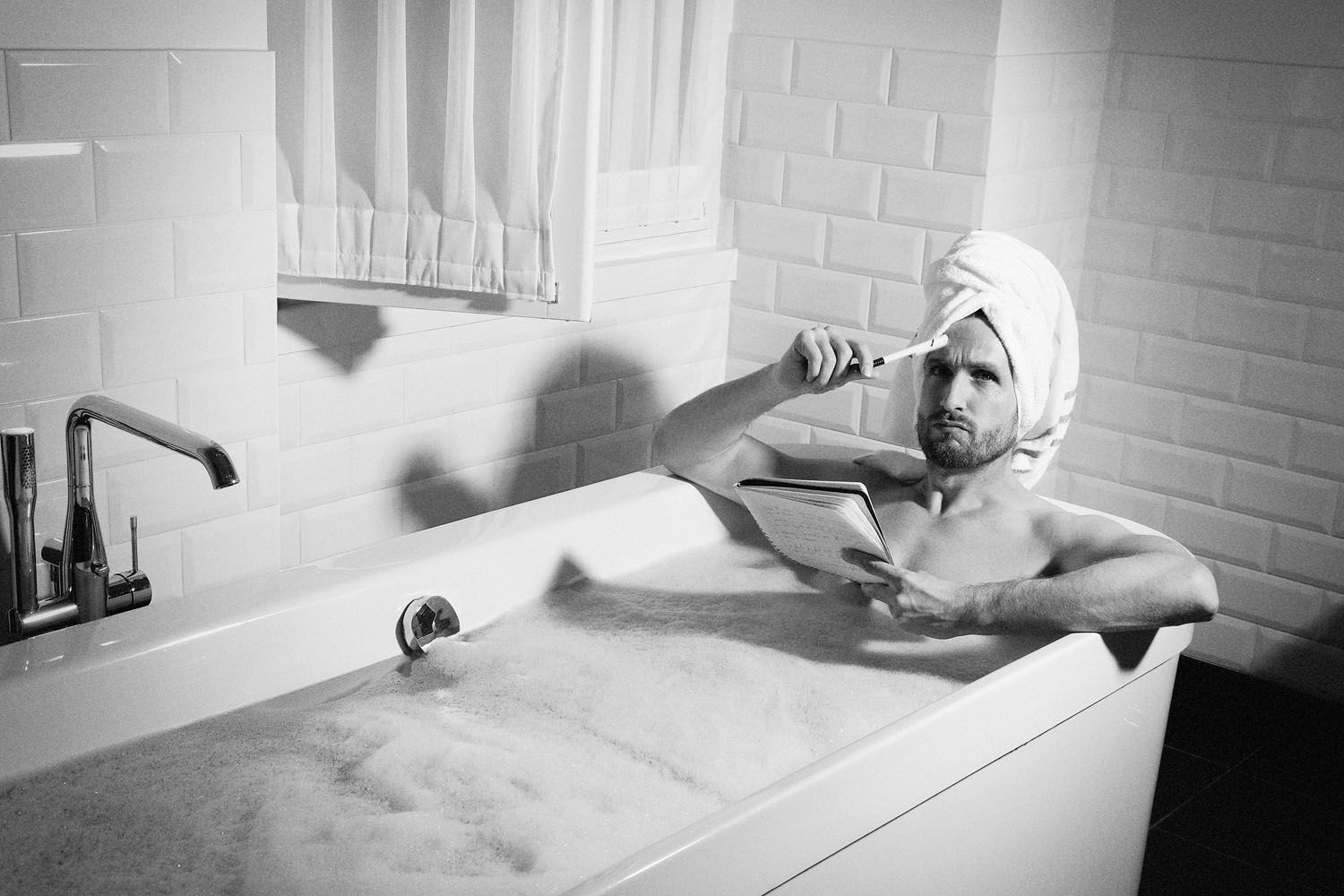
Philippe Lacheau ©Michèle Bloch-Stuckens
Did any artists invite you to their homes?
Matthieu Chedid invited me to take the picture in his studio, in his house. He gave me the theme of his album, which was about to be released: “Rêvalité.” I decided to show the moment when Matthieu becomes M, when he moves from reality to fantasy, with his LED stage outfit, which I used as the only light for the main image, but also for the one that opens the book, also with an LED, like when you’re caught up in a story and you enter the beam of light of the imagination.

Matthieu Chedid ©Michèle Bloch-Stuckens
What were the most moving moments?
There were many. Laëtitia Eïdo, for example, said to me, “I like to watch things grow.” I had the idea of placing a small sprout in front of her face and taking a portrait that I love very much. And then there was the moment when Audrey Dana started playing a shamanic drum in front of an old tree with a hollow trunk on which leaves were still growing. I was carried away by this wild chant. It was a timeless moment. Each artist gave me something very intimate, very personal, something that deeply reflects who they are, and I am very grateful to them for that.
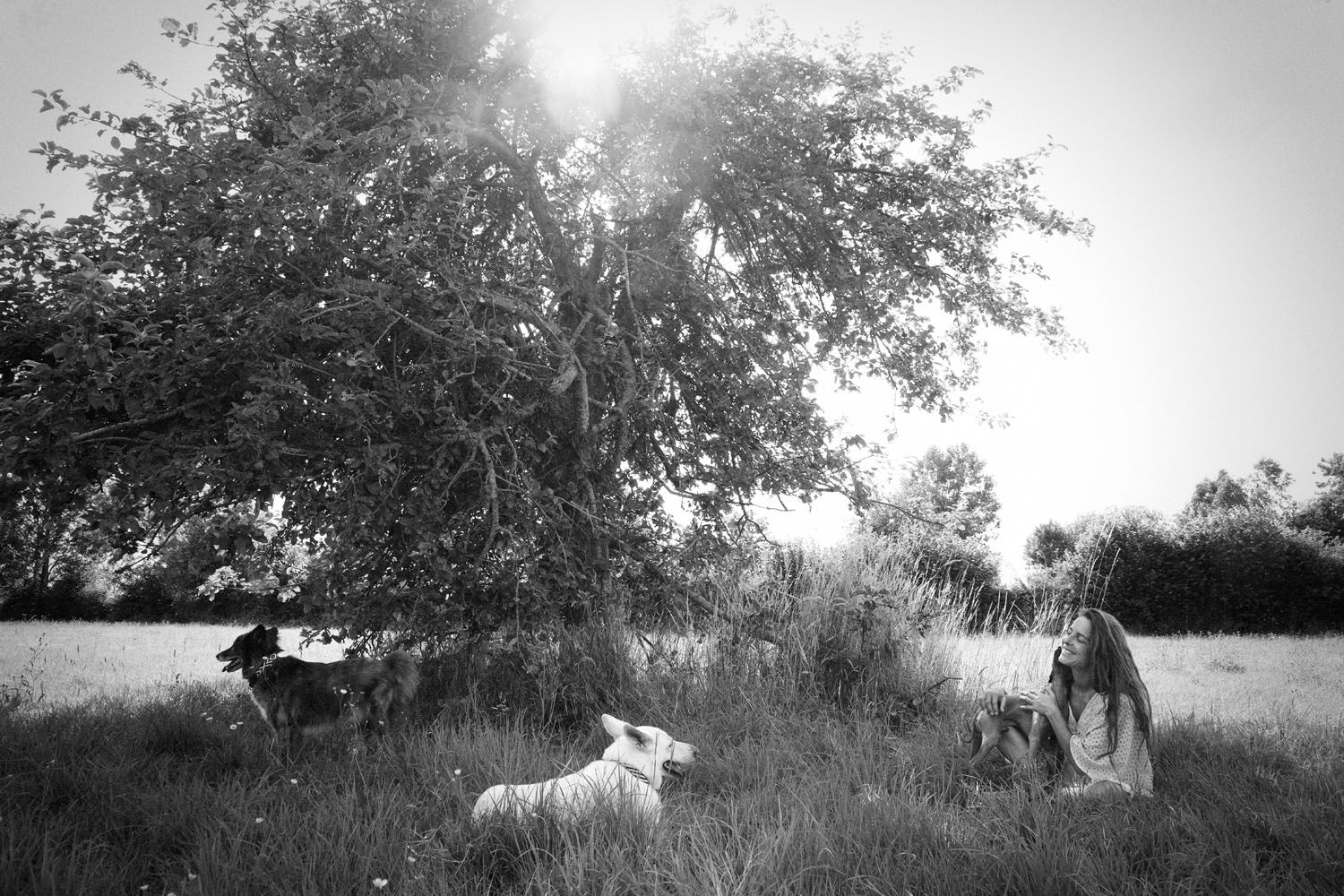
Audrey Dana ©Michèle Bloch Stuckens
Unis Vers, Michèle Bloch-Stuckens EspaceDiorama, Rue du Diorama 16, Geneva until 31st December.
Online shop