
Christian Dior X Azzedine Alaïa: a dialogue between two masters
There are only a few days left, until May 17, to see the extraordinary exhibition THE DIOR COLLECTION BY AZZEDINE ALAÏA at La Galerie Dior, alongside the exhibition AZZEDINE ALAÏA AND CHRISTIAN DIOR, TWO MASTERS OF COUTURE at the Alaïa Foundation, running until 21st June in Paris. A silent dialogue of fabrics has been established between two masters. Isabelle Cerboneschi
Azzedine Alaïa loved fashion – completely, madly, passionately – from a very young age. Not content with having written one of the most fascinating chapters in the history of fashion, he collected couture garments in vast quantities with the aim of preserving a fragile heritage. His collection comprises 20,000 pieces.
Azzedine Alaïa began building it in 1968, when he was not yet the great couturier he would become and his means were limited. He started with pieces by Cristobal Balenciaga, attempting to save part of his precious legacy when the fashion house closed its doors in May 1968. He spoke of this readily, in fact. But what is less well known is the Dior treasure trove he had amassed over the decades: more than 600 pieces.
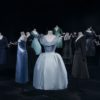
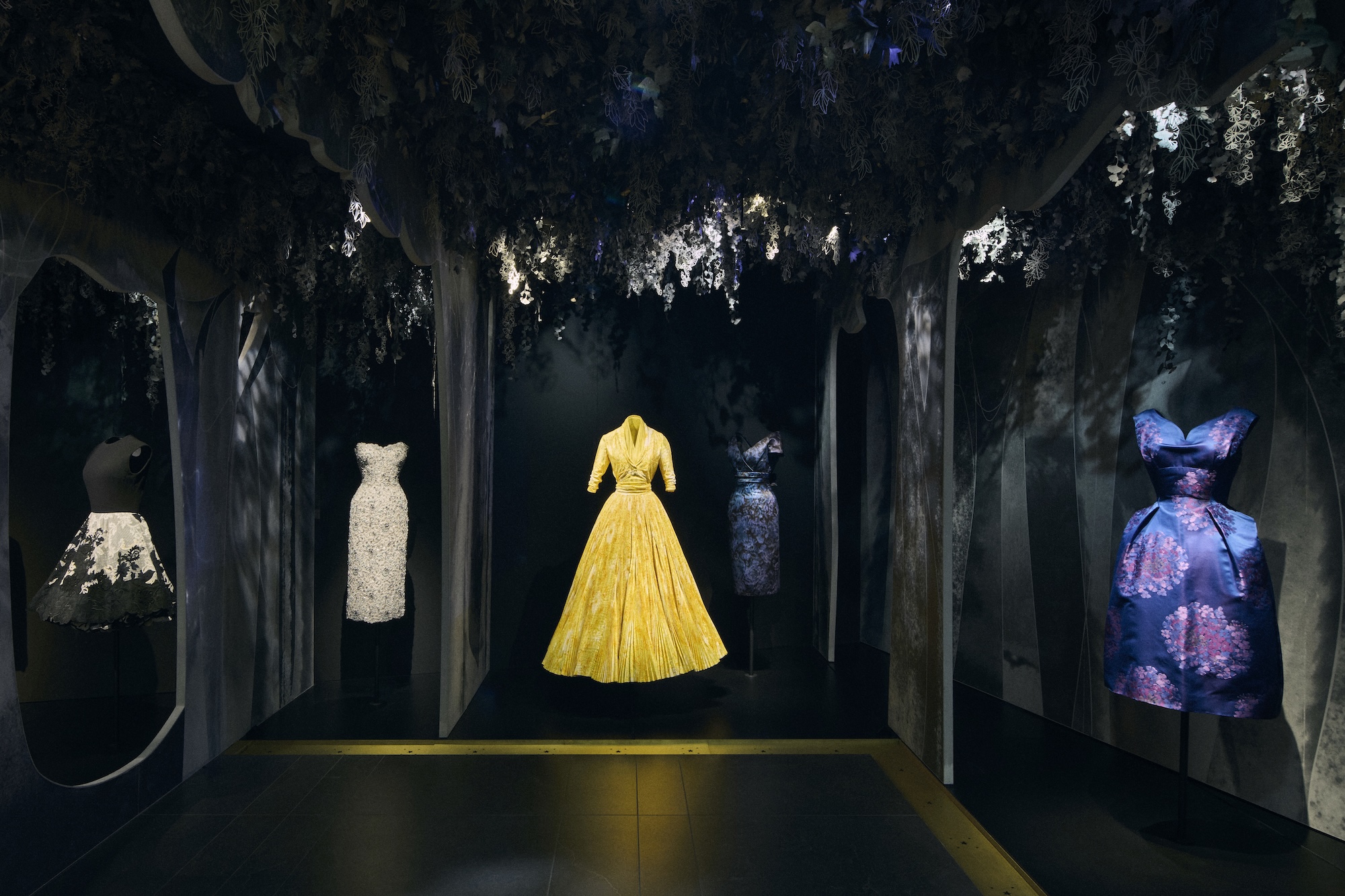
LA COLLECTION DIOR D’AZZEDINE ALAÏA, scenography ©Adrien Dirand
Azzedine Alaïa held Christian Dior in the highest regard, having discovered his creations in fashion magazines whilst he was a teenager. Upon his arrival in Paris in June 1956, and thanks to the help of Madame Lévy-Despas, who was a client at Dior, this student from the Beaux-Arts in Tunis secured an internship at the fashion house. He stayed there for just five days, but that was enough to soak up the spirit of the place.
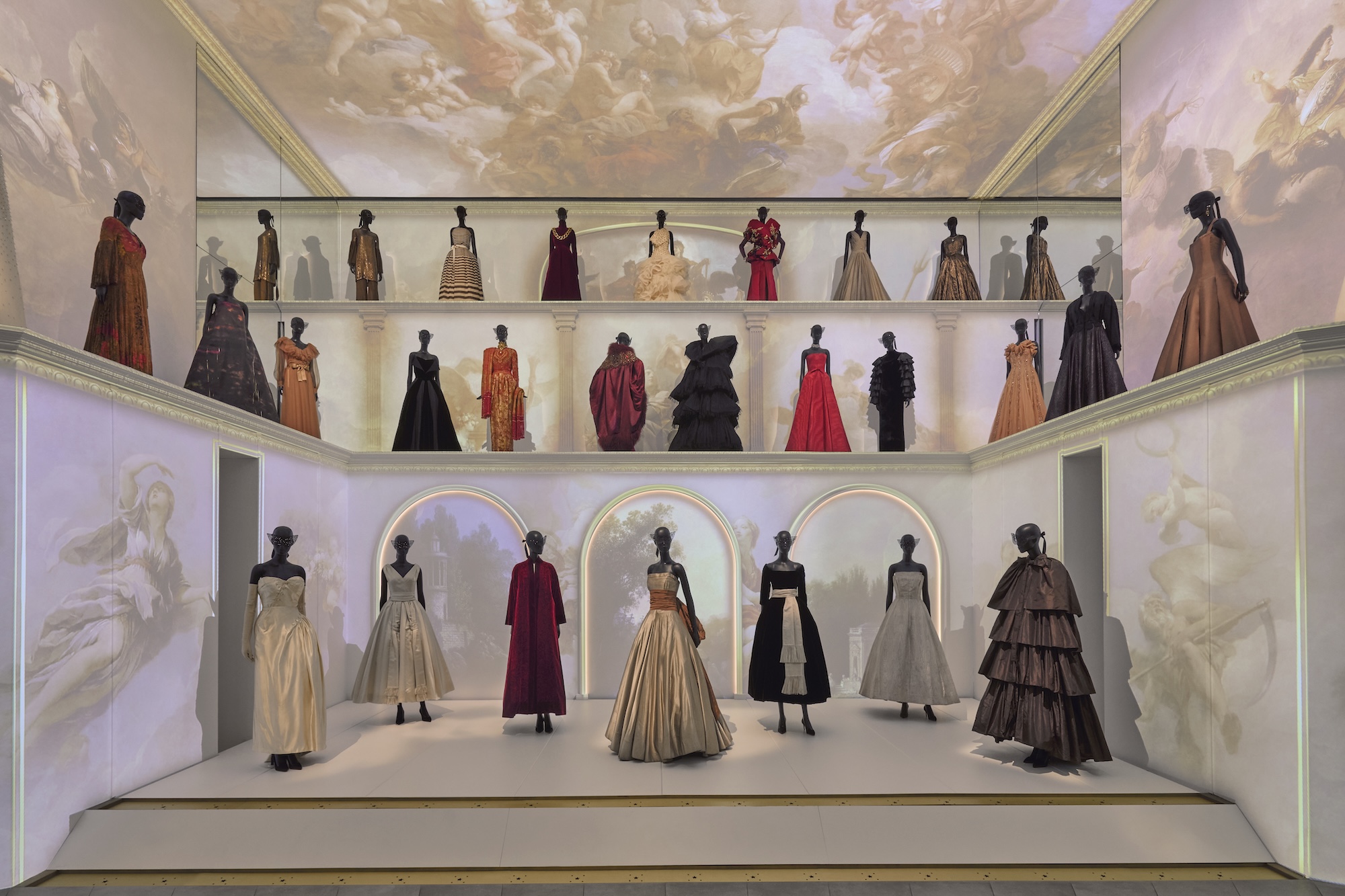
Thanks to the collaboration of Dior Héritage, which helped identify them, 101 pieces by Dior belonging to the Alaïa Foundation have been on display since late November 2025 at La Galerie Dior in Paris: dresses created by Christian Dior and his successors, Yves Saint Laurent, Marc Bohan, Gianfranco Ferré and John Galliano. The forty other garments featured in the exhibition, designed notably by Raf Simons, Maria Grazia Chiuri and Jonathan Anderson, belong to the Dior heritage.
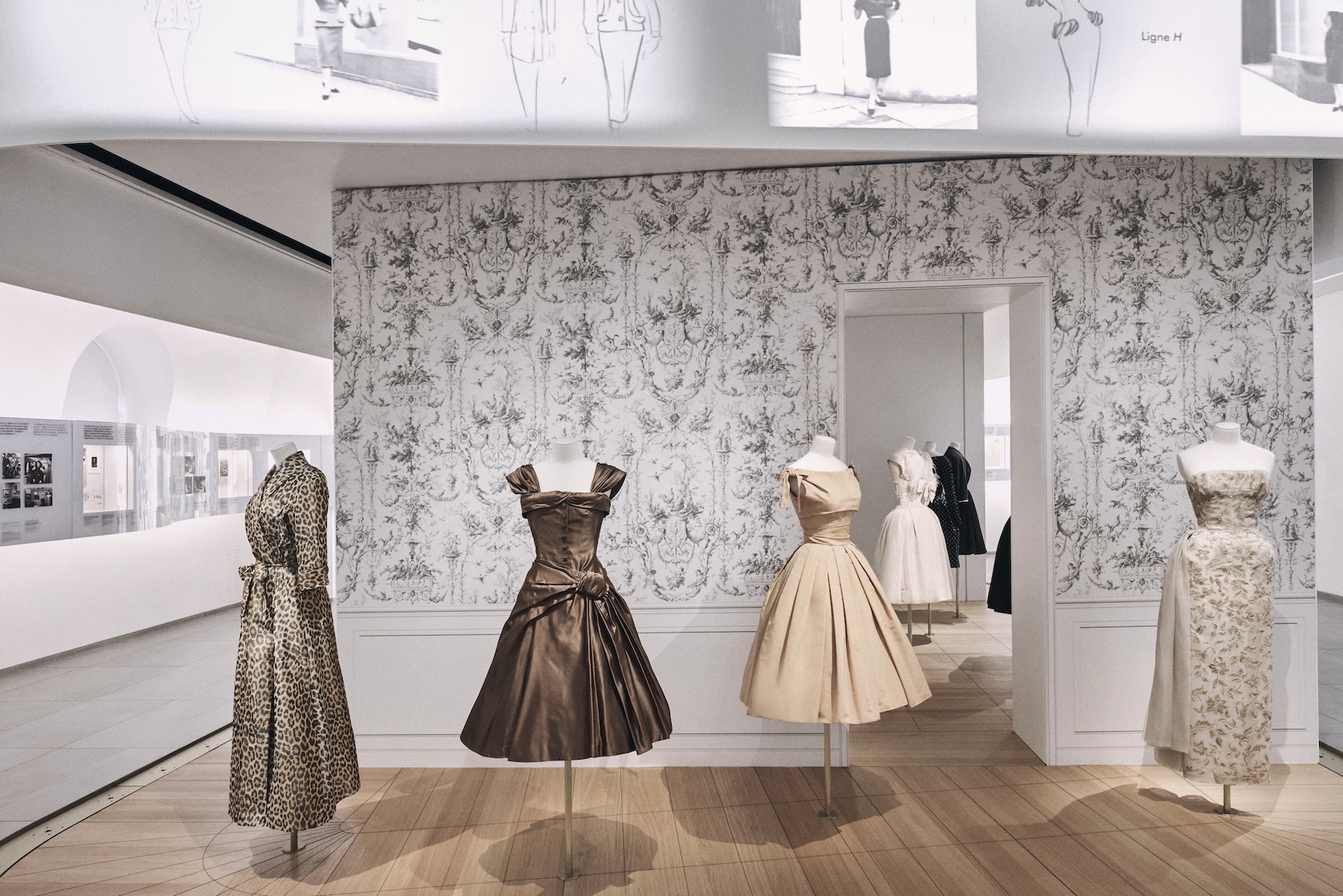
Scenography © Adrien Dirand
But before beginning the tour, let us return to a pivotal moment in the history of fashion. The time is 1946, one year after the end of the Second World War. The French economy is in dire straits. An art dealer named Christian Dior, from a Normandy family of fertiliser manufacturers, had been approached by the textile industrialist Marcel Boussac to create a fashion house bearing his name. The aim was to revive the textile industry at a time when the French were only just emerging from a long period of restrictions marked by ration cards.
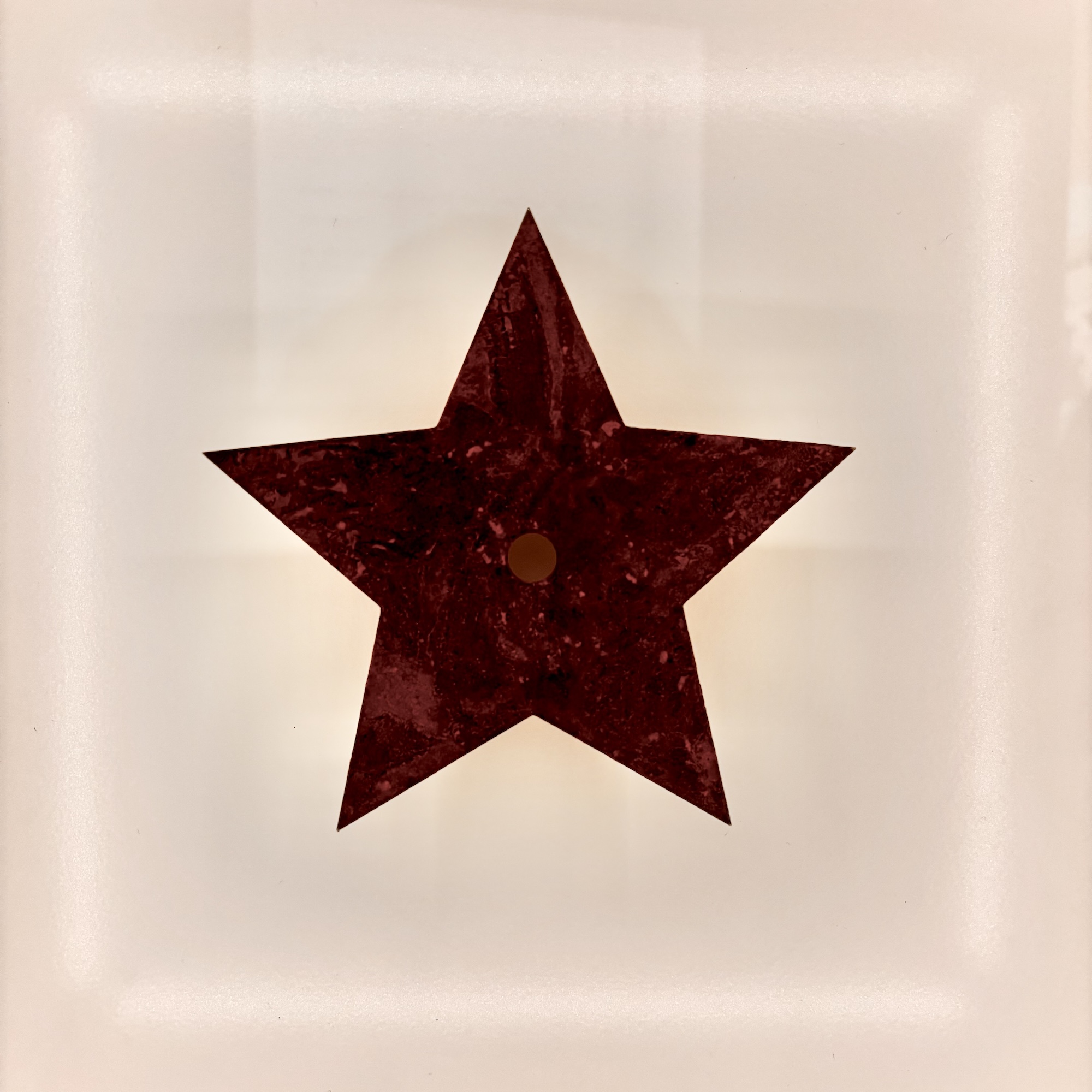
Christian Dior’s lucky star, which he found in 1946, ©Isabelle Cerboneschi
Legend has it that on 18 April 1946, whilst on his way to a meeting with Marcel Boussac, Christian Dior stumbled over a metal star that had come loose from a horse-drawn carriage. This superstitious man took this as a sign of destiny, and this star, which became one of the house’s signature motifs, remained with him until his final breath in 1957. This symbolic object opens the exhibition right next to the famous Bar suit presented by Christian Dior at his first fashion show, which took place in the salons of his fashion house at 30 Avenue Montaigne on 12 February 1947. This instantly recognisable silhouette is part of that first collection which Carmen Snow, the influential editor-in-chief of Harper’s Bazaar, had christened the ‘New Look’.
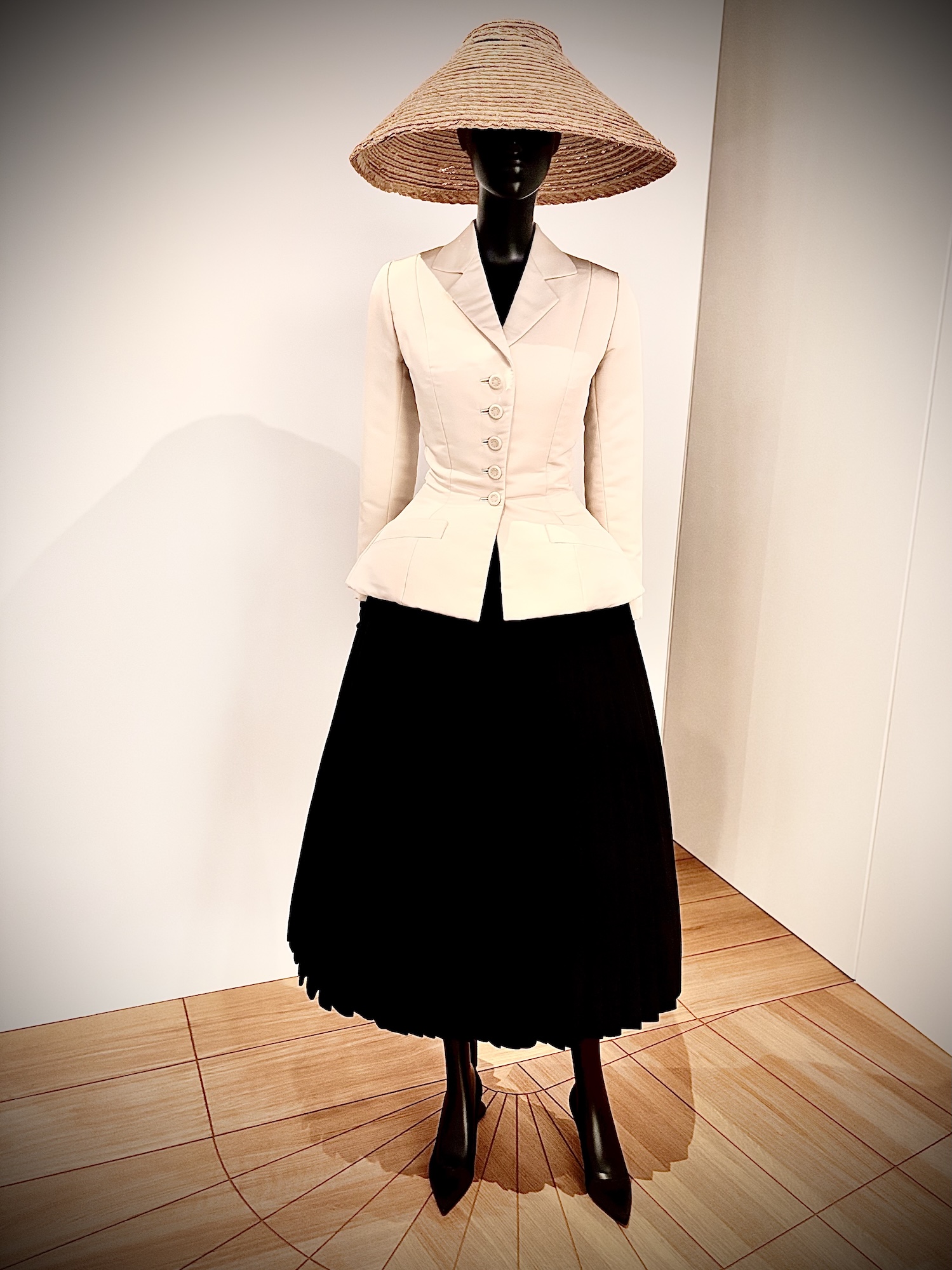
The Bar suit, created in 1947 by Christian Dior, ©Isabelle Cerboneschi
Throughout the exhibition, we discover Azzedine Alaïa’s flair for cut, the definition of a line – be it the Y line of 1955, the Aimant line of 1956 or the Fuseau line of 1957 – and his love of precious fabrics. We also come to understand the origin of his penchant for a sharply defined waist: the rigid inner corsets of Christian Dior’s dresses gave rise to the accentuated waistline of Azzedine Alaïa’s dresses, which he further cinched with leather belts as wide as corsets.
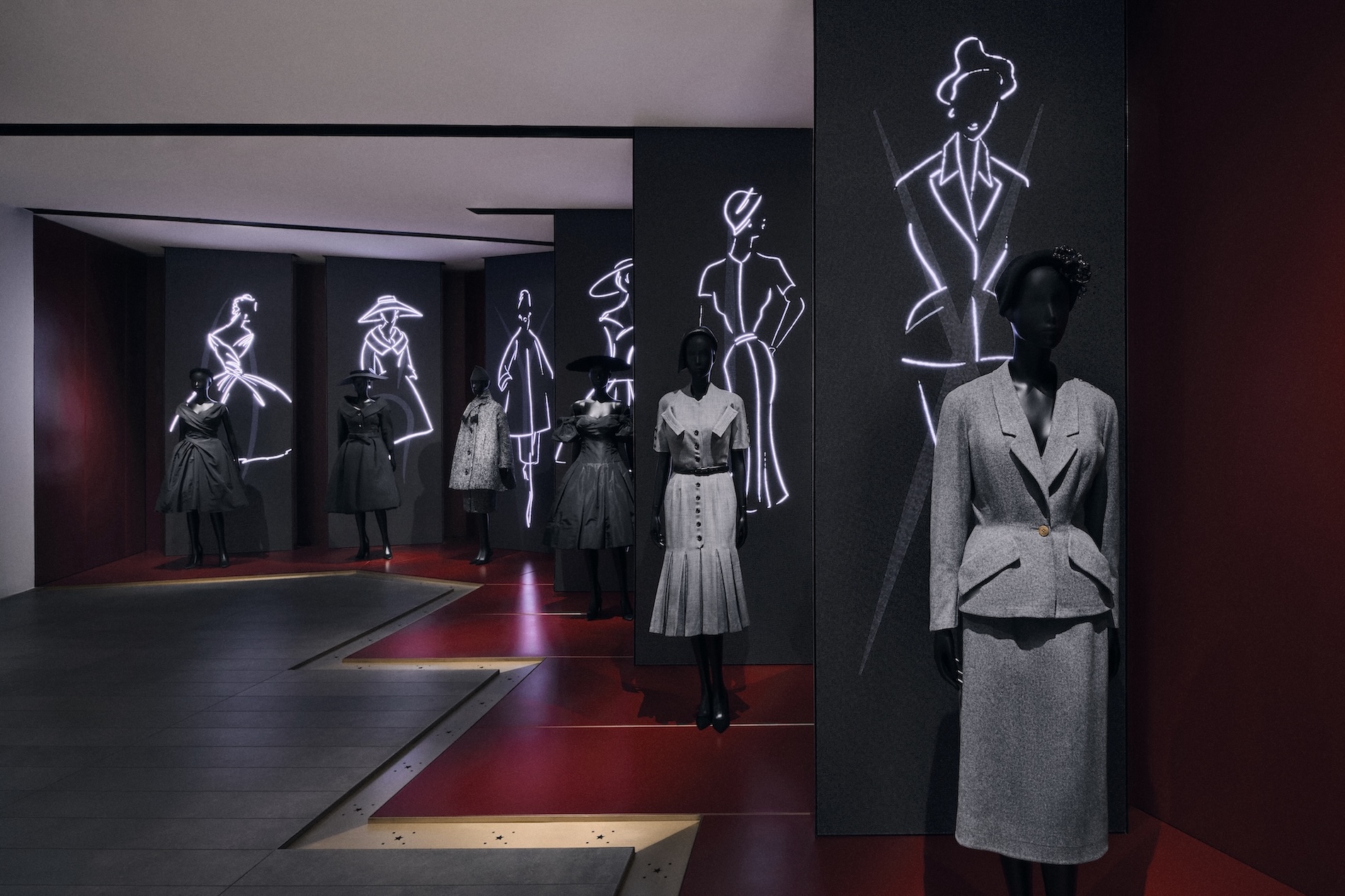
Scenography © Adrien Dirand
“Christian Dior’s designs bear witness to the ceaseless quest that Azzedine Alaïa constantly sought. In his search for the mysteries of dresses, for the delicate structures that make the diaphanous petticoats ‘stand up’, he skilfully brought together the objects of his teenage daydreams,” notes Olivier Saillard, director of the Azzedine Alaïa Foundation.
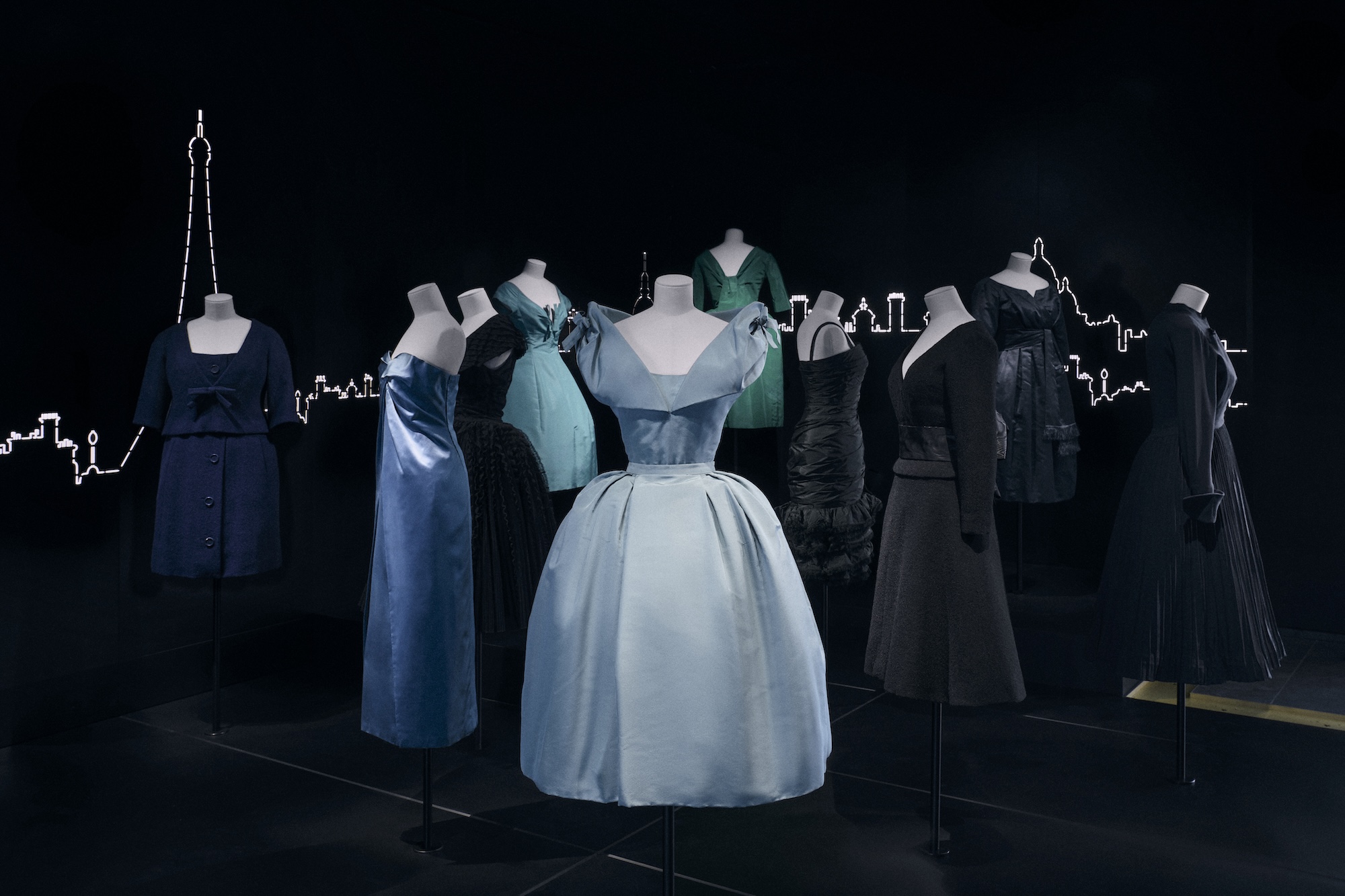
Scenography © Adrien Dirand
At the same time, and until 21 June, visitors can explore the exhibition AZZEDINE ALAÏA AND CHRISTIAN DIOR, TWO MASTERS OF COUTURE at the Azzedine Alaïa Foundation. This exhibition offers a unique presentation of the works of these two masters of couture. Around thirty Christian Dior designs collected by Azzedine Alaïa are displayed alongside an equal number of Alaïa’s own creations, illustrating how one influenced the other. A silent dialogue thus unfolds between two masters across the ages…
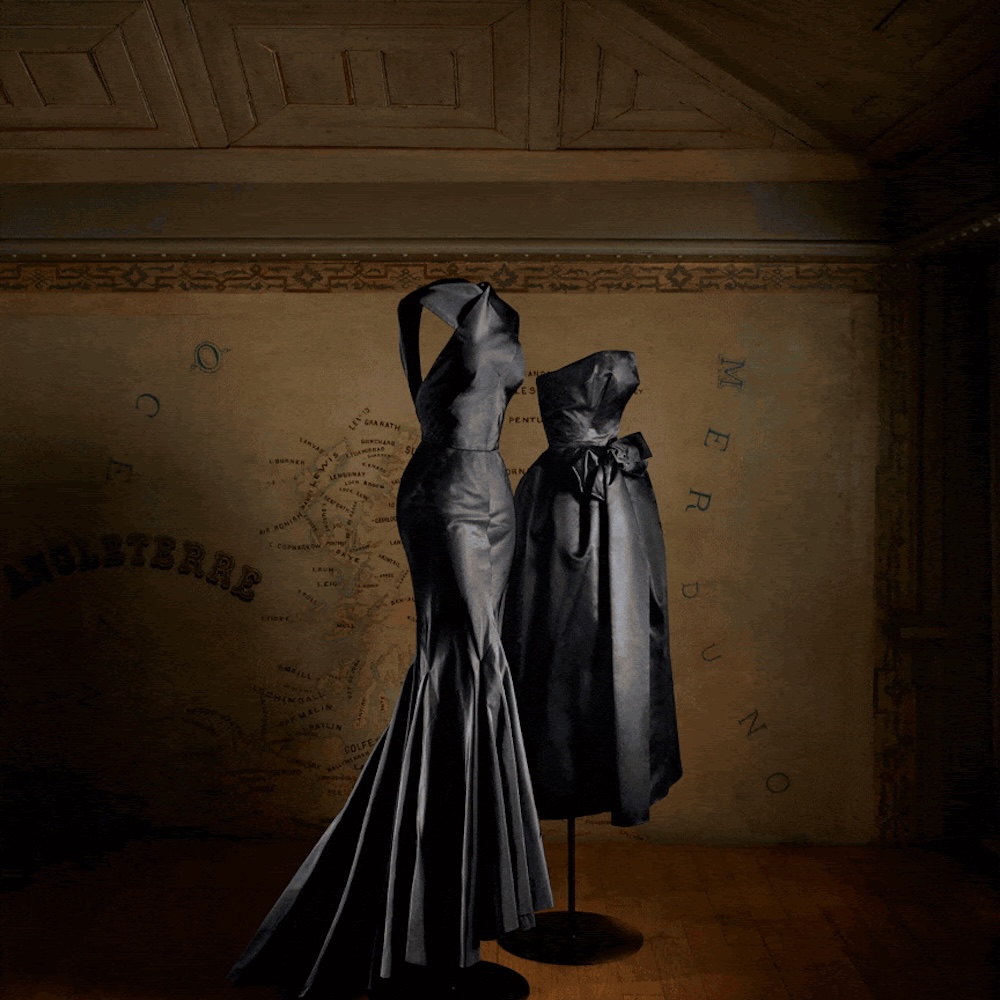
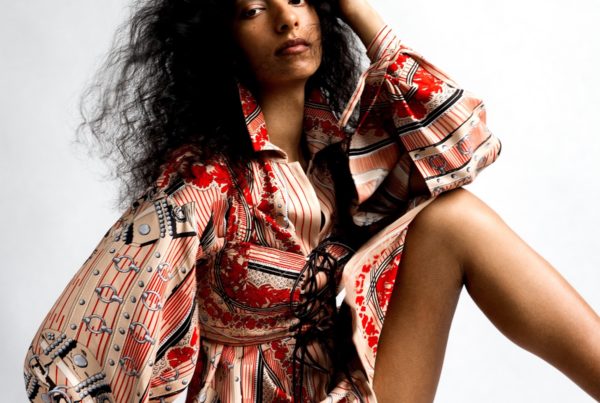
AZZEDINE ALAÏA ET CHRISTIAN DIOR, DEUX MAÎTRES DE LA COUTURE, © Stéphane Aït Ouarab & © Laziz Hamani
Not to be missed:
LA COLLECTION DIOR D’AZZEDINE ALAÏA, until 17th May, La Galerie Dior, 11 rue François Ier, Paris 8th. Open every day except Tuesday, from 11am to 7pm (last admission at 5.30pm). Even if tickets are sold out online, it is possible to buy tickets at the venue.
AZZEDINE ALAÏA AND CHRISTIAN DIOR, TWO MASTERS OF COUTURE, until 21st June 2026, Fondation Azzedine Alaïa, 18, rue de la Verrerie, Paris 4th. Open daily, from 11am to 7pm.
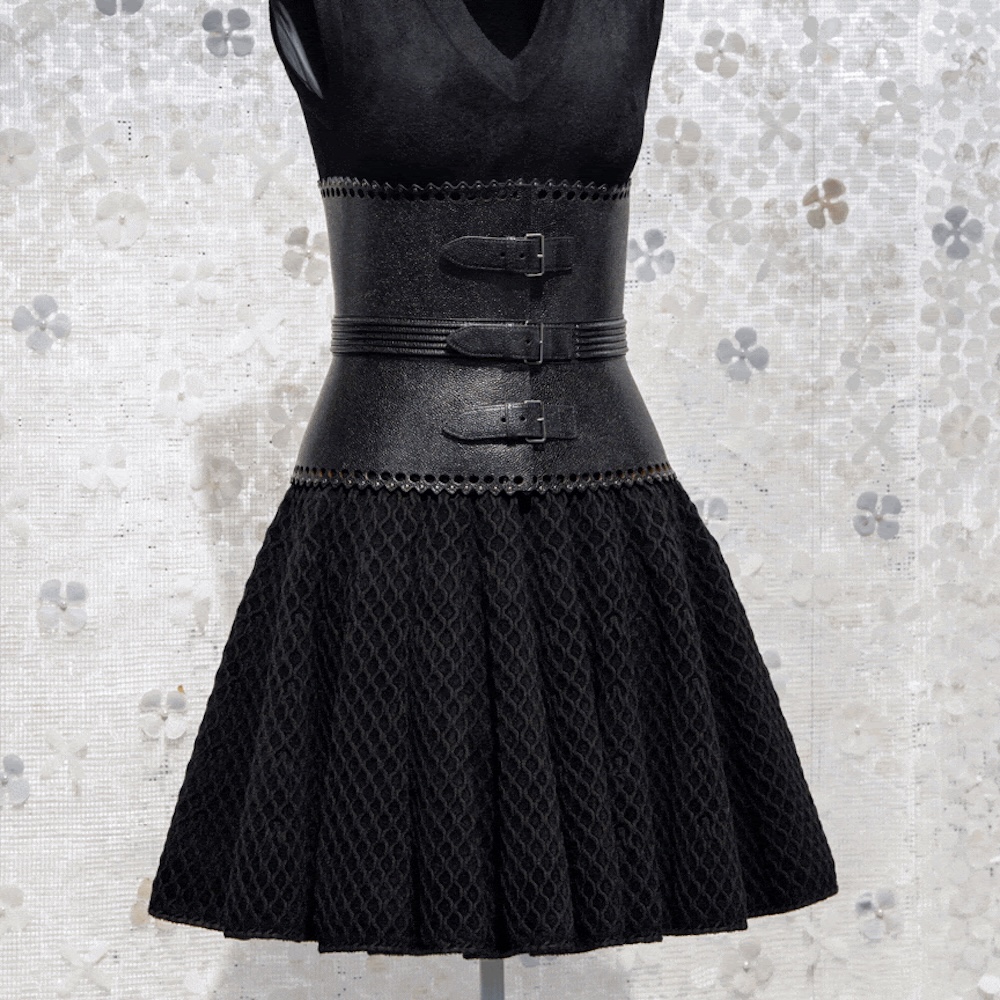
The rigid inner boning in Christian Dior’s dresses gave rise to the cinched waists of Azzedine Alaïa’s dresses, which he cinched even further with belts as wide as corsets, © Stéphane Aït Ouarab & © Laziz Hamani