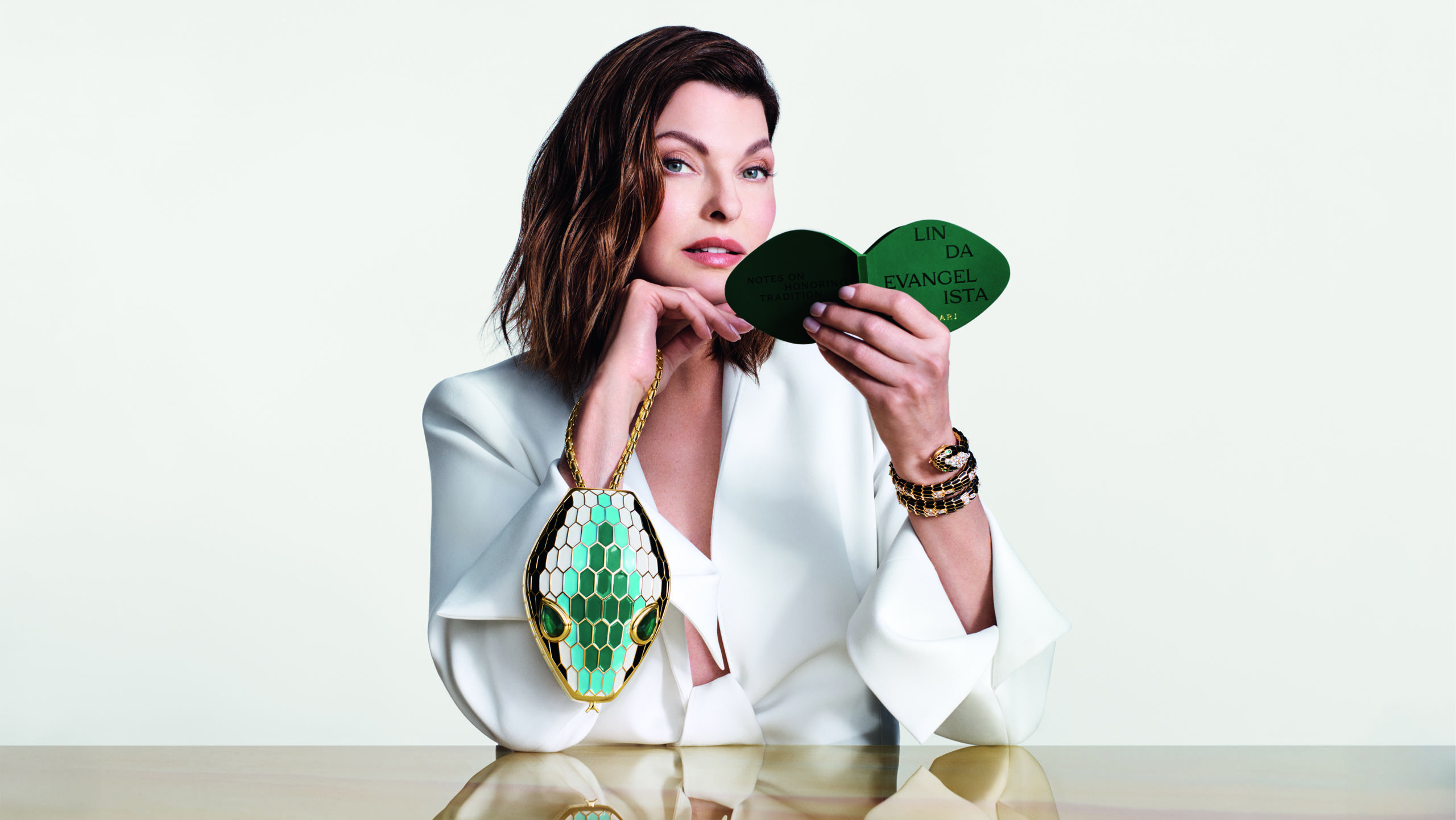

Icons: jewellery bags to be held in the palm of your hand
Bvlgari has launched a collection of exquisite clutch bags this year, inspired by the brand’s iconic collections: Monete, Serpenti, Tubogas, Divas’ Dream and Bvlgari Bvlgari. These bags, designed by Mary Katrantzou, Creative Director of Leather Goods and Accessories at Bvlgari, have been crafted with the same care as the jewellery to accompany the women who wear them during special moments, reflecting their individual style. Isabelle Cerboneschi

Mary Katrantzou, Creative Director of Leather Goods and Accessories at Bvlgari ©Bvlgari
Before designing clutch bags for Bvlgari, Greek designer Mary Katrantzou already seemed to be collecting worlds and wonders. The daughter of an interior designer and a textile engineer, she grew up in Athens surrounded by art books, fabrics and precious objects. Was it this childhood bathed in light and beauty that gave rise to her fascination with ornaments that tell stories? Perhaps…
Having initially trained in architecture, she chose to scale down her designs to at London’s prestigious Central Saint Martins and study fashion. Mary Katrantzou quickly made a name for herself and established her unique aesthetic. Her colourful printed garments sometimes feature trompe-l’œil necklaces, imaginary gemstones or oversized ornaments, already creating a dialogue between fashion and jewellery.
In 2024, her appointment as the first Creative Director of Leather Goods and Accessories at Bvlgari seemed a natural fit. Upon joining Bvlgari, the Greek designer discovered an aesthetic kinship, sharing with the Roman House a shared fascination with colour, a taste for the spectacular and a deep attachment to their roots: Greek for one, Roman for the other.
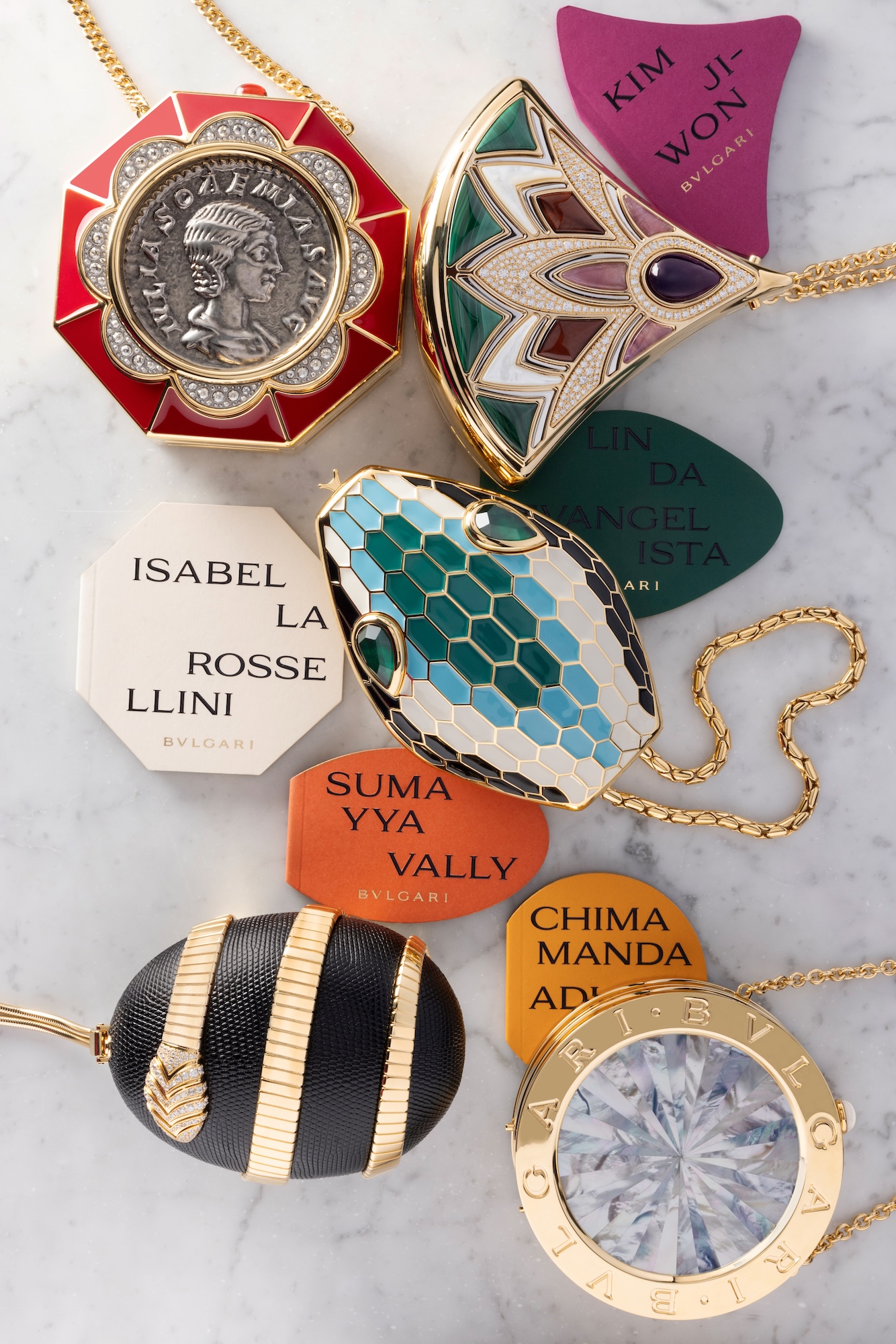
Bvlgari Icons Minaudière Collection ©Bvlgari
Can we still call them accessories after discovering the collection of clutch bags she has designed for Bvlgari? These jewel-like bags have been crafted with the same care as pieces of jewellery. They gleam like treasures one might have unearthed in a Roman palace, to be held close in the palm of the hand or nestled in the crease of the elbow. Each one pays homage to an icon of the house: Monete, Serpenti, Tubogas, Divas’ Dream and Bvlgari Bvlgari.
With her miniature creations at the crossroads of fine jewellery and artistic craftsmanship, Mary Katrantzou explores a particular vision of luxury. She offers a bag capable of holding a dream rather than a mobile phone, granting the wearer a moment as precious as the bag itself.
INTERVIEW
How long did this project take to come to fruition?
Mary Katrantzou : This project took a long time to come to fruition. It’s been almost a year and a half since I started working on these clutch bags. The summer was the perfect time to reflect on the vision for the Bvlgari bags.
How did you come up with the idea of creating clutch bags?
In 2021, as part of a collaboration with Bvlgari, I had already created Serpenti Metamorphosis clutch bags, which were worn by model Natalia Vodianova for the campaign. The idea of creating a collection of precious evening bags – something we had never done before – allowed us not only to work on the positioning of this category, but also to build a bridge between the worlds of fine jewellery and leather goods. It is this intermediate realm that I wanted Bvlgari to embrace—one that no other luxury brand can claim. These clutches are as precious as a piece of jewellery that transforms into a functional accessory. Creating a collection entirely dedicated to evening wear gave us the opportunity to showcase not only Bvlgari’s craftsmanship but also its iconic pieces. Of course, this meant sticking to a very limited series.
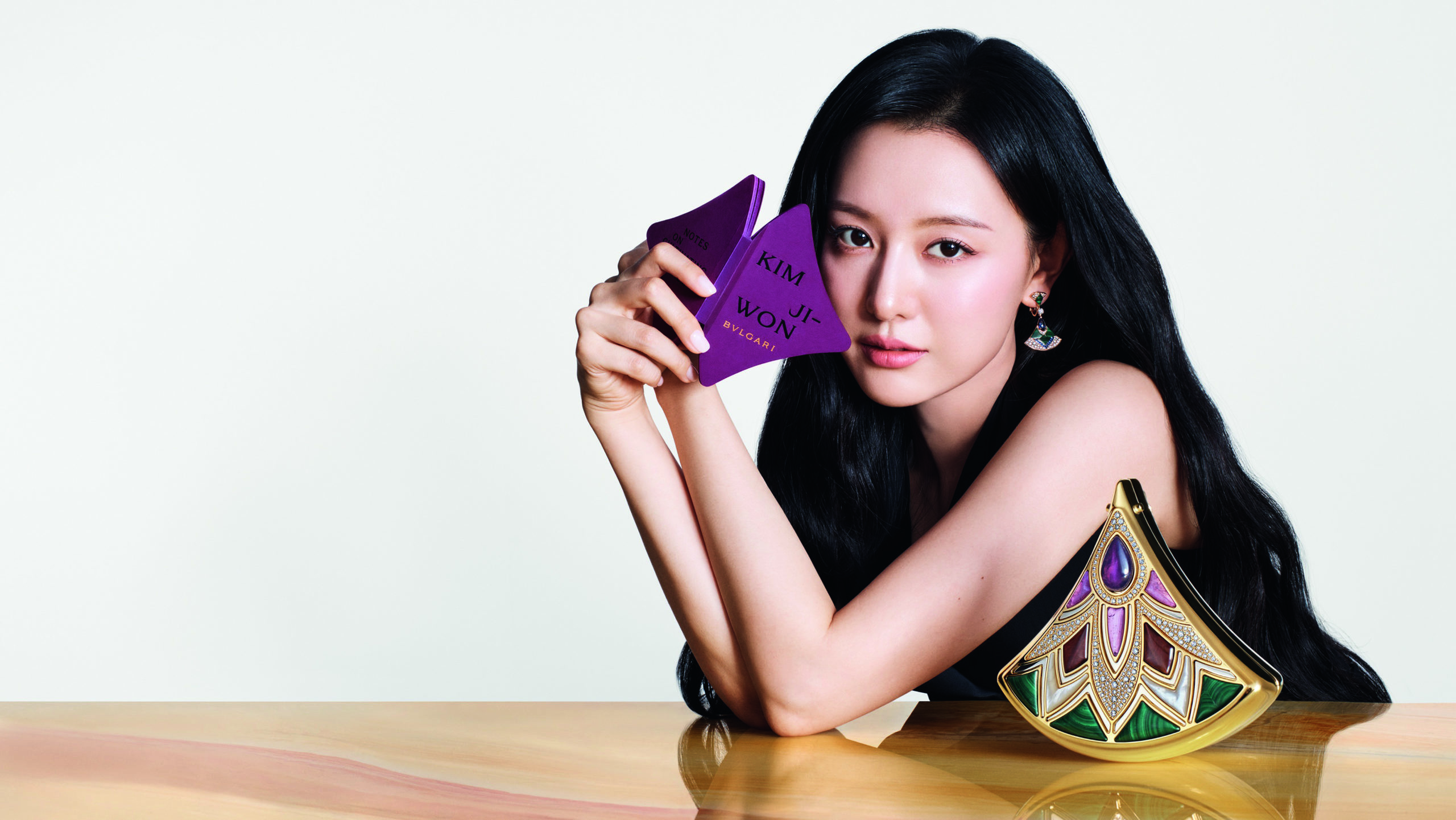
Kim Ji-Won, Icons Minaudière Collection Bvlgari ©Ethan James Green
How did you choose these particular icons?
I was introduced to the world of Bvlgari by Laura Burdese, who will become our new CEO on 1st July. I travelled to Rome and she showed me all the House’s symbols and icons. It was during that visit that this project began to take shape. Originally, I had more symbols in mind, but we chose to focus on icons whose shapes could be adapted to objects such as a clutch bag. The cosmic egg from Greco-Roman mythology, which symbolises the beginning of time and the creation of the world, inspired the Tubogas model. As I mentioned, I had previously worked on the Serpenti model. The Divas’ Dream bag, whose design is inspired by the mosaics of the Baths of Caracalla, is fan-shaped. The Monete model references the famous jewellery collections set with ancient Roman coins, and Bvlgari Bvlgari, of course, references the original Bvlgari Bvlgari watches, right down to the mother-of-pearl centre inspired by the watch face. There were other strong symbols, but they resembled a clutch bag less than these. The collection features highly recognisable shapes: the hexagon, the circle, the snake’s head, the fan. As for the idea of the egg, it came to me from an image I found in one of our books, where the photographer had wrapped the Serpenti Tubogas watch around an egg. It was a powerful image linked to mythology.
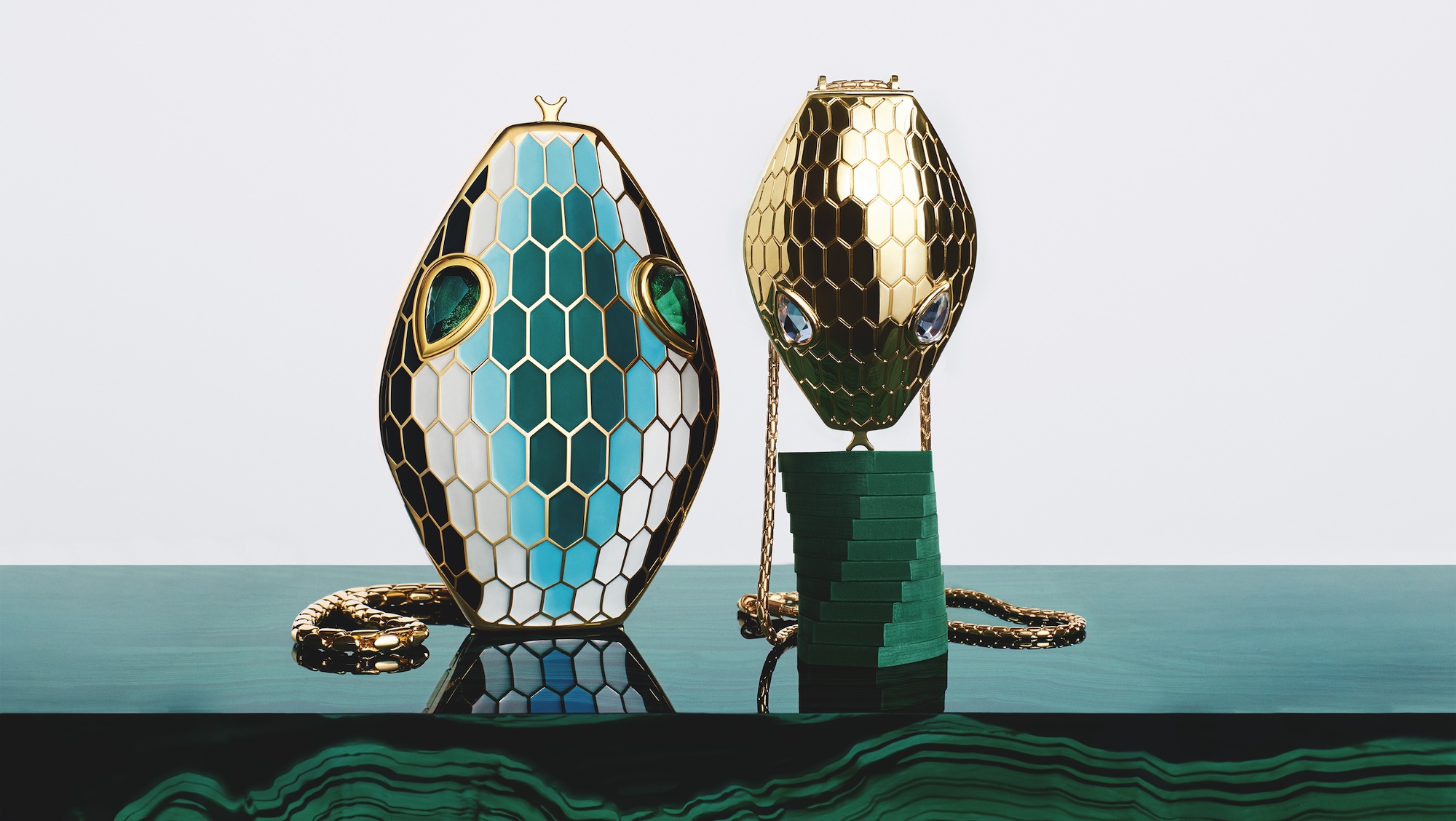
Minaudière Serpenti ©Bvlgari
You are known for your architecture-inspired fashion collections and their sophisticated embellishments. How did you reconcile your distinctive signature with Bvlgari’s Roman and jewellery heritage?
When working on your own brand, you have to be introspective: your ideas cannot come from archives, nor from a living heritage. You have to ensure that your creations will form your future archives. Having the opportunity to visit Bvlgari’s archives, to examine them in depth and to understand all these incredible innovations – because what belongs to heritage today was once innovation – is something I had never been able to do as a designer. What’s interesting about this project, and indeed all our bags, is the idea of drawing inspiration from 142 years of design integrity and bringing it into the future. That is, in fact, my role at Bvlgari: to examine what existed and develop it further.
Historically, clutch bags are associated with a sophisticated lifestyle that emerged in the 1920s. Did you design these as a fashion accessory or as a piece of fine jewellery with a function?
I wanted it to be something very unique to Bvlgari. These pieces are collector’s items. As Bvlgari has evolved, its symbols have evolved and gained in power over time. So, when you buy a bag that isn’t logo-centric but symbol-centric, you know it will increase in value over time, just like jewellery, because they share the same origins. Of course, it’s still a bag, but the fact that it celebrates a Bvlgari symbol makes it timeless. It’s not just a clutch bag; it’s Serpenti, it’s Divas’ Dream, it’s Tubogas, it’s Monete… These bags embody Bvlgari. And they highlight the beauty of craftsmanship. We’ve used techniques we’d never used before for bags. We set the team some challenges.
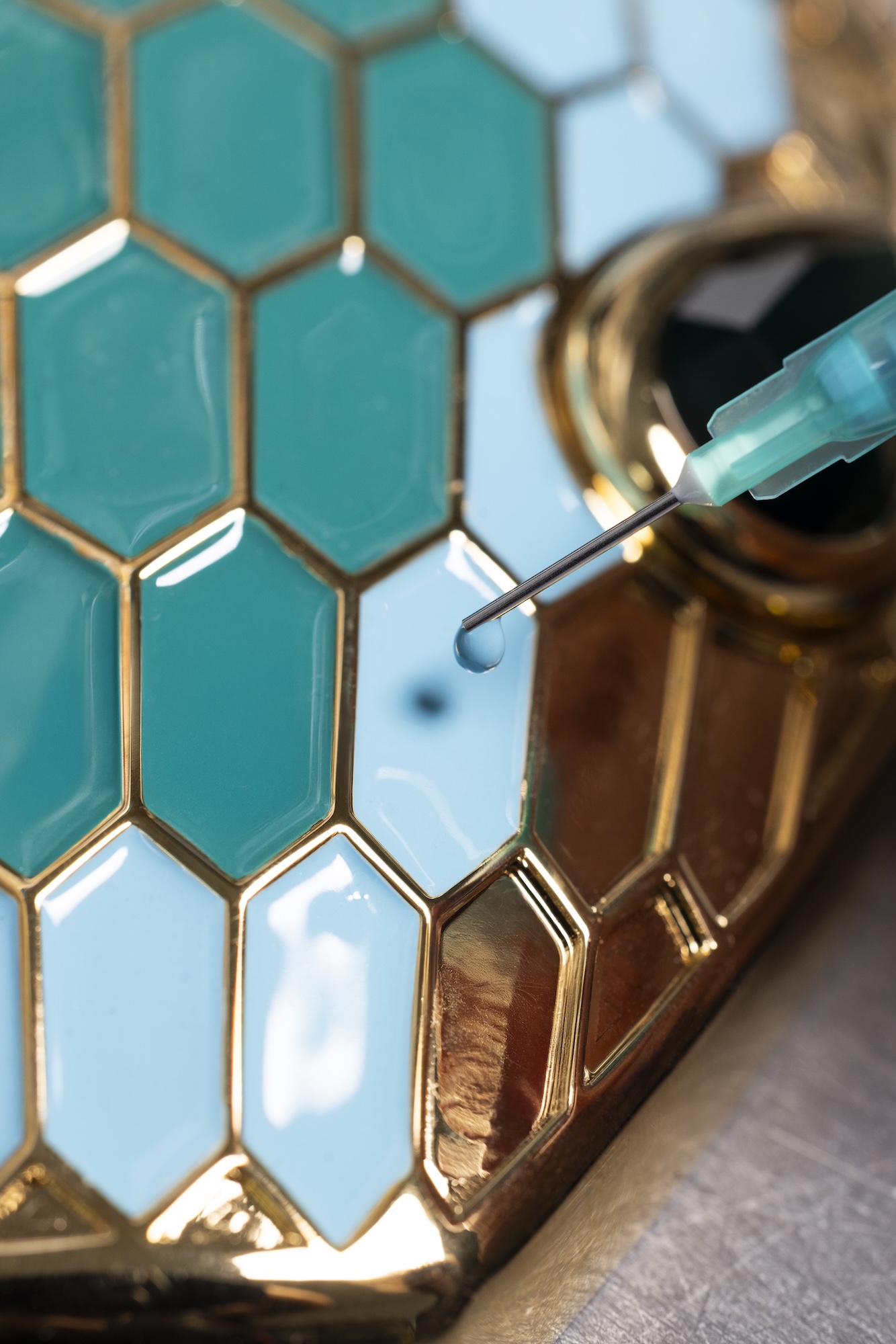
Making of Serpenti ©Bvlgari
You mention the techniques, and when you look at these clutches, you get the impression that they’ve been created exactly as jewellery is crafted. Is that the case?
We tried, in collaboration with the jewellery team, to remain very faithful to the techniques used in the workshops. For example, to create the Tubogas clutch, we had to develop in Florence – where our bags are made – the same tools as those used for the jewellery version of the Tubogas. Of course, the preciousness of the metal is different – it’s not pure gold, but a plating – but the technique, the tools and the proportions of the Tubogas are identical to those of Bvlgari. The same applies to Divas’ Dream. The semi-precious stones we use are in colours found in the Diva collections: malachite, amethyst and mother-of-pearl. And the setting of the zircons, which evokes diamond-paved motifs, was done in the same way as for the jewellery. To bring this project to life, we didn’t simply choose an existing piece of jewellery and enlarge it to create a different scale. We took inspiration from a piece of jewellery and gave it an entirely new function. That’s why it took us so long. Bvlgari created extraordinary clutch bags from the 1930s right through to the end of the 20th century. The gold Melone model, in particular, enjoyed immense success in the 1970s and 1980s. It had been a long time since Bvlgari had done anything similar.
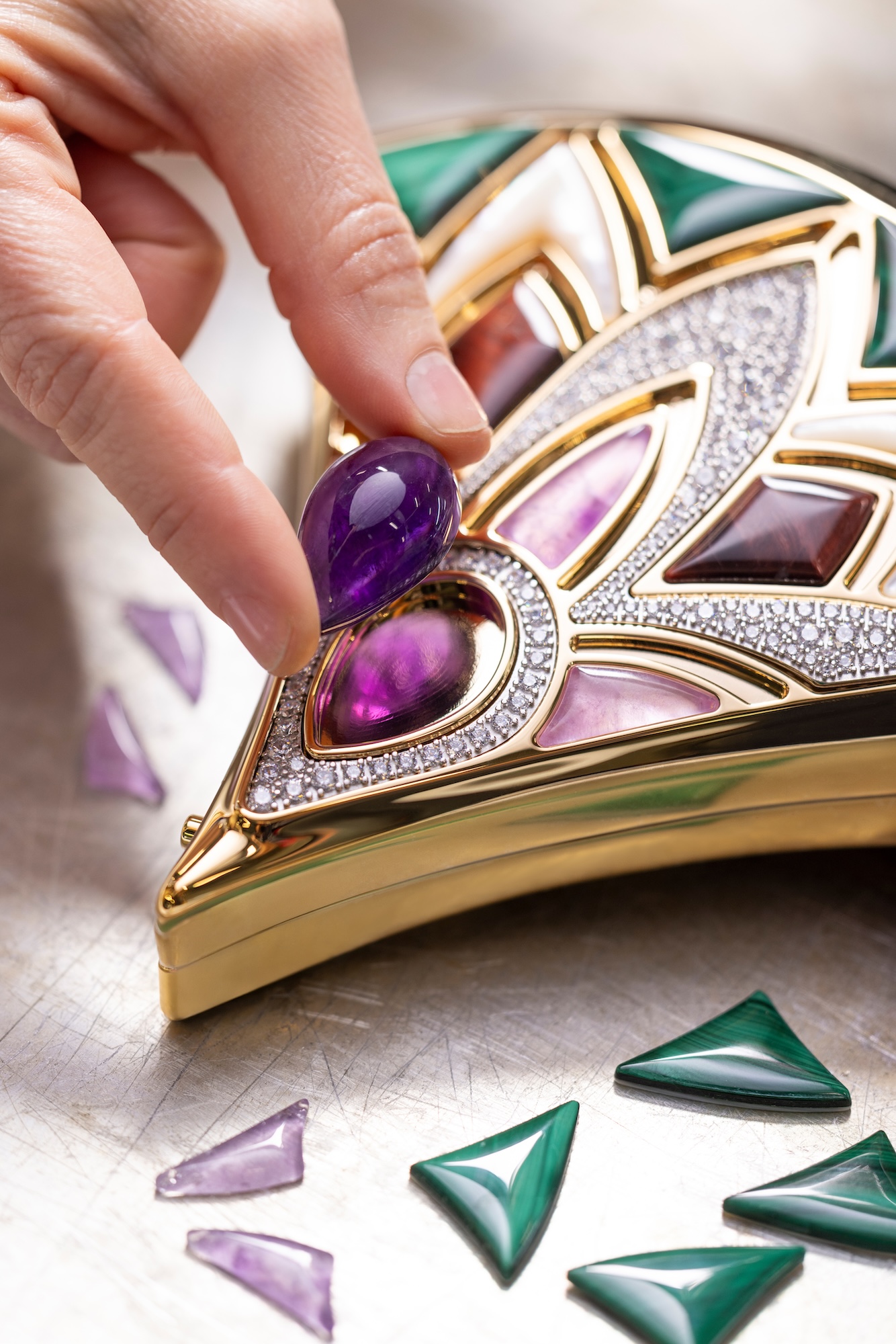
Making of Diva’s Dream
Was it a deliberate choice to create a bag that you can’t slip a phone into?
No, it wasn’t my aim to create a collection that couldn’t hold a phone. That had never crossed my mind. But it became clear very early on that, as the shapes of these designs are inspired by jewellery, we would have had to create a small trunk for a phone to fit inside (laughs). As the structure of the piece was limited, this allowed us to think about how to give meaning to these clutches and turn this restricted space into a distinctive feature. That’s how the ‘Carrying Culture’ campaign came about. We had the idea of associating a community of famous women with this collection: the writer Chimamanda Ngozi Adichie, the model Linda Evangelista, the actress Kim Ji-won, the actress and model Isabella Rossellini, and the architect Sumayya Vally. The slogan? What can you carry in a handbag so small that a phone cannot fit? You can carry culture. This allowed us to talk about Bvlgari bags in a very different, sophisticated way and to position the category for the future. Each personality shared their own perception of culture through their story and journey.
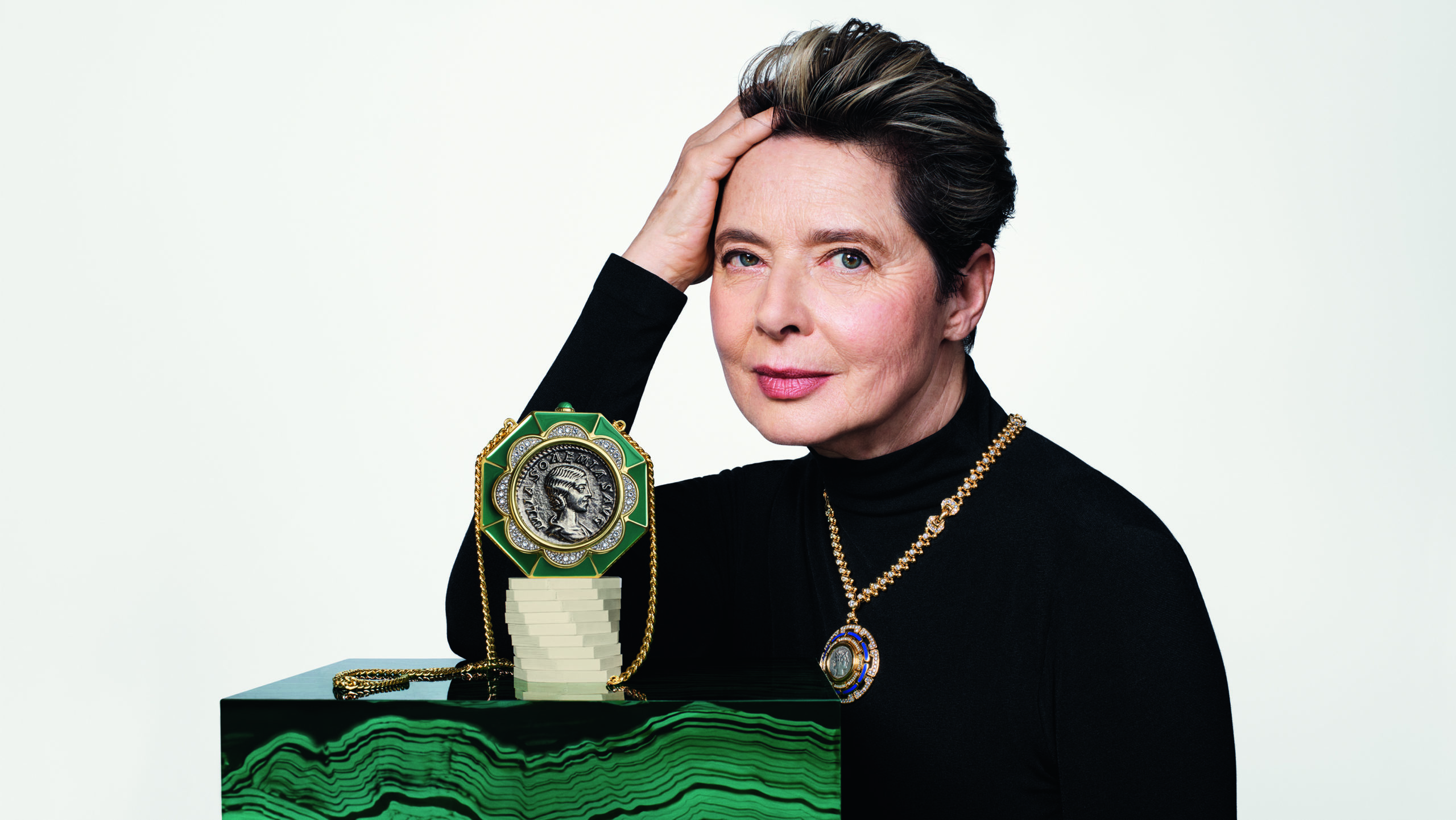
Isabella Rossellini, Icons Minaudière Collection Bvlgari ©Ethan James Green
It’s an elegant move to leave your phone aside for an entire evening…
It certainly gives you a chance to engage with your neighbours. When I carry a Bvlgari clutch to a party and set it down on the table, it becomes a talking piece. The person next to me notices it and invariably asks me questions. Besides, isn’t being unavailable for a while what true luxury is all about?
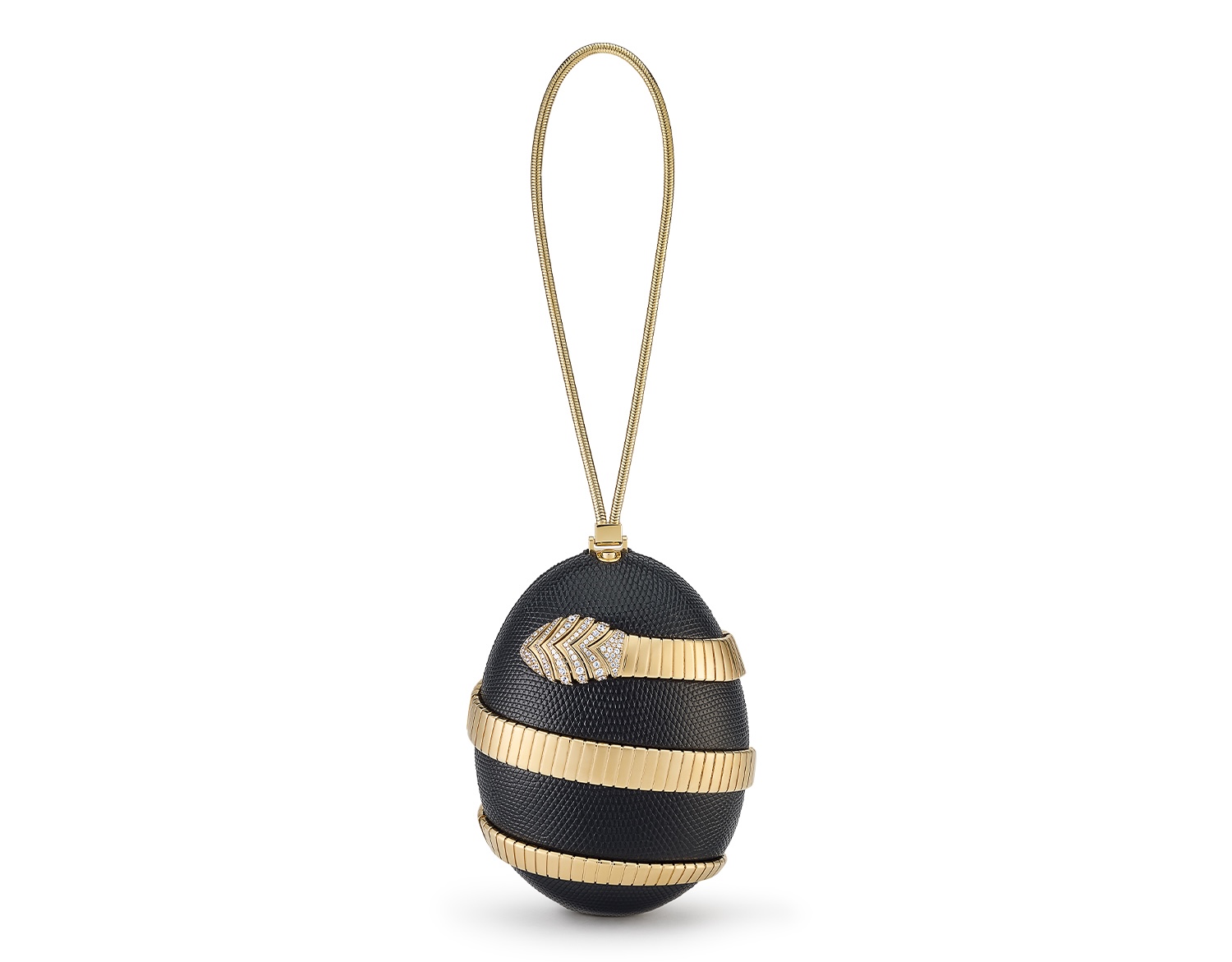
Tubogas Large ©Bvlgari