
Passing on the Art of Time at F.P.Journe
From François-Paul Journe’s founding vision to the hands of the watchmakers who carry his work forward, a precious thread runs through the generations. In the quiet of the Manufacture’s workshops, watchmakers learn the master’s language before passing it on in turn, through every movement bearing the motto Invenit et Fecit. An encounter with the men who are keeping François-Paul Journe’s legacy alive. Isabelle Cerboneschi
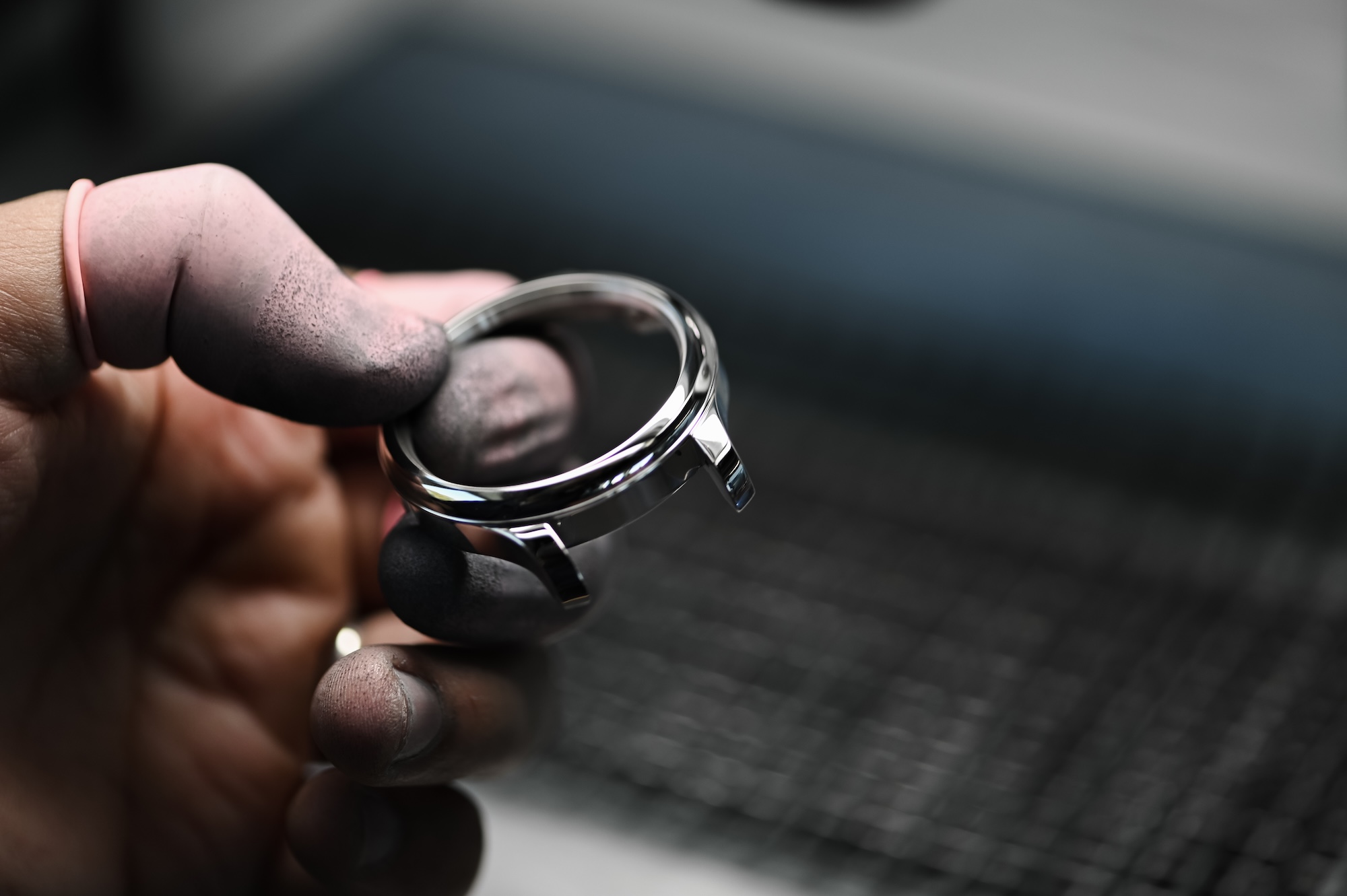
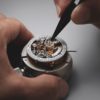
Polishing process.
Behind the precision of F.P.Journe’s calibres are hands, voices and individual journeys, all woven into a shared story: that of an exceptional Manufacture where the art of watchmaking is a language to be learnt and passed on.
It takes only a few hours spent with the watchmakers at F.P.Journe to understand the fascination François-Paul Journe inspires, not only among collectors but also among those who work alongside him. Listening to the people who bring his calibres and dreams to life every day offers an insight into what it means to work for him, and with him. It also reveals what the passing on of knowledge truly means within these walls.
The affection and admiration they feel for him spring from the master watchmaker’s extraordinary body of work, which unfolds almost like a novel, its compelling chapters each revolving around a particular calibre.
Some are young, others highly experienced. All are passionate and full of admiration, occasionally moved when speaking of the man some still address as “Monsieur Journe”. Through their words emerges a portrait of a remarkable watchmaking house, where the beauty of craftsmanship comes with a commitment: to contribute to a horological legacy without ever compromising the spirit of its creator. From the youngest recruit to the seasoned watchmaker who now passes on his own knowledge, each has a story that echoes another. Together, these accounts reveal the soul of the Manufacture.

François-Paul Journe in his early days.
François-Paul Journe’s early years
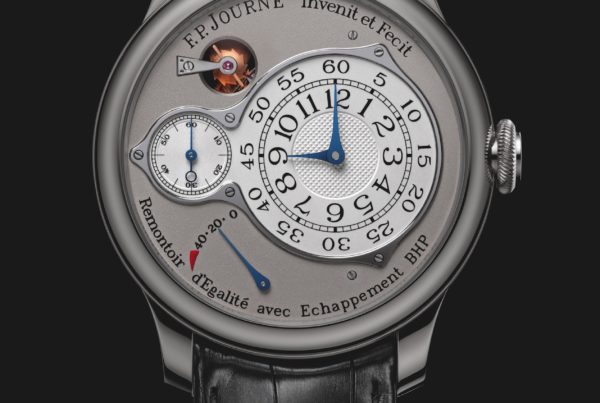
To understand this culture of transmission, we must first go back several decades, to François-Paul Journe’s own apprenticeship. Born in Marseille in 1957, he studied at the Paris School of Watchmaking before joining his uncle Michel’s workshop, specialising in the restoration of antique timepieces. There, he discovered the work and spirit of the great masters who would become his sources of inspiration: Antide Janvier, Abraham-Louis Breguet and Ferdinand Berthoud, to name but a few. It was in this Parisian workshop that he absorbed the horological culture and aesthetic traditions of the 18th century, influences that would later shape the first wristwatch he made entirely by hand in 1993: the F.P.Journe Tourbillon à Remontoir d’Égalité “15/93”.
In 1999, he unveiled his first collection under his own name, F.P.Journe, accompanied by the Latin motto Invenit et Fecit — “He invented it and made it”. His ambition was to conceive and manufacture his own movements with complete independence. His career has since been marked by technical innovations that have left a lasting imprint on watchmaking history, including the Tourbillon Souverain (1999), the Chronomètre à Résonance (2000), the Sonnerie Souveraine (2006) and the Astronomic Souveraine (2020), to name just a few.
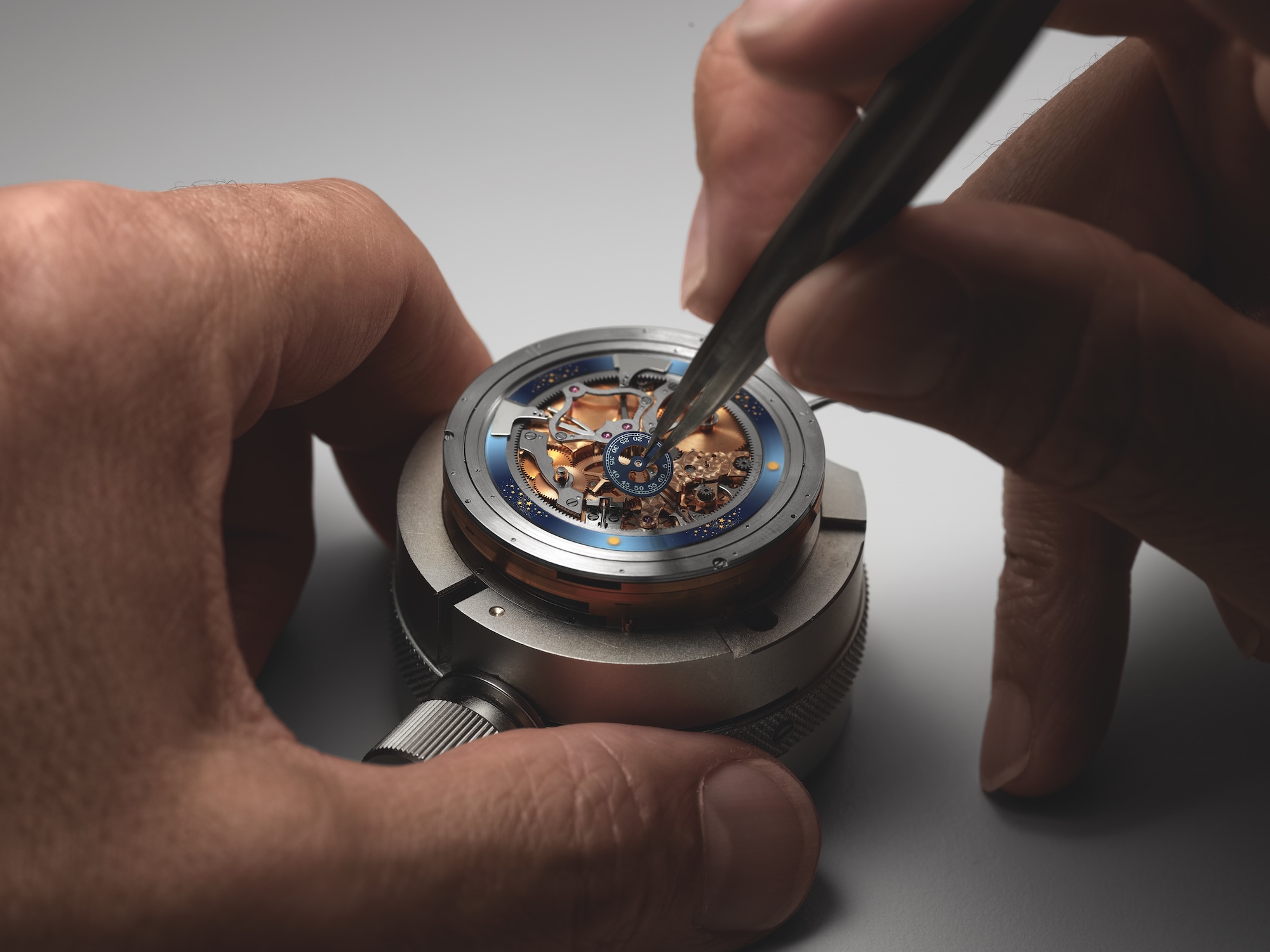
Positioning and adjustment of the seconds disc during assembly of the Astronomic Souveraine movement.
“The Picasso of watchmaking”
For many of the Manufacture’s watchmakers, François-Paul Journe is far more than a celebrated name in horology. He is an exceptionally gifted and demanding creator. For Louis, 24, who has worked as a watchmaker at F.P.Journe since October 2023, “François-Paul Journe is the Picasso of watchmaking. What he has achieved in twenty-five years, nobody else has done. His creations are not merely mechanisms; they are works of art.”
The young watchmaker studied in Marseille, François-Paul Journe’s birthplace.
“There were posters of his watches hanging on the walls of our classroom,” Louis recalls. “It was inspiring to see what he had accomplished and to think, ‘He comes from here, and look what he’s achieved!’ The first time I opened an F.P.Journe movement, I thought it was magnificent! Even a seemingly simple model like the Chronomètre Souverain reveals surprising technical choices: the gear train is unlike that of any other movement. I often wonder why he designed it that way. What was he trying to achieve? Assembling the movements he has created is a way of entering his mind. You can sense the extraordinary power of his talent, his ability to take the foundations of traditional watchmaking and reinterpret them to create something unique. Working at the Manufacture is both an education and a source of pride.”
“To me, François-Paul Journe is a watchmaking genius, but also a visionary entrepreneur,” explains Sylvain, who joined F.P.Journe on 1 September 2006 and is now responsible for training. “Fifteen years ago, I used to wonder where he was heading… and the results today show that he was right. Working with him means playing a small part in the chapter of watchmaking history he is writing. It raises your own standards. I am convinced I would never have reached this level anywhere else.”
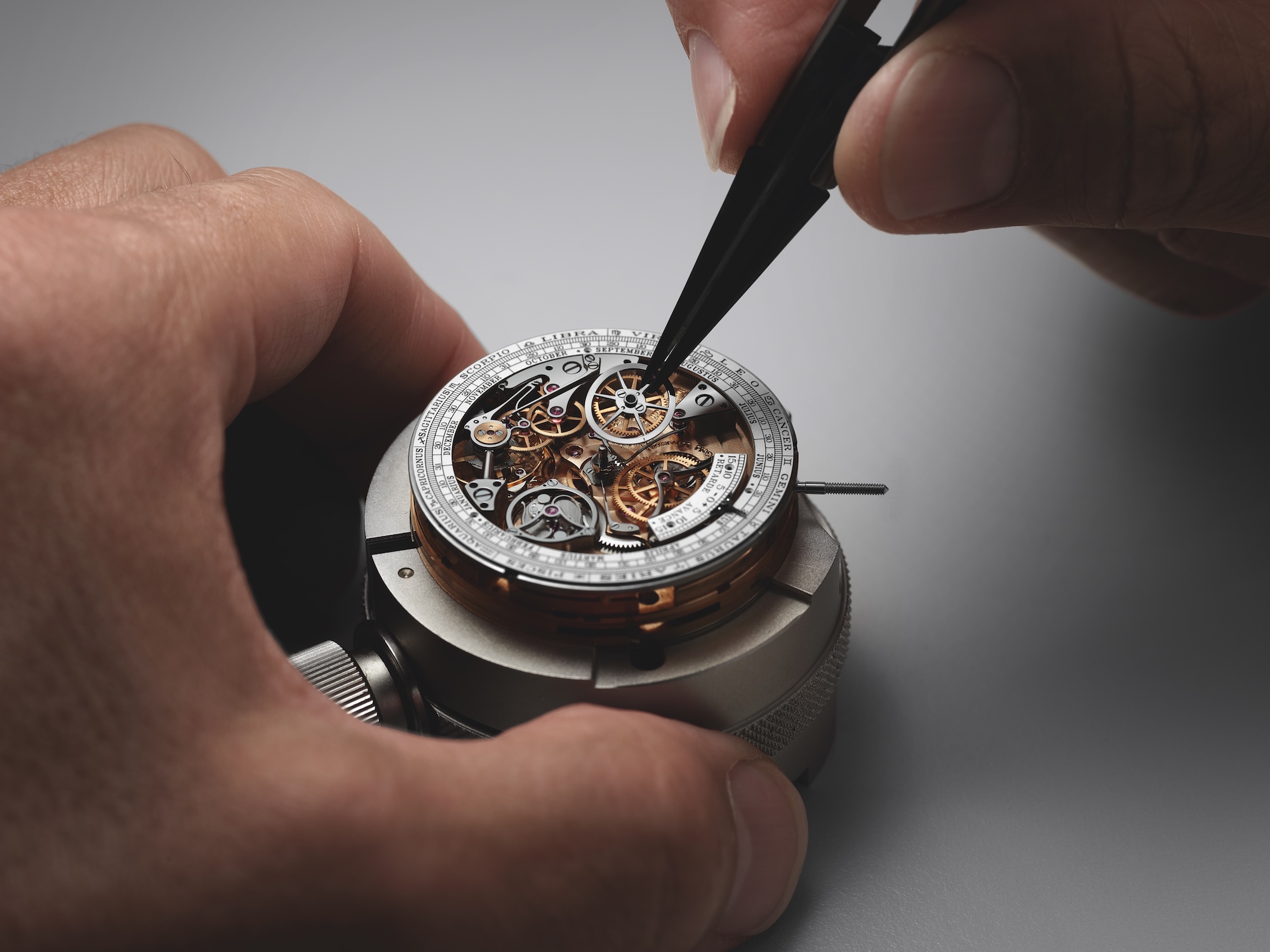
Fitting the equation-of-time cam to the back of the Astronomic Souveraine movement.
F.P.Journe, and nowhere else
Listening to these watchmakers recount their professional journeys, one discovers that, for many of them, working at F.P.Journe was the ultimate ambition.
“My dream as a student was to work for Monsieur Journe,” reveals Antoine, who joined F.P.Journe on 1 June 2017. “In 2008, when I finished my studies, I sent in my first application, but without success. Years later, after returning from a trip, I decided to try again. This time, I was hired. Had I not been, I would have kept applying until I succeeded. That was my goal. I am grateful to be able to contribute to this collective endeavour, even if, in our day-to-day work, we do not always appreciate the significance of what we are doing. I am proud to say that I do not work for just any watchmaker. I work at F.P.Journe.”
For each of them, the first day remains an unforgettable experience. “One of my most vivid memories at F.P.Journe is my very first day,” recalls Marc, who has worked at the Manufacture since 2014. “I came in through the main entrance, into the showroom. It was rather overwhelming, because the first thing you encounter is the extraordinary astronomical clock by Constantin Louis Detouche. But I was welcomed warmly, in an almost family atmosphere. I am proud to wear the blue watchmaker’s coat bearing my employer’s name,” he continues. “Sometimes I almost forget what a privilege it is, because it has become part of my everyday life. But whenever I meet collectors and see their reactions, I realise how fortunate I am. What strikes me most is not simply my own journey, but that of our founder and the entire team. Because success, in watchmaking as in any other field, is above all a human adventure.”
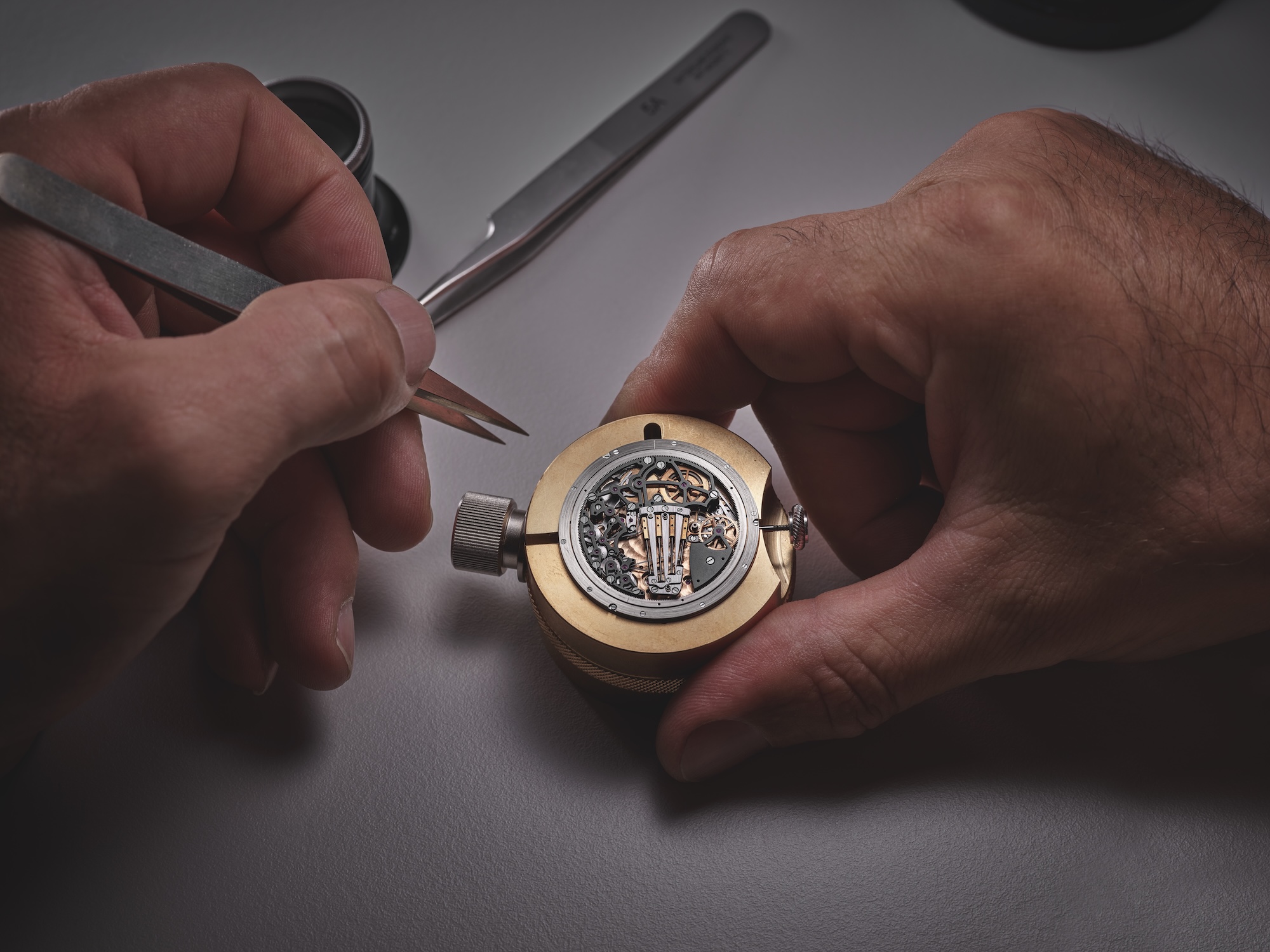
Assembly of the FFC movement
Learning the language of watchmaking
Joining F.P.Journe means far more than learning to assemble or regulate a movement. It means becoming part of a culture, and contributing to a vision.
This spirit is tangible in the workshops, where watchmakers, both young and experienced, gather around the calibres, studying them, discussing their intricacies and sharing their observations.
Antoine recalls: “Over the years, I have had the opportunity to work on every generation of the Résonance and to witness its evolution… I feel privileged to be part of the history of this Manufacture. Above all, I see my work as a responsibility towards the client. Every watch must be impeccable.”
“The greatest challenge for me, at first, was adapting to the Manufacture’s exacting standards,” explains Louis. “We work on movements of exceptional quality, with extremely tight tolerances. I had previously worked for another company, but here the attention to detail goes much further. You can really see the difference in quality. I have adapted, though. It comes with practice. Watchmaking is a craft that takes years of experience to master.”
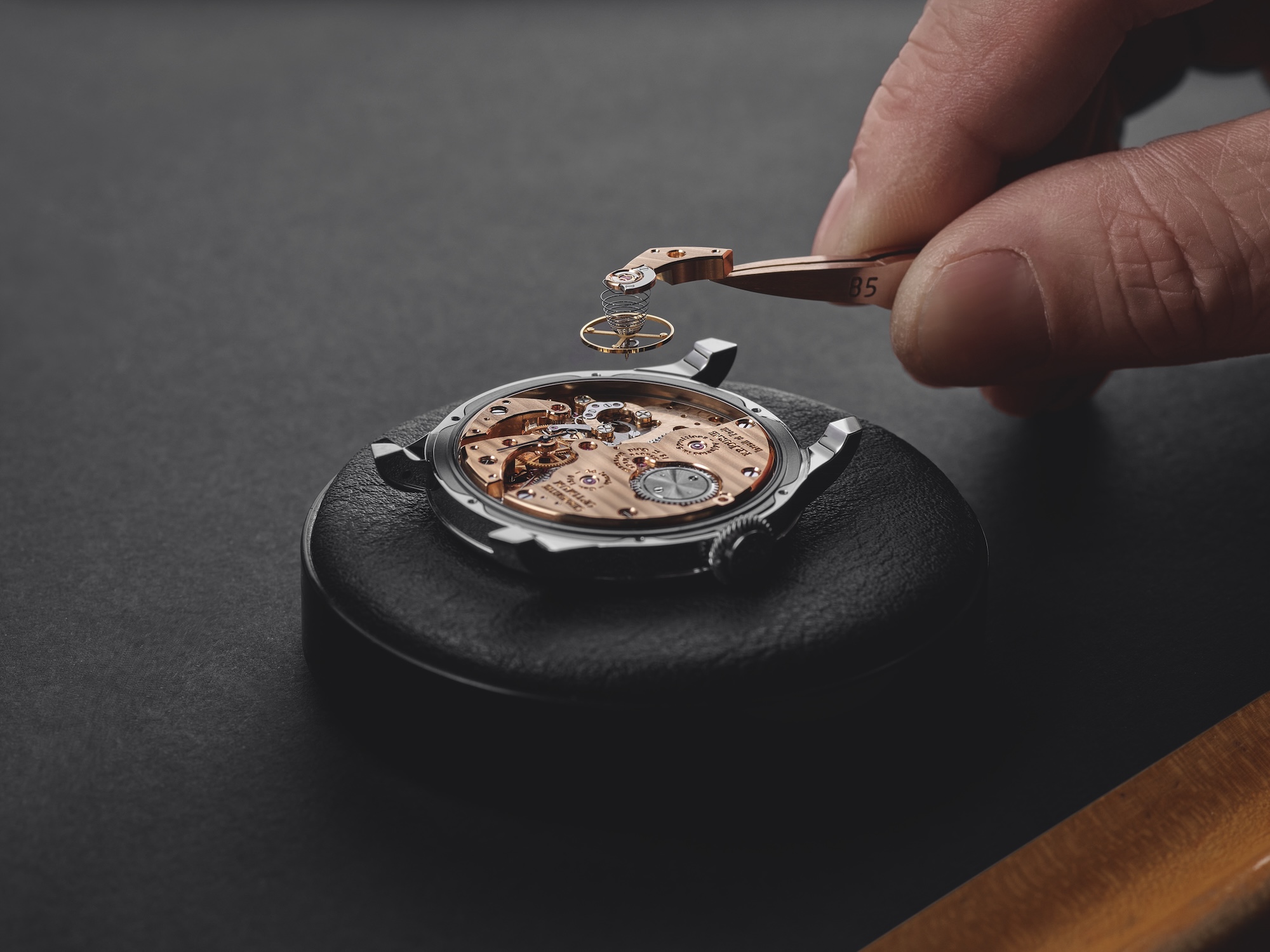
Assembly of the balance wheel and its bridge on the Chronomètre Optimum movement.
Passing on the spirit and the skills
In an independent Manufacture where rigour, exacting standards and trust are essential, in-house training plays a fundamental role. Passing on knowledge here involves far more than teaching a technique. It means sharing a philosophy, a particular way of thinking about time and understanding the decisions of the creator. It means learning humility, patience and curiosity, and always seeking to understand the reasoning behind each movement. It means following a path shaped by the master watchmaker himself.
“Training a young watchmaker straight out of school is not so much about overcoming technical difficulties,” explains Sylvain. “It is primarily about teaching them to be organised, to be patient and to think carefully about every gesture. There is no point in assembling a movement without understanding what you are doing. They need to know why they are doing it.”
This commitment to passing on knowledge is woven into the very fabric of the Manufacture. A watchmaker learns, then becomes a mentor in turn.
“Our profession is a chain: we receive knowledge and pass it on,” says Marc. “Sometimes it is a piece of technical advice, sometimes just a little trick that makes everyday work easier… It is these exchanges that preserve the beauty of our craft.”
The bonds between the watchmaker and the Manufacture, between craftsmanship and creativity, between the young apprentice and the master, are among its greatest strengths. A watchmaker here is never merely someone who executes a task. He is a participant, a witness and a custodian of knowledge, responsible for passing it on. Every watch that leaves the Manufacture embodies this unbroken chain.
“If there is one lesson to remember, it is humility,” Sylvain observes. “Here, you must constantly question yourself. Just because you have mastered one thing does not mean you know how to do everything. You have to remain open-minded and keep trying to understand. With François-Paul, every detail has a purpose. Even after all these years, I still sometimes go to him and ask, ‘Why did you choose to do it this way?’ And he explains. Often, I realise that ideas he had three or four years ago are only now coming to fruition. Nothing is left to chance. Everything is carefully thought through, logical and coherent.”
The bond that unites these watchmakers with the Manufacture grows out of their admiration for its founder, the quality of their craftsmanship, a shared spirit of independence and, above all, the passing on of knowledge. For what is handed down is not simply a set of technical skills, but a way of thinking about time, a pursuit of excellence, an art.